Písek
(the royal town since the mid-13th century)
31,100 inhabitants
South Bohemian Region, Písek District
Historical milestones
1308: The gold-mining settlement of Starý Písek, predecessor to the new royal town, is first mentioned in documents on the left bank of the Otava River.
Second half of the 13th century: From 1243, King Wenceslas I of the Přemyslid dynasty had built a new royal town on the right bank of the Otava River, which was completed and fortified by King Přemysl Otakar II, who often stayed at the local castle with his court.
1254: King Přemysl Otakar II founded a royal mint.
1419: After the conquest of the Dominican monastery, Písek joined the Hussites and became a free member of the Tábor Union. It maintained its position as a free municipal republic until 1452.
1509: The town bought the castle and estate with its rich forests from the Royal Chamber.
1532: Písek was hit by a massive fire. As a result, most of the houses in the town were reduced to ashes.
1547: The town was punished by Emperor Ferdinand I Habsburg for participating in the first Estates Uprising by confiscating all its property and revoking its town privileges. However, most of its property and privileges were returned after a few years.
1611: The Passauers breached the town walls and plundered it.
1619–1620: Participation in the second estates uprising became a fatal threat to its existence. First, it became the center of fighting between the imperial and estates armies, and then on September 30, 1620, it was conquered by the imperial army under the command of Count Buquoy. The town was completely destroyed, burned down, and looted. Most of the population was massacred and the town’s property confiscated.
1623: Písek lost its status and privileges as a royal town and became the domain of the military adventurer Count Martin de Hoeff-Huerta. The violent recatholization of the remaining inhabitants began.
1641: The town regained its status as a royal town.
Mid-17th century: The town was struck by two devastating fires (1646 and 1651).
1741: The Austrian and French armies clashed in the Battle of Písek. Five hundred soldiers were killed.
1778: The famous grammar school was established, where important Bohemian personalities later studied.
1850: Písek became the capital of the Prácheň region, i.e. the regional capital.
1884: The Prácheň Museum with historical exhibitions was founded in the town castle.
1887: František Křižík introduced permanent street lighting here, the first Bohemian city to do so.
1888: The municipal hydroelectric power plant begins operation.
1992: The historic center of the city is granted the status of an urban conservation area.
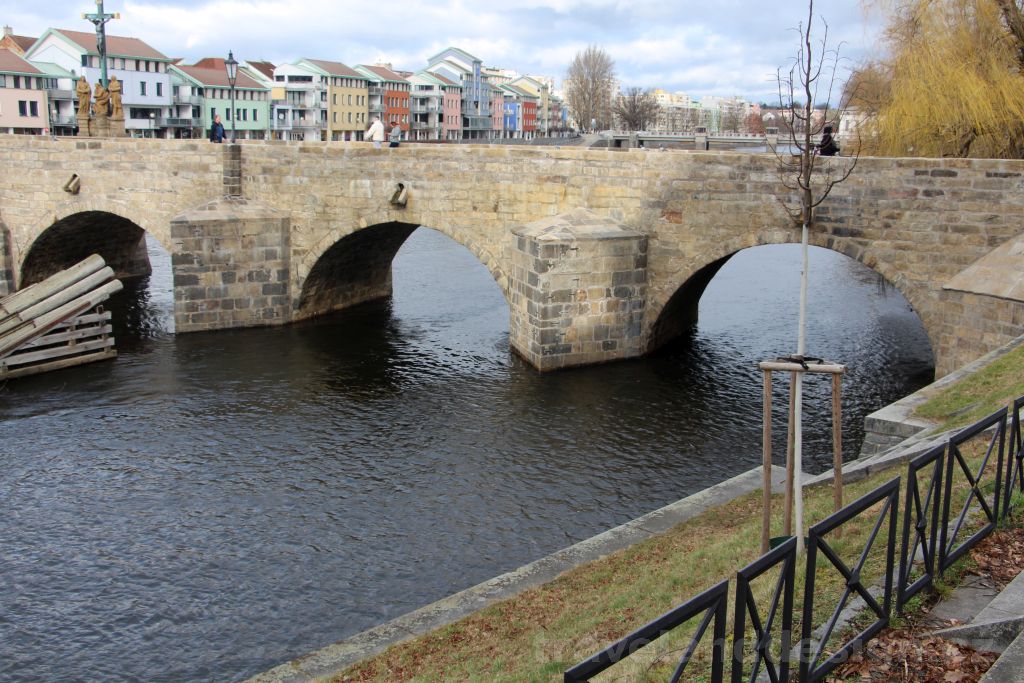
2002: Extensive flooding inundated most of the town and severely damaged the Stone Bridge over the Otava River.
Interesting facts about the city
The name of the city of Písek was derived from the sandy alluvial deposits of the Otava River, which were a source of rare gold in the Middle Ages. Gold was also the immediate reason for the founding of the city of Písek. Later, gold and precious stones began to be mined in the nearby Písek Mountains. The town was strategically built on the important Golden Trail to guard it and also to support royal power in southern Bohemia.
Gold mining became both a blessing and a curse for the town. In the 16th century, thanks to lucrative mining and extensive land holdings, Písek was one of the richest royal towns in Bohemia. However, poverty struck a century later with the Thirty Years‘ War. In the fall of 1620, the town was heavily plundered by the imperial general Buquoy because of its wealth, and according to legend, only 13 men were saved from its inhabitants, who hid under a weir on the Otava River.
During the Hussite Wars, the town joined the Táborite Union, and it was here that gold began to be collected in community vats for the benefit of the Písek community. This is one of the reasons why Jan Žižka of Trocnov chose Písek as his seat in 1420.
From the beginning of the 18th century, Písek began to engage in wood rafting and became an important transshipment point for wood.
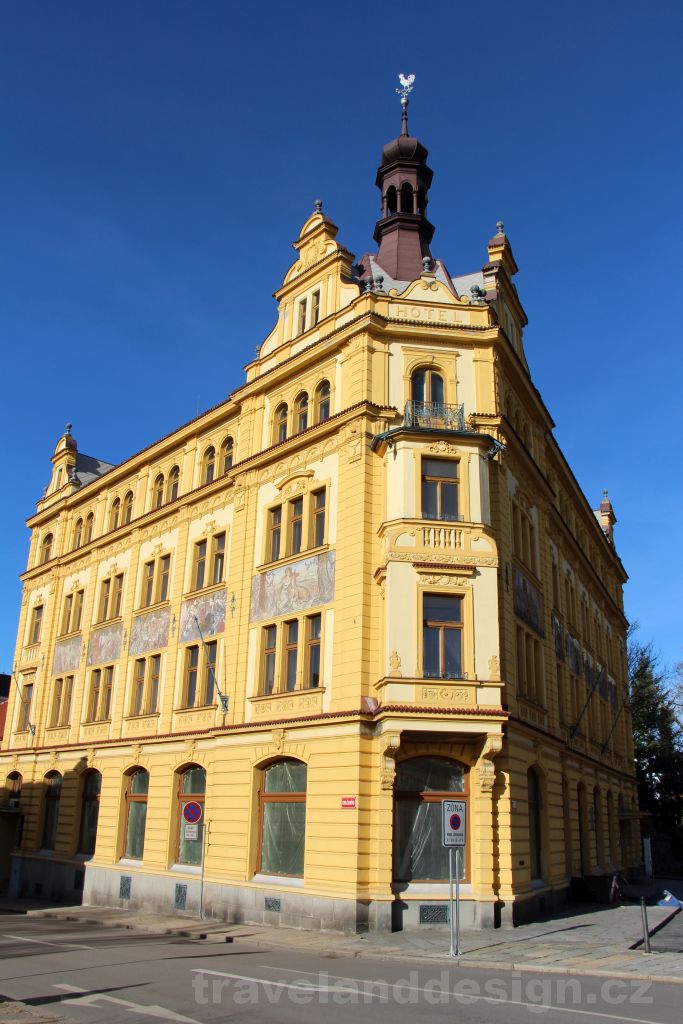
In the second half of the 19th century, Písek became a popular place of residence for numerous Bohemian writers and painters and one of the centers of the national revival. Many poets studied and lived here, led by F. L. Čelakovský, L. Stroupežnický, K. Klostermann, and Fráňa Šrámek, who lived in the house named U koulí. The painter Mikoláš Aleš also left his mark on the town, with 11 facade paintings on today’s Hotel Dvořáček from 1899 based on his cartoons.
The city is home to a private university – the Miroslav Ondříček Film Academy.
On the outskirts of Písek, towards České Budějovice, lies the historic Provincial Stud Farm, founded in 1902 for the needs of the strong army garrison in the town, which is a national cultural monument. The Art Nouveau buildings, constructed using fired bricks, were built in 1901-2 by the architect František Skopalík. It was from this stud farm that the stallion Ardo came, who served as a model for the sculptor Josef Václav Myslbek when he created the St. Wenceslas monument on Wenceslas Square in Prague.
The biggest tourist attractions
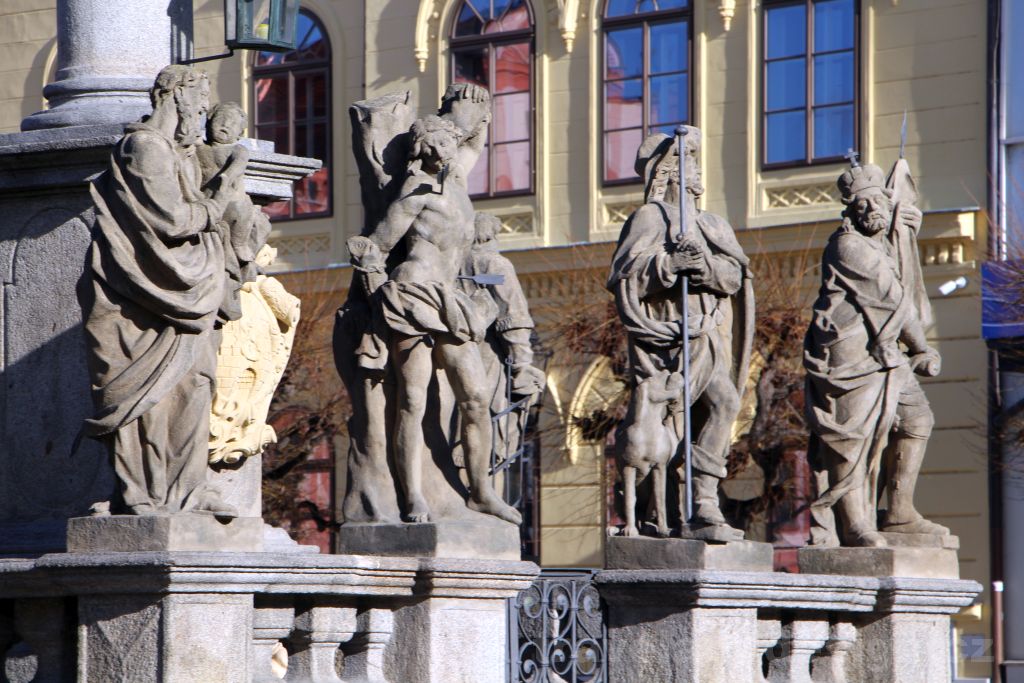
The city’s biggest historical attraction is the renovated gothic bridge over the Otava River, the oldest in the country and a national cultural monument. It was built in the second half of the 13th century, together with the founding of the royal city. The seven-arch bridge, called Kamenný (Stone), measures 111 meters in length and 4.5 meters in width. Although the bridge no longer has its two tower-like gates at either end, it is complemented by baroque sculptures of saints from the 18th century. It is sometimes called the Deer Bridge because a deer is said to have been the first to cross it. Its main purpose was to connect Písek on the right bank with the settlement of Starý Písek on the left bank, the historical predecessor of the town. The oldest town church, dedicated to St. Wenceslas and dating back to the early 13th century, stands out in Starý Písek. Its interior features the oldest preserved frescoes depicting the burning of Jan Hus.
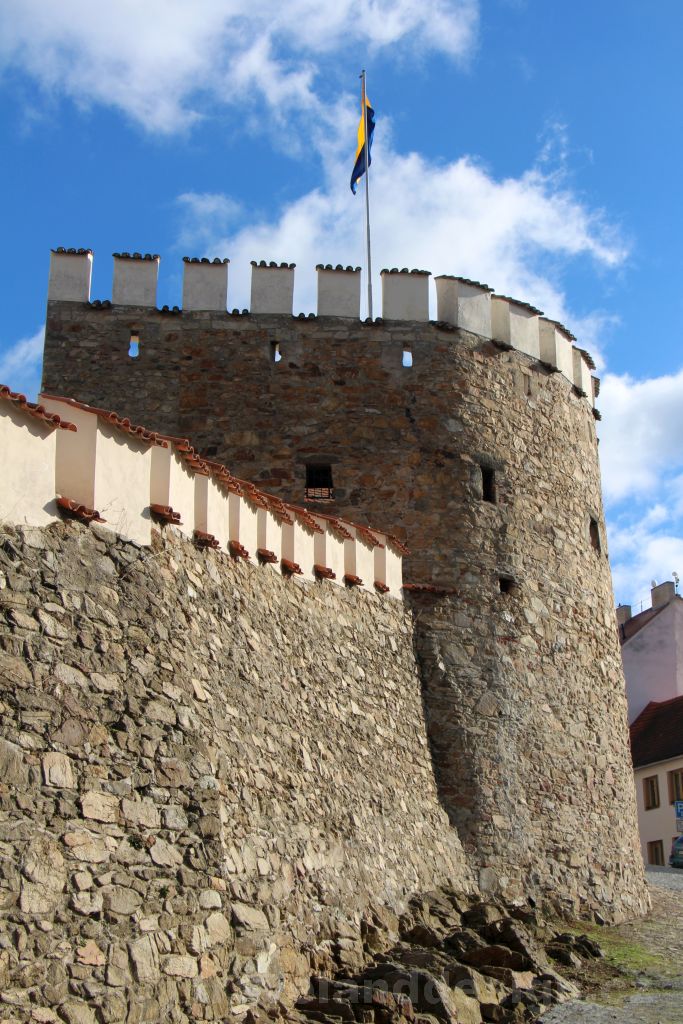
Písek was properly fortified with a system of ten-meter-high stone walls with bastions placed side by side every 75 meters and opened to the surroundings through three gates – Prague, Budweis, and Putim. Currently, the best-preserved remains of the walls with bastions are on the eastern side of the town in Palacký Park. However, not a single gate remains, as they were demolished in the 19th century. Only a very nice semicircular barbican has been preserved from the Putimská Gate, which is accessed by a stone bridge over a deep moat. It is here that one can perceive the strength of the city’s fortifications, underlining the strategic importance of this city for the Bohemian kings.
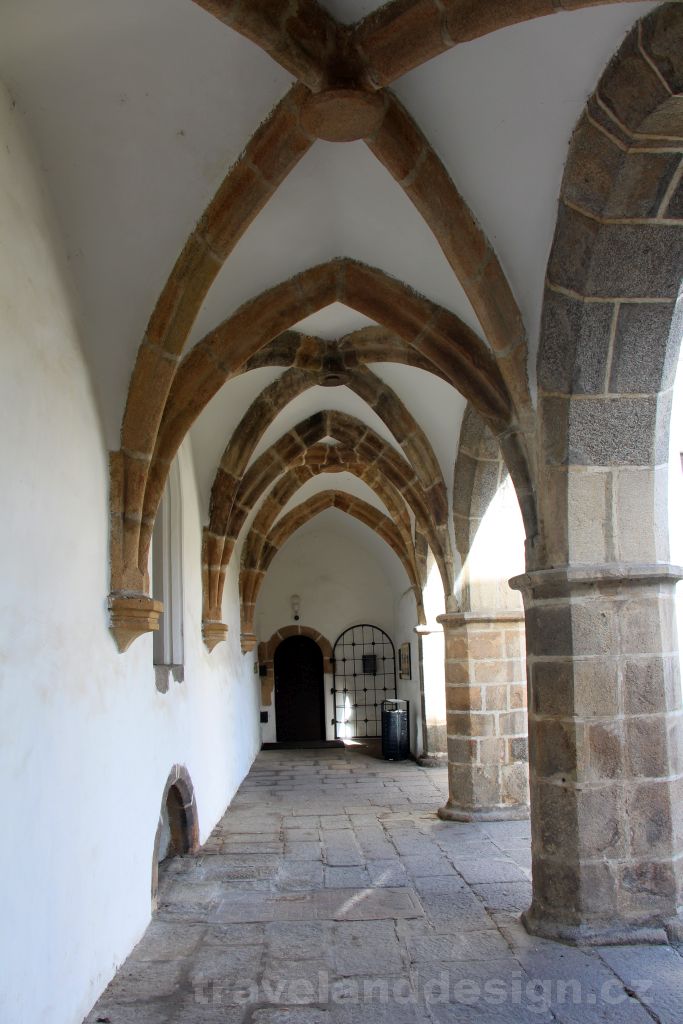
The gothic royal castle, which stands behind the town hall building by the Otava River, is one of the most important gothic monuments in Písek, although only the western wing has been preserved in its original form, as the northern wing was converted into barracks. It used to be an important part of the city fortifications. The last king to reside here was Wenceslas IV of Luxembourg. Today, it houses the Prácheň Museum. During your tour, you can also see the gothic arcade of the courtyard and the large gothic hall with its magnificent ribbed vaults.
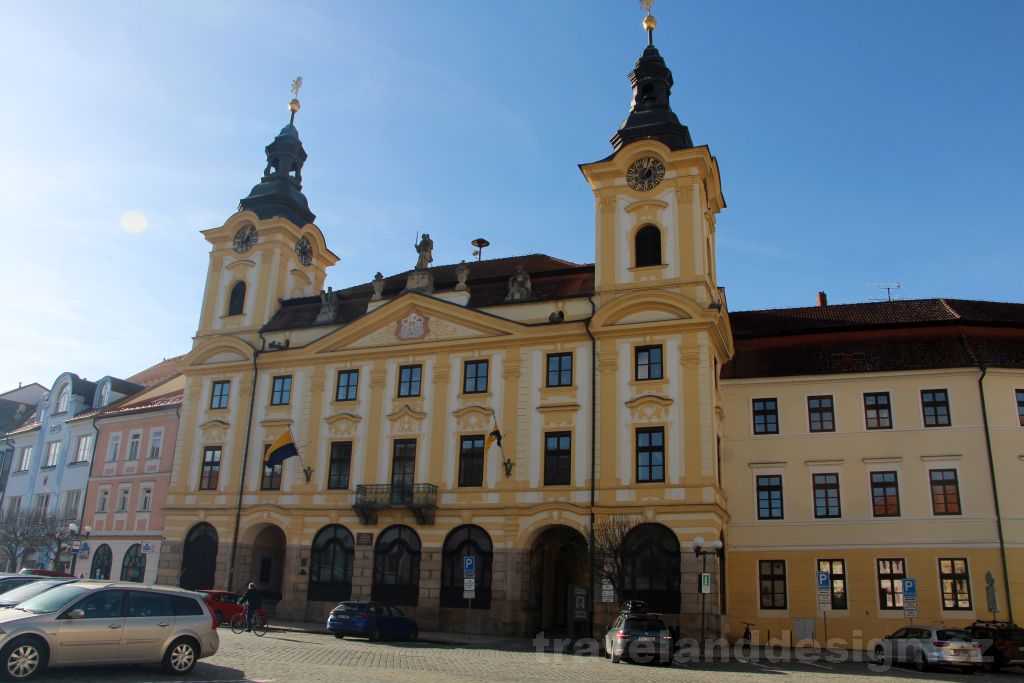
The dominant feature of the Great Square is the massive baroque town hall building from 1740-67 with two prismatic towers on the facade, one of which chimes every hour. There are three sculptures of women representing Patience, Strength, and Justice above the gable of the facade. You can then walk through the passageway towards the Písek town castle.
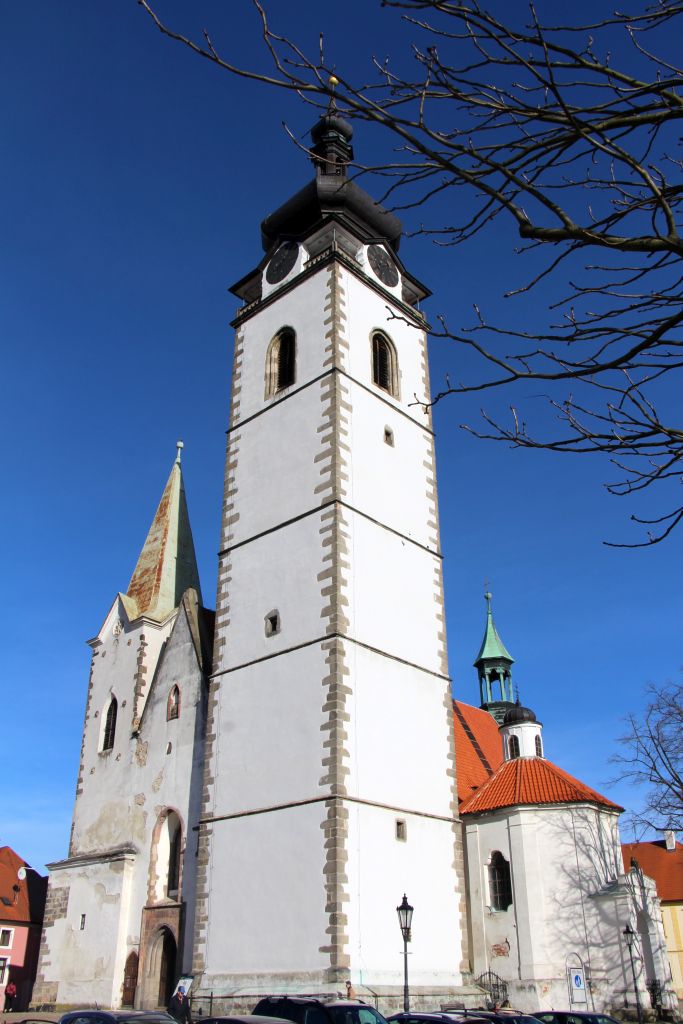
The most valuable sacred monument in the town is the Deanery Church of the Nativity of the Virgin Mary, a three-nave early gothic building with the 74-meter-high Písek Tower, which dominates the entire town. The tower clock has inverted hands, with the small one showing the minutes and the large one showing the hours. In front of the church is a modernly landscaped area called Bakaláře, named after the renaissance school that was demolished in 1853. Under the glass in the pavement, you can see the uncovered prehistoric burial mounds and cremation graves of an extensive necropolis.
The baroque Marian Column from 1715, designed by Ch. Widmann for Aleš Square as a token of gratitude for the end of the plague epidemic two years earlier, is particularly valuable.
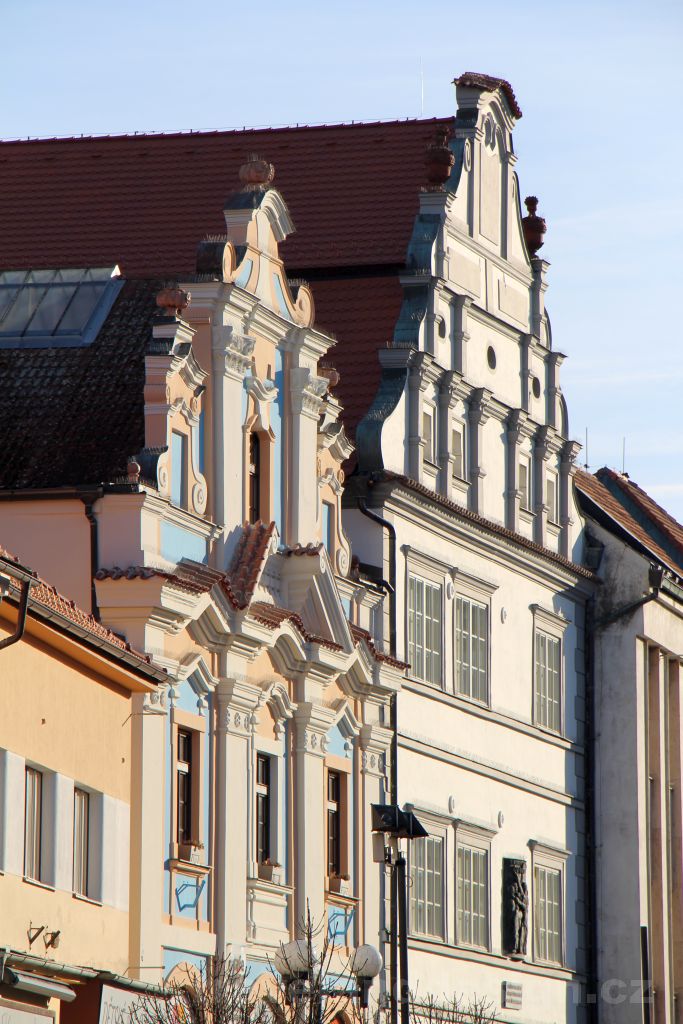
Throughout the historic center, we find many valuable renaissance, baroque, and rococo town houses. Particularly noteworthy is the renaissance house U koulí (No. 131), where Adolf Heyduk and later Fráňa Šrámek lived, and the baroque pharmacy U Matky Boží (Nos. 150 and 153) is also valuable. The beautiful corner rococo house with a bay window, called U Zlaté lodi (No. 180), is also worth seeing. All these houses and many others are named after house signs, because until the end of the 18th century, there were no house numbers.
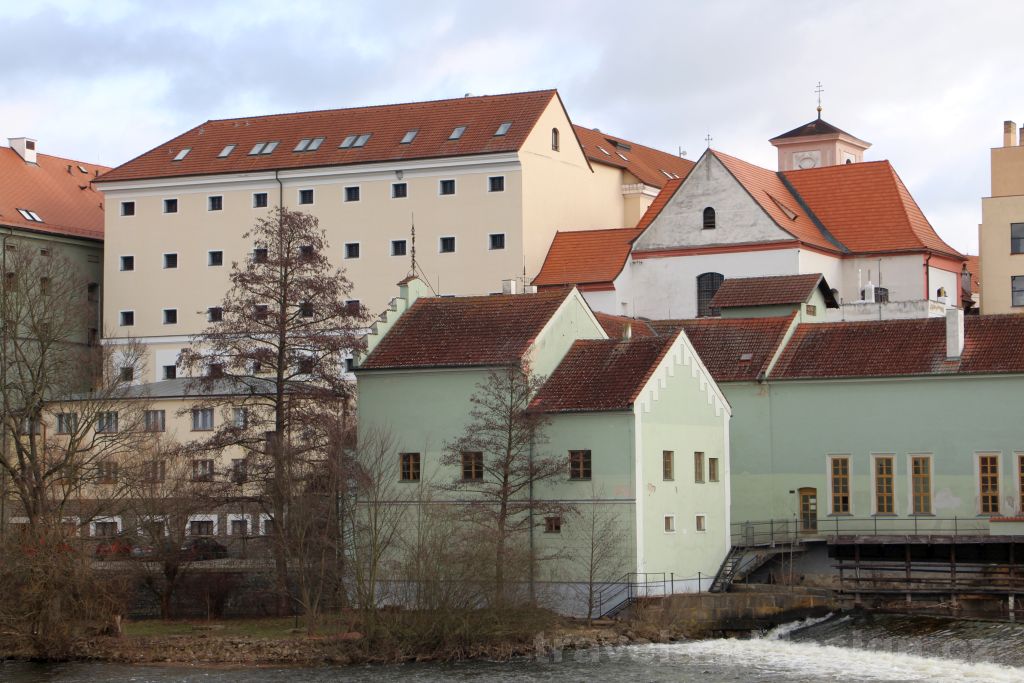
However, the Municipal Library is a true oasis for the soul, where you can sit in modern spaces with a café. It is a former school building from 1859, built on the site of an old grammar school, complemented by a relaxation garden and an outdoor stage. Its predecessor was opened as one of the oldest in Bohemia in a baroque house on Aleš or Small Square in 1841. The renovated Sladovna building, which now serves as a gallery for paintings by Radek Pilař, a local native, is also worth a visit.
Famous natives of Písek
Josef Chochol, architect (*1880)
Vladimír Dvořák, presenter and entertainer (*1925)
František Filip, director (*1930)
Radek Pilař, painter (*1931)
Petr Brukner, actor (*1943)
Josef Pleskot, architect (*1952)
Dana Morávková, actress (*1971)
Bohuš Matuš, singer (*1973)
Kateřina Neumannová, cross-country skier (*1973)
Iva Kubelková, model (*1977)
Tomáš Verner, figure skater (*1986)
The famous who stayed in the city
Jan Žižka of Trocnov, Hussite military leader
František Ladislav Čelakovský, writer
Karel Klostermann, writer
August Sedláček, historian
Ladislav Stroupežnický, playwright
Adolf Heyduk, poet
Mikoláš Aleš, painter
Antonín Sova, poet
Fráňa Šrámek, poet
Jaroslav Ježek, composer
Emil Hácha, politician