Rokycany
(the royal town since 1584)
14,400 inhabitants
Pilsen Region, Rokycany District
Historical milestones
1110: On the site of present-day Rokycany stood a manor belonging to the Bishops of Prague, where the Bohemian Prince
Vladislav I of the Přemyslid dynasty met the German King Henry V.
1290: The town’s fortifications were completed by the bishop of Prague, Tobias of Bechyně.
1399: Rokycany was fortified and granted town status.
15th century: A residential and defensive castle for the archbishops of Prague was founded in the town, of which nothing
remains today.
1547: Rokycany remained loyal during the first estates’ revolt against King Ferdinand I of Habsburg, for which the town’s
coat of arms was improved.
1584: Rokycany was classified as a Bohemian royal town.
Early 18th century: Iron ore mining and processing began to develop in the town and its surroundings.
1639–42: A period of constant Swedish raiding of the town, which ended with the brutal decimation of Madlon’s regiment by
the imperial forces for allegedly causing the defeat at the battle of Breitenfeld.
1757: The town was severely affected by a major fire, following which its baroque reconstruction began.
1784: Rokycany was destroyed by another major fire.
1897: Rokycany’s first foundry began operations.
1945: Rokycany was liberated by the US Army, and the war criminal K. H. Frank was arrested there.
1992: The historic town centre was designated a municipal conservation area.
2002: A major flood on the Klabava river caused considerable damage to the town.
2006: Rokycany was once again damaged by a flash flood on the river Klabava.
Interesting facts about the town
Today’s Rokycany originated at a ford across the river on an important trade route from Prague to Plzeň and on to Bavaria. The local mineral wealth in the form of iron ore led to the town’s enormous economic boom at the turn of the seventeenth and eighteenth centuries. The Klabava valley was home to the fourth-largest industrial complex in the Plzeň region, which processed local iron ore. A hundred years later, the industrial complex expanded to include a foundry and, in 1909, rolling mills, meaning that by that time the town was renowned for its heavy industry. However, the connection to the Austrian railway network also contributed to the boom in local industrial production. Unfortunately, the ‘Favorit’ brand of sports bicycles, which were manufactured here for a long time, is now known to us only from history.
The town’s name is derived from ‘rokytí’, an old Czech term for low-growing willow thickets, of which there were certainly considerable quantities in the surrounding marshy meadows near the newly founded town.
Today’s Dr Horák Museum in Rokycany houses the richest collection of fossils in the Czech Republic, so it is worth a visit. The collection was built up mainly thanks to iron ore mining in the surrounding areas of Brdy region. You will also find a whole range of interesting exhibits relating to the history of the local ironworks. An interesting feature of the museum is the fact that the remains of the walls of the former Rokycany castle have been preserved within its walls.
The biggest tourist attractions
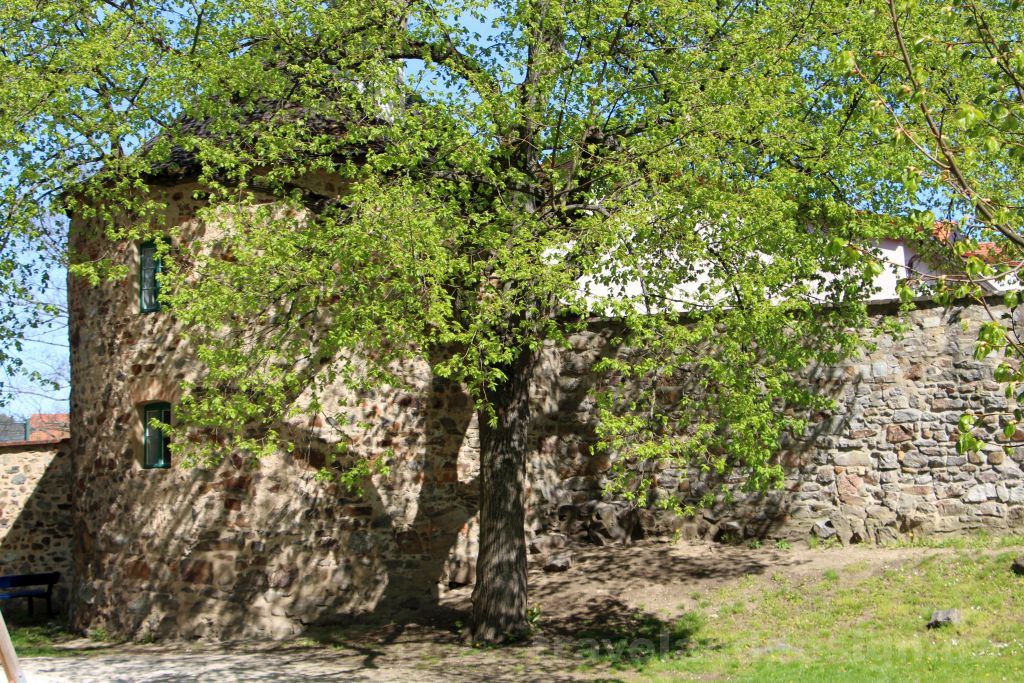
Rokycany used to be surrounded by massive stone ramparts, of which, however, only fragments dating from the 14th century have survived to the present day. The most beautiful of these is the preserved gothic semi-cylindrical bastion on Třebízský Street, which is connected to a preserved section of the town walls.
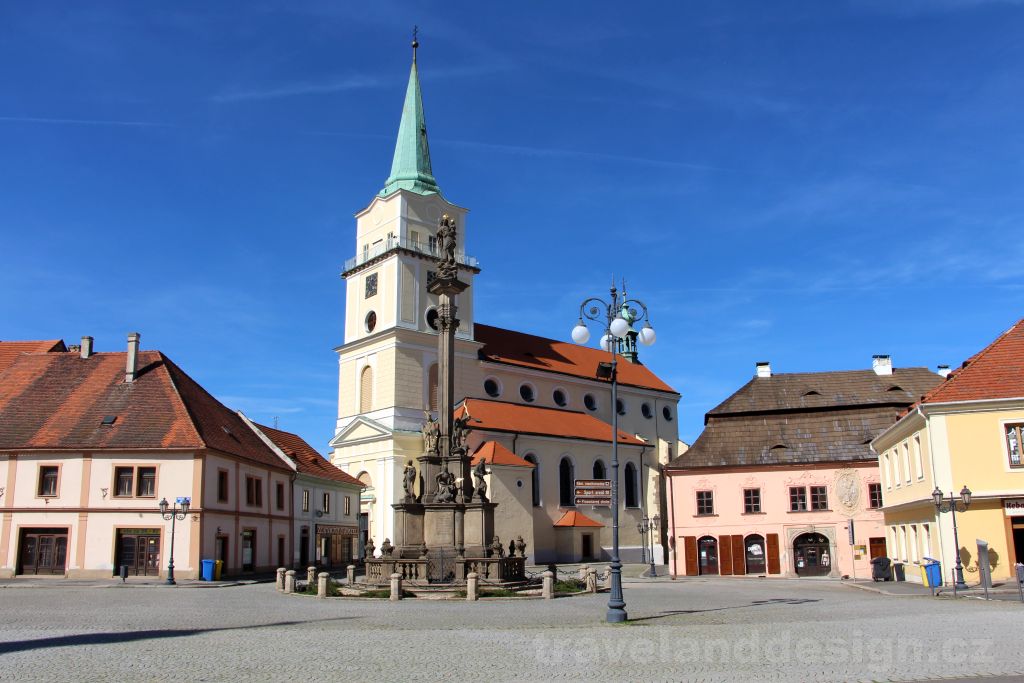
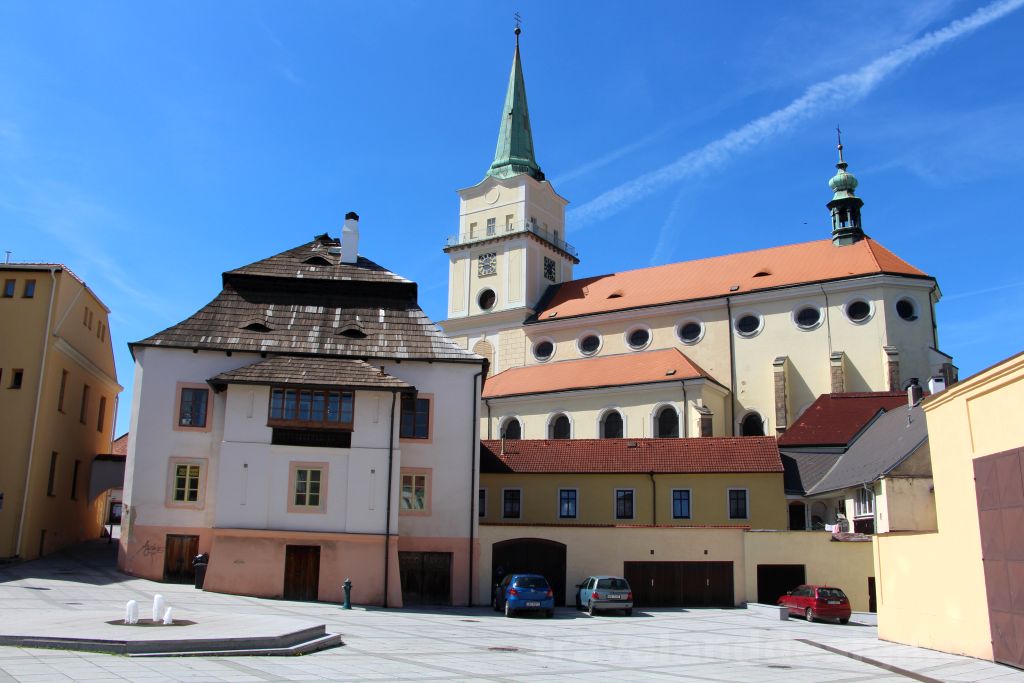
Right in the heart of the town, two of its most striking landmarks catch the eye. The originally gothic church of Our Lady of the Snows was thoroughly rebuilt in the baroque style following the great fire of 1784–88, according to plans by the architect Ignác Jan Palliardi. It also bears witness to the famous meeting between Henry V, king of Rome, and Vladislav I of the Přemyslid dynasty, Prince of Bohemia, in 1110. Its tower, however, is of a later date and was built in the then-modern classicist style, making it unique in our country. Standing nearby is the monumental town hall, which was built at the same time as the church, that is, during the late baroque period. However, as early as 1802–10, it was rebuilt and extended in the classicist style according to the plans of the famous Italian architect Ignác Alois Palliardi. The town hall’s ceremonial hall houses the town’s most valuable work of art that is a painting by Alfons Mucha entitled ‘The Council of Basel Bows Before Jan Rokycana’. The square in front of the town hall is adorned with a historicist fountain dating from 1827, and on its façade, the observant visitor will also spot a sculpture by Olbram Zoubek from 2008, entitled ‘Welcome to Rokycany’.
If you venture deeper into the town’s narrow streets, you will also discover other interesting buildings, such as the former gothic butcher’s shops dating from 1460, which, however, did not take on their present form until the mid-19th century. Perhaps the most beautiful house in the centre of Rokycany is the rococo Dumet House. However, its original renaissance appearance from 1517, dating from the time of its founder Vavřinec Dumet, was obscured by alterations made at the very end of the eighteenth century, which gave it a rather whimsical character.
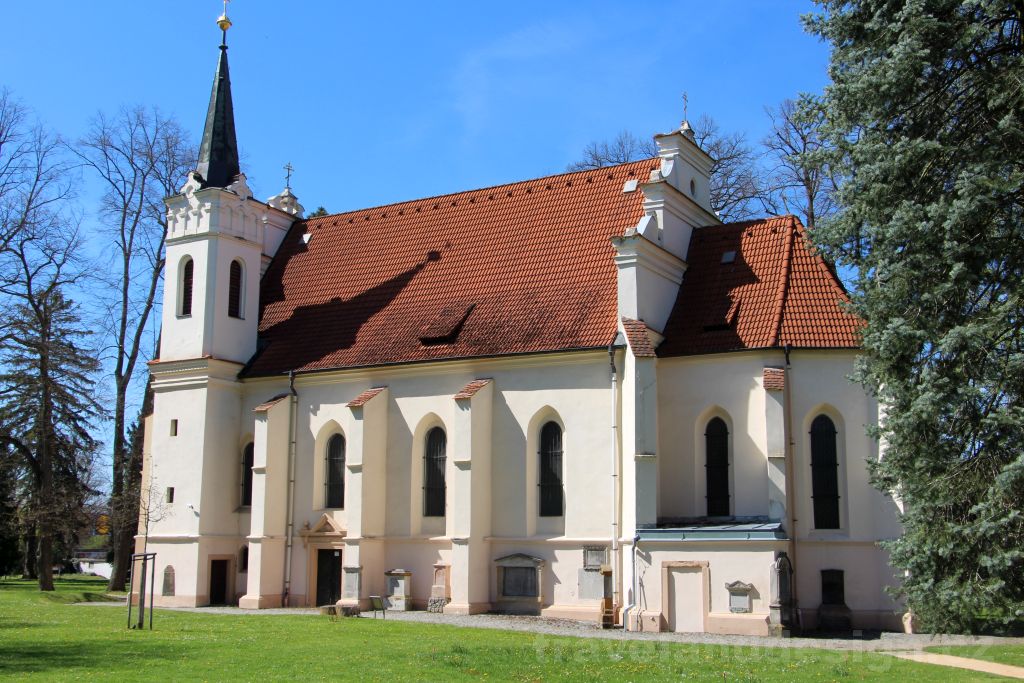
Just outside the town walls, you can visit the late-renaissance cemetery church of the Holy Trinity, which was built in just six years between 1609 and 1615, only to be forcibly re-catholicised along with the entire town in 1624. Another point of interest relating to this cruel episode is the monument to Madlon’s regiment above the mass grave, nicknamed the ‘Black Cross’. It is here that one in ten soldiers lies buried; they were shot as part of the decimation punishment for the alleged defeat of the imperial forces at the battle of Breitenfeld. All the officers of the same regiment were also beheaded here.
Famous natives of Rokycany
Jan Rokycana, archbishop of Prague and preacher (*1397)
Jiří Stříbrný, Czechoslovak politician, resistance fighter and minister (*1880)
Jan Mikolášek, healer (*1889)
Čestmír Řanda, actor (*1923)
Jana Preissová, actress (*1948)
Věra Bílá, singer (*1954)
Jiří Pehe, political scientist (*1955)
Irena Budweiserová, singer (*1957)
Tomáš Petříček, politician (*1981)
Famous residents who lived in the city
Bedřich Smetana, composer