Olomouc
(a royal city since 1239)
Population: 103,000
Olomouc Region, Olomouc District
Historical milestones
late 7th century: The oldest fortified Great Moravian settlement is established on Wenceslas Hill.
1020: Olomouc becomes the seat of the appendage principality of the same name, with a newly built castle – later rebuilt in the Romanesque style.
1063: The town becomes the seat of the Diocese of Olomouc.
1201: The Olomouc branch of the Přemyslid dynasty died out and the appendage principality passed to Přemysl Otakar I.
1239: Probable confirmation of the town’s status as a royal town by King Wenceslas I, following the merger of three separate settlements.
1306: The last Přemyslid king, Wenceslas III, was murdered at Olomouc Castle, bringing the Bohemian royal dynasty to an end.
1321: The town is fortified with stone walls.
1422: The town is granted the right to mint its own coins by the King Sigismund of Luxembourg.
1454: A pogrom against the Jews took place in the town, leading to their expulsion.
1469: Matthias Corvinus was crowned King of Bohemia in St Wenceslas Cathedral in Olomouc by the rebellious Moravian estates.
1492: The town was struck by a devastating fire, which led to its subsequent reconstruction using stone and brick in the late Gothic style.
1573: The Jesuit Academy, the direct predecessor of today’s Palacký University, was founded.
1619: During the Estates Uprising, Olomouc opposed Ferdinand II, Holy Roman Emperor, and the Jesuits fled the city.
1620: St John Sarkander was martyred in the city.
1621: Following the suppression of the uprising, Olomouc was subjected to fines and confiscations. The Jesuits returned triumphantly to the city.
1642: The poorly fortified city was occupied without a fight by General Torstensson’s Swedish army, and all Moravian provincial authorities were subsequently moved to Brno. The Swedes completely plundered the city and ruined its economy whilst they remained there as their main Central European base until 1650.
1655: Olomouc was declared a fortified town by Emperor Ferdinand III of Habsburg.
1709: Following a major fire, the city underwent baroque reconstruction and its fortifications were modernised.
1741: The city was conquered by the Prussians.
1742–54: Olomouc was surrounded by a completely new ring of baroque citadel fortifications. However, it never took part in any military operations.
1777: The Diocese of Olomouc was elevated to an archdiocese.
1829: Marshal Josef Radecký of Radeč was appointed commander of the Olomouc fortress.
1841: A railway line was brought into the city.
1848: In this revolutionary year, the imperial court moved to Olomouc, and Emperor Ferdinand V the Benevolent abdicated in favour of his nephew Franz Joseph I at the Archbishop’s Palace.
1886: The Olomouc fortress was dismantled.
1894: The industrialisation of Olomouc’s suburbs begins, as does the dismantling of the fortress walls. A network of city parks is created around the historic city centre.
1946: Following the Second World War, the Germans of Olomouc, who made up a quarter of the city’s population, were expelled.
1950: Olomouc becomes an urban conservation area.
1960: The first exhibition named ‘Flóra Olomouc’ flower show was held in the city.
1995: Pope John Paul II visited the city to canonise John Sarkander and St Zdislava.
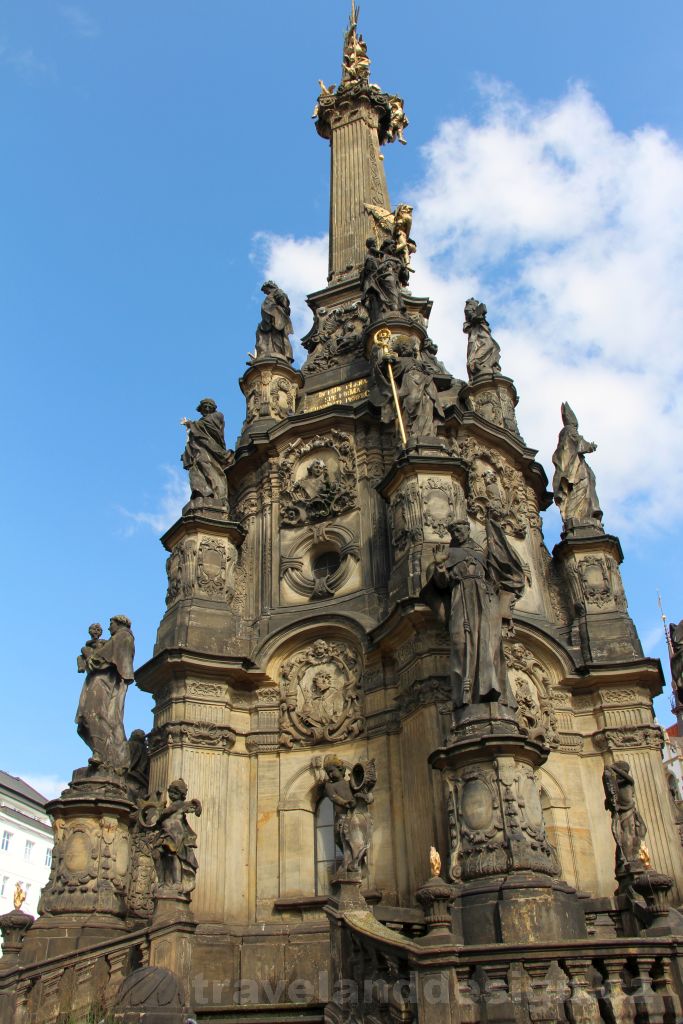
2000: The monumental baroque Holy Trinity Column was inscribed on the UNESCO World Heritage List.
Interesting facts about the city
Olomouc is historically the most significant city in Moravia and its cultural, ecclesiastical and economic metropolis, which even rivalled Prague in the Middle Ages. It lies on the river Morava and is the centre of the fertile Haná region. It is also the sixth-largest city in the Czech Republic. The city’s name is derived from the proper name Olomút.
The city is famous for the production of Olomouc’s cheese, a local, pungent cheese speciality, although production is actually concentrated in the nearby town of Loštice. Olomouc, however, has always been the centre of trade in this cheese.
The historic centre of Olomouc is of great value and, due to its size, is the second-largest conservation area in the country after Prague.
Olomouc has the status of a regional and statutory city and is headed by a mayor. For many centuries, it competed with Brno for the role of Moravia’s principal city, but ultimately lost this contest due to the prolonged Swedish occupation of the city during the Thirty Years’ War, and the Moravian provincial authorities moved to the better-fortified city of Brno. Paradoxically, following the departure of the Swedes in 1650, it acquired the status of a fortified town and soon transformed into a baroque citadel. In another twist of fate, however, it never actively took part in any battles. Olomouc’s military significance, however, remained, and from the Soviet occupation of Czechoslovakia onwards, it was also home to a strong Russian garrison. It is currently the headquarters of the Czech Republic’s Land Forces.
The prince Břetislav of Bohemia also lived in Olomouc; it was to the local castle that he abducted Jitka. It was also here that Wolfgang Amadeus Mozart composed his Symphony No. 6 in F major in 1767.
Thanks to its beautiful surroundings, the city has been the setting for a number of Czech crime dramas, such as A Case for the Exorcist and several episodes of Gendarmerie Humoresques. Among older productions, Olomouc featured as Stínadla in the black-and-white series The Mystery of the Puzzle.
The biggest tourist magnets
The city’s oldest monument is the ruins of the Romanesque castle on Wenceslas Hill, they are particularly striking for their sprawling mullioned windows, which have no parallel in the Bohemian lands except at castle of Cheb (Eger). The castle grounds are accessible as part of a tour of the most valuable artistic artefacts in the Archdiocesan Museum, which is housed in the baroque complex of the chapter deanery. The exhibitions delight visitors with their diversity and the way the collections are presented, as they combine modern techniques and materials with preserved historical architectural features. In its vicinity stands Olomouc’s oldest church, St Wenceslas’s Church. Its foundations date back to the 11th century. However, not even its gothic form has survived to the present day, as it was first given a baroque makeover and then thoroughly restored to its gothic style between 1883 and 1892. Inside, one will find, unsurprisingly, the tombs of the Přemyslid princes. St Wenceslas Hill represents the original centre of the Přemyslid city of Olomouc and a sort of ecclesiastical district enclosed on the outside by gothic and baroque walls.
Heading west, one first enters the historic part of the city reserved for canons and the Archbishops of Olomouc themselves. A row of richly decorated baroque houses is complemented above all by the extensive building of the Archbishop’s Palace with its rich art collections, which are also open to the public. It was built here in the early baroque style between 1665 and 1669, and it was here that Emperor Ferdinand V the Benevolent abdicated in 1848.
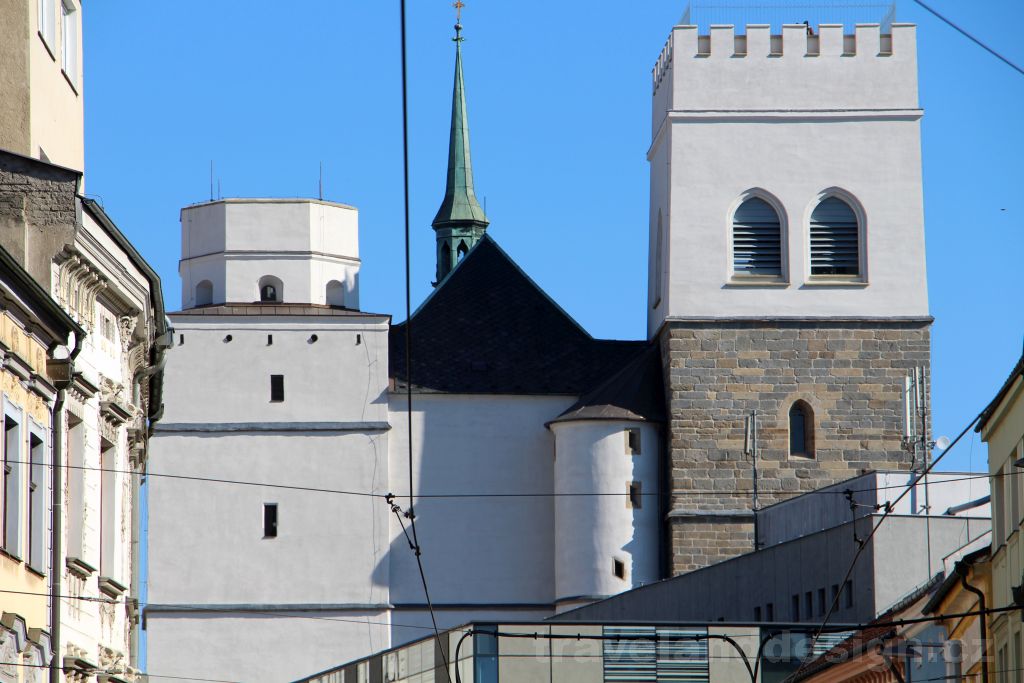
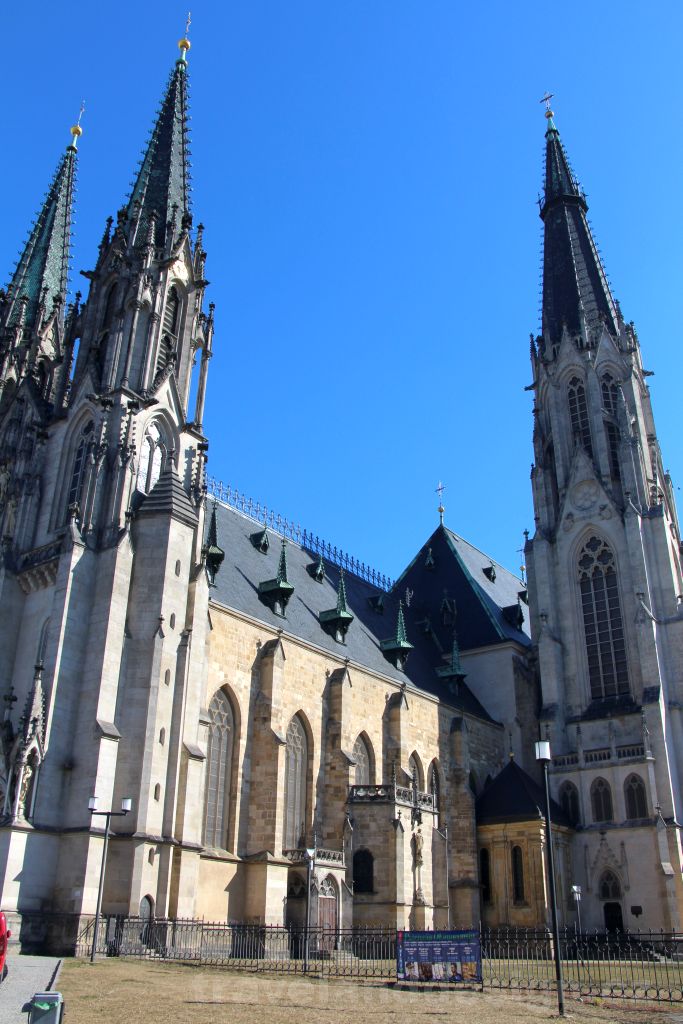
Olomouc is a city of churches and cathedrals. The oldest is St Maurice’s Cathedral. It consists of a massive gothic three-nave structure with a bluntly terminated stone tower. Inside the cathedral, one finds, in particular, an exceptionally valuable organ with six stops and ten thousand pipes, dating from 1740–45 and crafted by the Breslau-based master Engler. It is partly thanks to this organ that organ festivals are held here every autumn. Among the other churches, the baroque sanctuaries are particularly noteworthy. Of particular interest is the Church of St Michael with its three massive domes from the late 17th century, and the monumental façade of the high baroque Church of Our Lady of the Snows, built between 1712 and 1719.
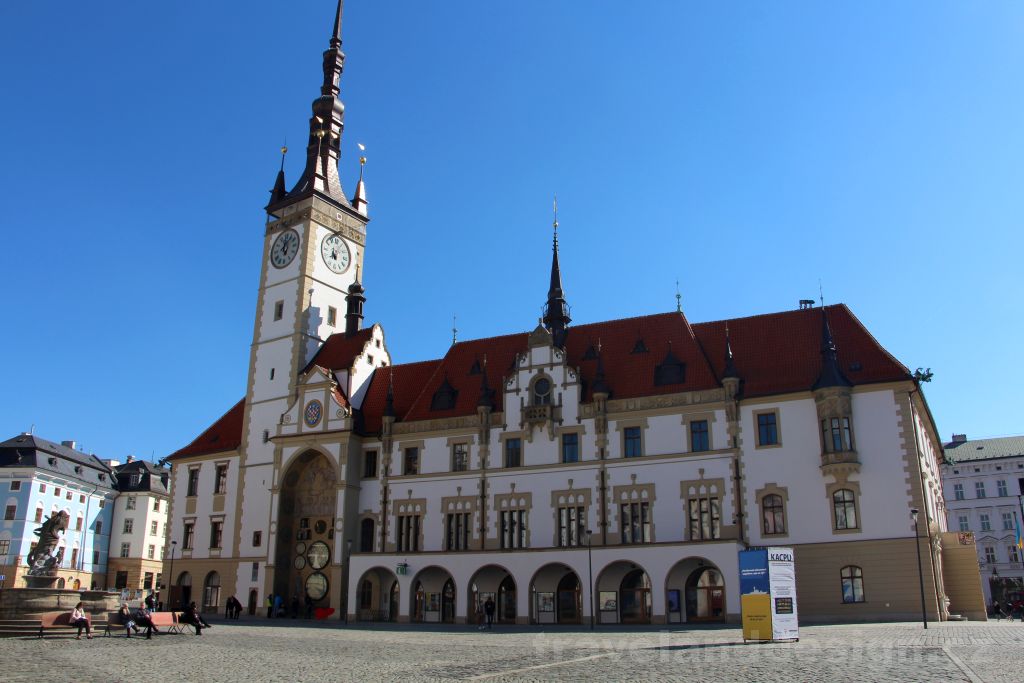
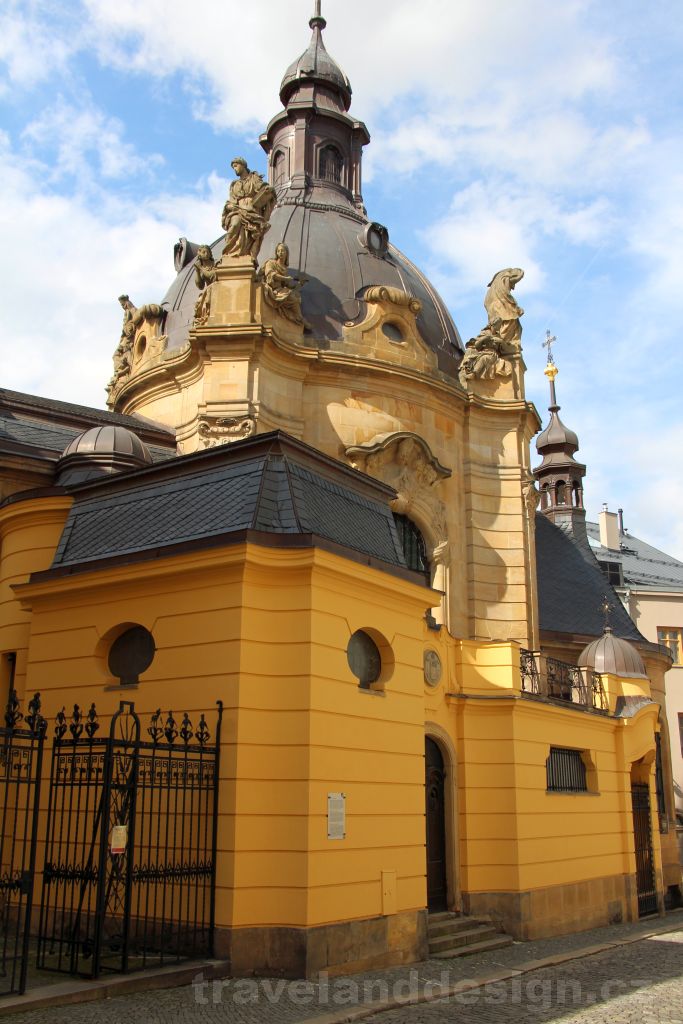
The town’s secular character is epitomised above all by its two spacious squares, named Dolní (Lower) square and Horní (Upper) square according to their location. The larger and more imposing of the two is Upper square, at the centre of which stands the originally gothic town hall dating from 1401, which underwent substantial reconstruction in the renaissance style during the sixteenth century. On its southern side, a late-gothic oriel window with the Chapel of St Jerome has been preserved, and the town hall’s elongated façade is adorned with an astronomical clock. It was first put into operation here as early as the end of the fifteenth century, and apart from Prague, it is found to this day only in Olomouc, although it has been substantially modernised with mosaics by Karel Svolinský. However, the most valuable monument on Upper Square is the baroque Holy Trinity Column by local native Václav Render, which was completed in 1754 and consecrated that same year in the presence of Empress Maria Theresa herself. It is the largest baroque sculptural group in the country, with a chapel hidden within its structure. The structure stands 35 metres tall and, due to its significance, is protected by its inclusion on the UNESCO World Heritage List.
Lower Square formerly served as a market place and, like the neighbouring Upper Square, is surrounded mainly by the stately façades of aristocratic palaces and town houses, primarily from the renaissance period. The most beautiful building is the 16th-century Hauenschild Palace, where Leopold Mozart and his gifted son Wolfgang Amadeus occasionally stayed. Also preserved here are the former butcher’s shops and the early Baroque complex of the 17th-century Capuchin monastery.
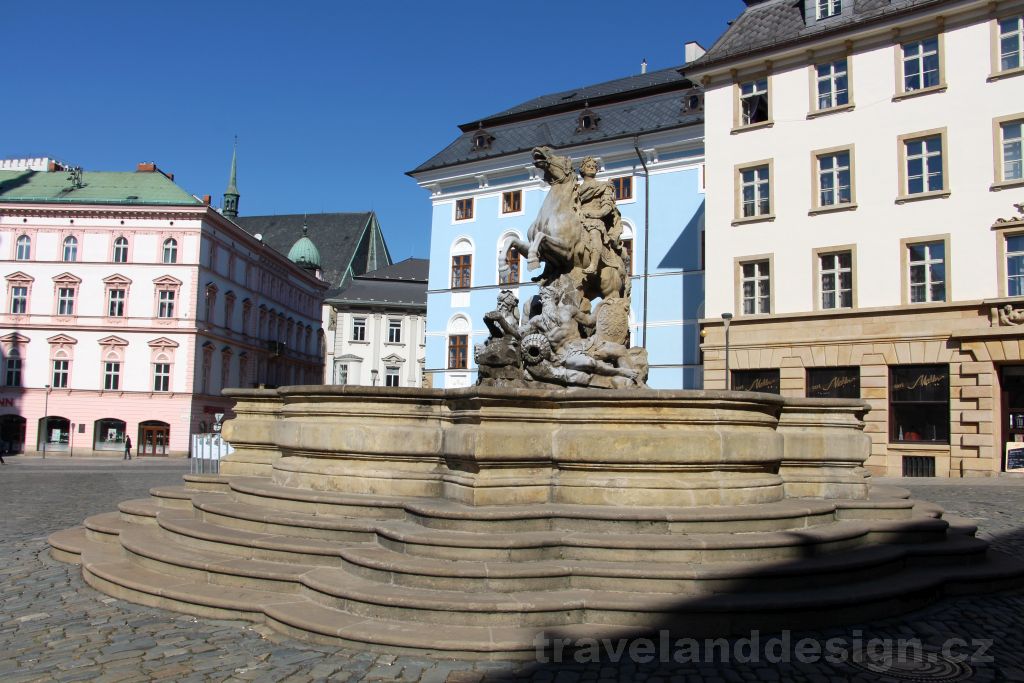
Olomouc is also a city of fountains, which are scattered throughout the historic city centre. On Upper Square, there are two striking fountains – the Hercules Fountain from 1688 and the later Caesar Fountain with an equestrian statue of the emperor from 1725. Lower square is adorned by the Neptune Fountain from 1683, which is the oldest in Olomouc. All the other fountains date from the 18th century onwards, with the Mercury and Jupiter fountains, as well as the Triton Fountain on Square of the Republic, standing out in particular.
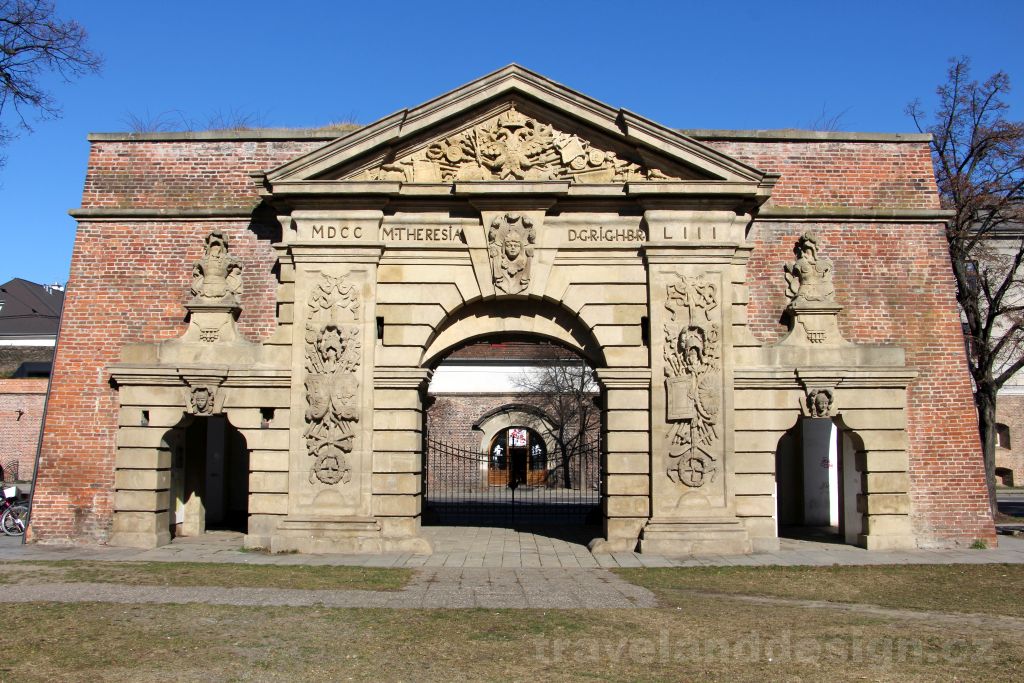
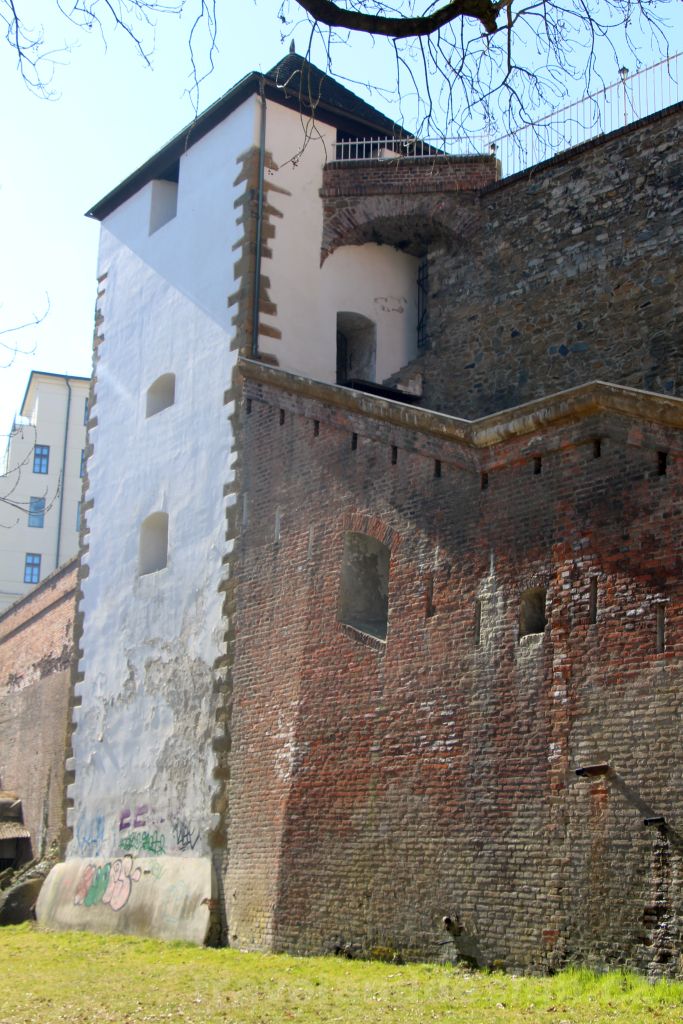
The remains of the city’s gothic fortifications, including the walled-up Jewish Gate, are also impressive, but it is the remarkably well-preserved sections of the former Baroque citadel of Olomouc that are particularly striking for their grandeur. These include, in particular, the Locatelli Bastion with its cavalier, the Water Barracks with their casemates, the Theresian Gate dating from 1752, the remains of the Litovel Gate, and the Crown Fortlet with its powder magazine. Most of this military architecture is skilfully integrated into the greenery of Olomouc’s parks, which encircle almost the entire historic city centre. Since 1902, these have also been complemented by the botanical garden.
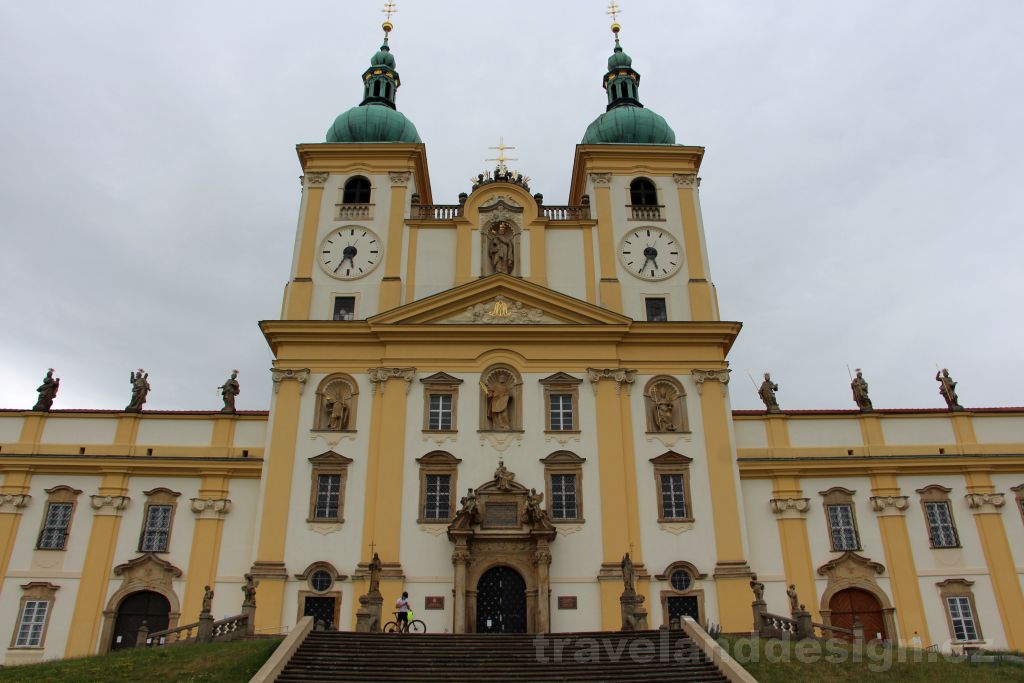
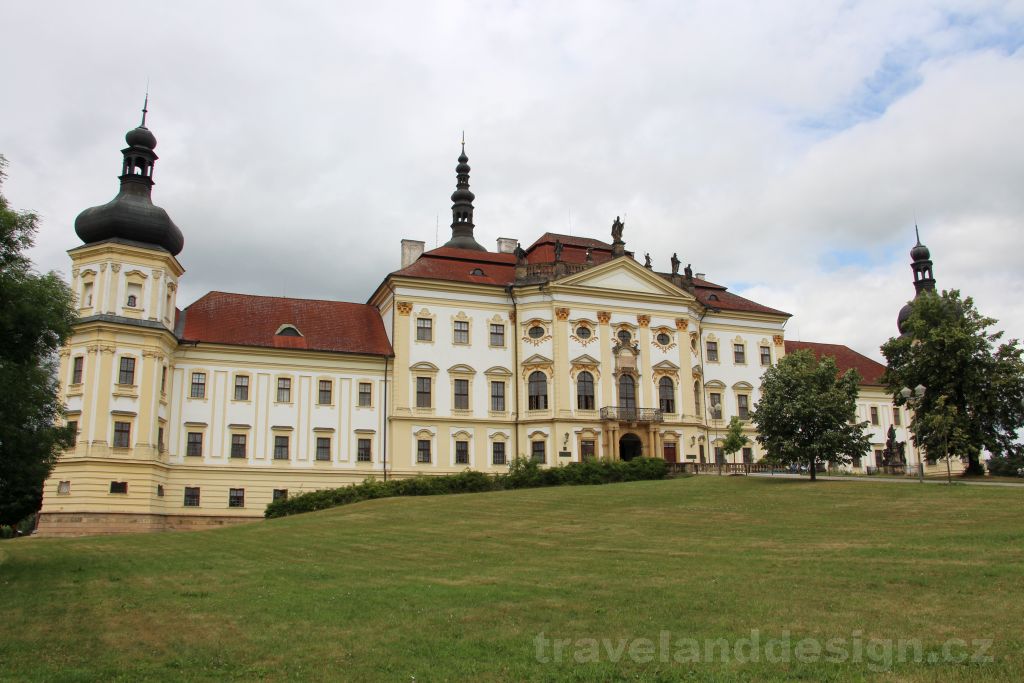
A truly exceptional Baroque complex is the former Premonstratensian monastery of Hradisko, founded as early as 1078 within sight of Václavské návrší, where a military hospital has long been situated. A prominent feature of the landscape is the imposing facade of the pilgrimage church of the Visitation of the Virgin Mary on Svatý Kopeček, dating from the second half of the 17th century. The Olomouc Zoo is situated nearby.
Famous Olomouc natives
Spytihněv II, Prince of Bohemia (*1031)
Zdeněk Fierlinger, politician (*1891)
Eliška Junková, racing driver (*1900)
Evžen Rošický, athlete (*1914)
Karel Brückner, footballer and manager (*1936)
Pavel Dostál, politician (*1943)
Petr Novotný, presenter and entertainer (*1947)
Jiří Paroubek, politician and former Prime Minister (*1952)
Ivan Langer, politician (*1967)
Lubomír Metnar, politician (*1967)
Marek Jarolím, footballer (*1984)
Karlos Vémola, wrestler (*1985)
Aleš Loprais, racing driver (*1988)
Karolína Muchová, tennis player (*1996)
Famous who stayed in the city
Charles IV of Luxembourg, King of Bohemia and Holy Roman Emperor
Wolfgang Amadeus Mozart, composer
Ferdinand V the Benevolent, Emperor of Austria
Franz Joseph I, Emperor of Austria
Gustav Mahler, composer
Gregor Mendel, geneticist
Karel Sabina, writer