Doksy
(the royal town since 1264)
5,100 inhabitants
Liberec Region, Česká Lípa District
Historical milestones
1264: On the site of an older settlement, a new royal town was founded by decree of King Přemysl Otakar II, with the assistance of German colonists led by Konrad and Hartvík of Kravaře.
1293: Doksy is first mentioned in documentary sources issued by King Wenceslas II of the Přemyslid dynasty as an important guard post on the trade route from Prague to Zittau.
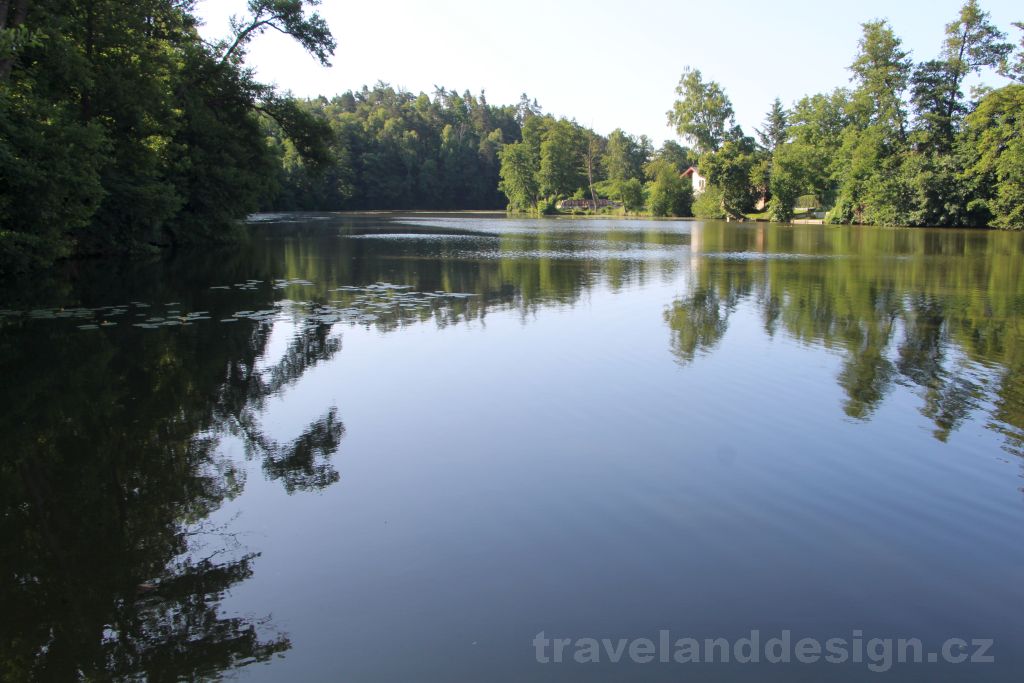
1367: King Charles IV of Luxembourg founded Velký rybník (Great Pond), later known as Máchovo jezero (Lake Mácha), near the town.
1426: Doksy, which at that time had been pledged by Sigismund of Luxembourg to the noble family Berka of Dubá, was sacked by the Hussites.
1588: Doksy lost its status as a royal town and became an integral part of the estate of Jan of Vartemberk. A new renaissance chateau with extensive park grounds was built in the town to serve as the seat of this estate.
1622: The local estate was confiscated by Emperor Ferdinand II of Habsburg from Václav Berka of Dubá and transferred to Albrecht von Wallenstein as part of his Duchy of Friedland.
1634: Following Wallenstein’s assassination in Cheb, the ducal estates were subject to confiscation and the noble Irish Butler family moved here.
1680: The Wallensteins ruled Doksy until 1945.
1750: The town was struck by a major fire, which completely destroyed most of it.
1800: The miller František Wünsche built a calico mill on Tovární Hill, along with a workers’ quarter known as Malá strana.
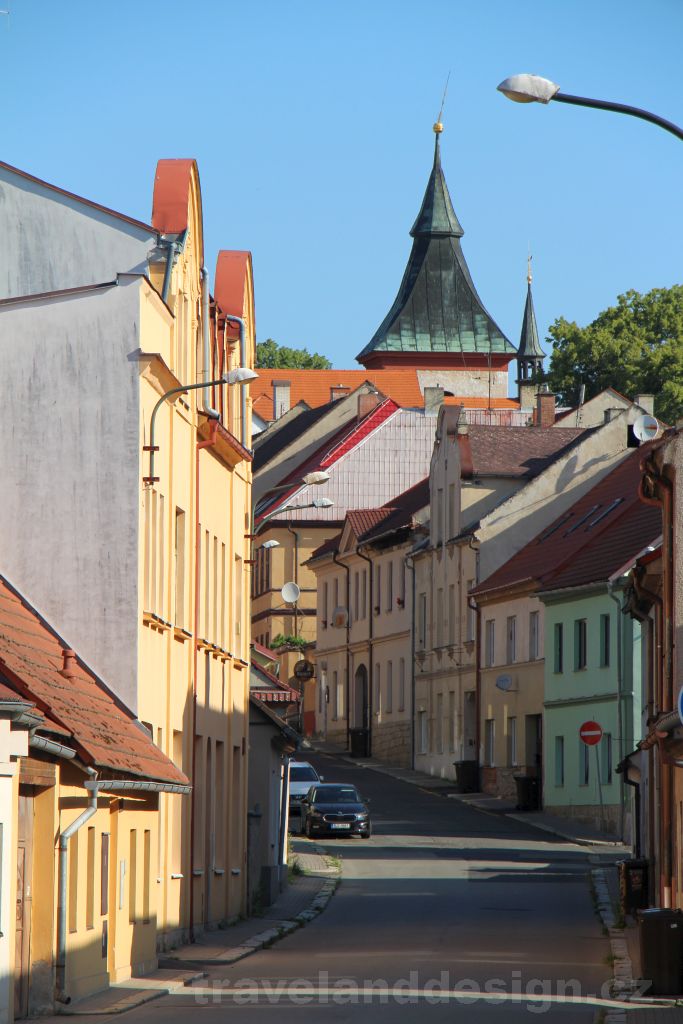
1842: Another fire reduced a third of the town’s historic centre to desolate ruins. However, Doksy was subsequently rebuilt in a uniform classicist style.
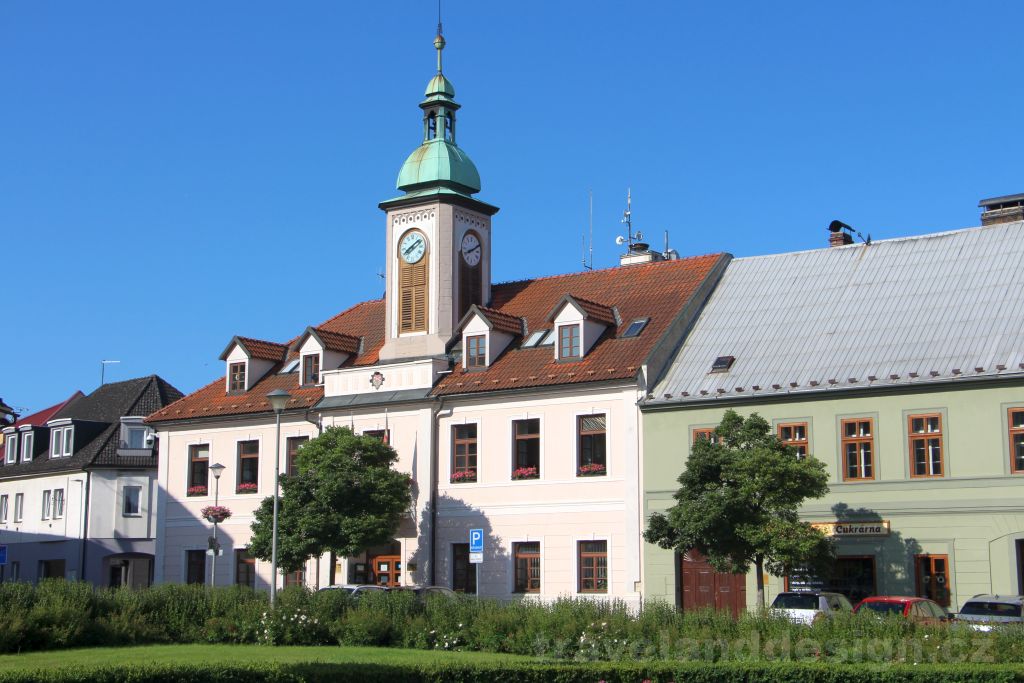
1855: The ruling Walenstein family donated a newly built brick town hall to the town, on the site of its burnt-down predecessor.
1867: The town was connected to the railway network.
1928: The first public beach was opened on Lake Mácha.
1938–1945: Doksy was incorporated into the German Third Reich.
1945: Following the end of the Second World War, the local German population was expelled.
Interesting facts about the town
The town’s rather unusual name is most likely derived from the English word ‘dox’, meaning ‘dark’. This was originally the name of the local stream, which flowed through the dark and damp peat bogs in the area. In German, however, the town was called Hirschberg, meaning ‘Deer Mountain’. The local German population thus named the town after the stag featured in its coat of arms. The main reason the Bohemian kings founded this town was, above all, the ever-growing power of the prominent local noble family, clan of Markvartic, particularly the Vartemberks.
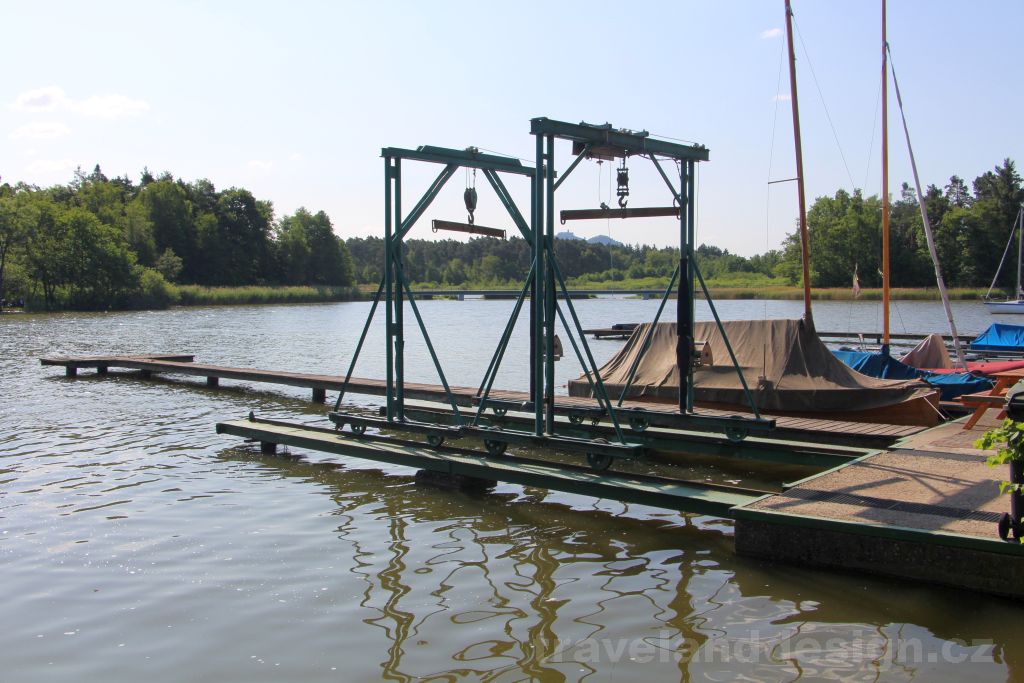
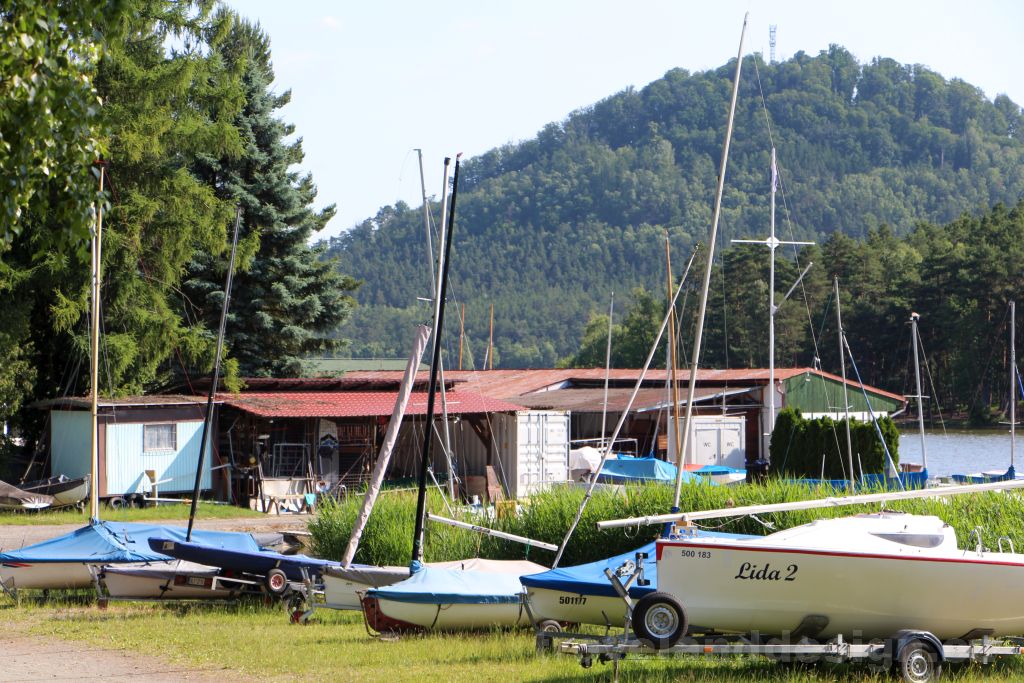
For practically its entire existence, the town has benefited from its proximity to Lake Mácha, thanks to which it ranks among renowned holiday resorts. Covering an impressive 350 hectares, it is the sixth-largest pond in the Czech Republic. It has always been used for summer swimming by both children and adults, and regular motorboat services have operated on the lake since the 1920s. A number of interesting buildings, including hotels and marinas, have gradually sprung up in the surrounding area. In the town itself, several stately summer villas were built, and there were also municipal spas and a number of pubs. Thanks in part to its exceptional reputation, Doksy was known as the ‘North Bohemian Riviera’ during the First Czechoslovak Republic.
Doksy is known as the town of Třeskoprsky from the cult Czech comic strip called Čtyřlístek, created by Jaroslav Němeček. He also renamed Lake Mácha as Blaťák Pond in the comic. An interactive exhibition dedicated to its characters is now housed in the attic of the chateau of Doksy.
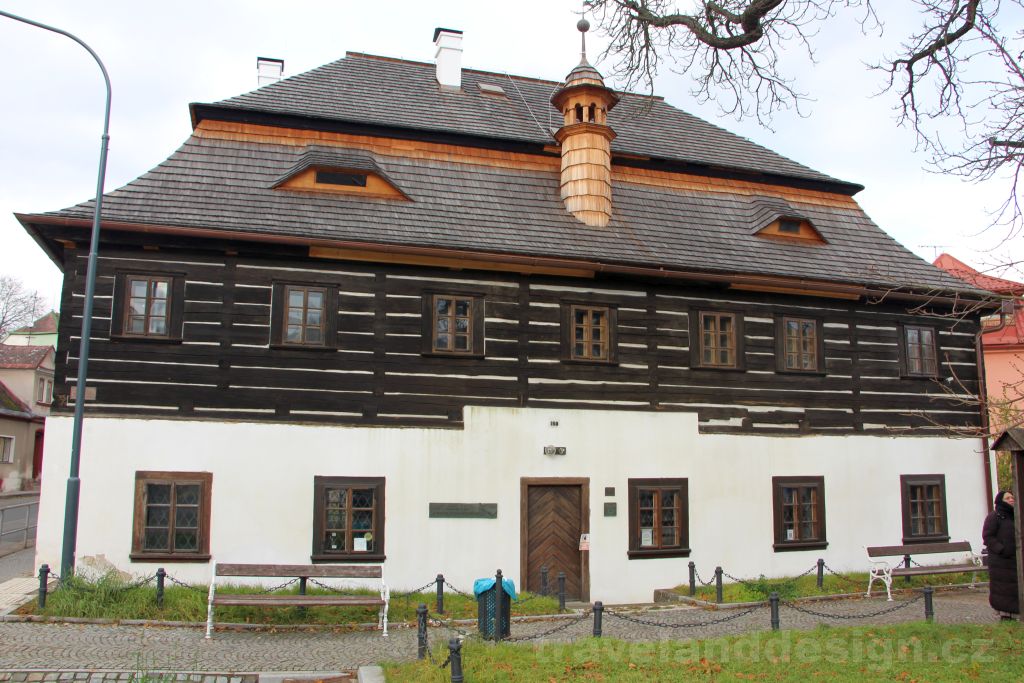
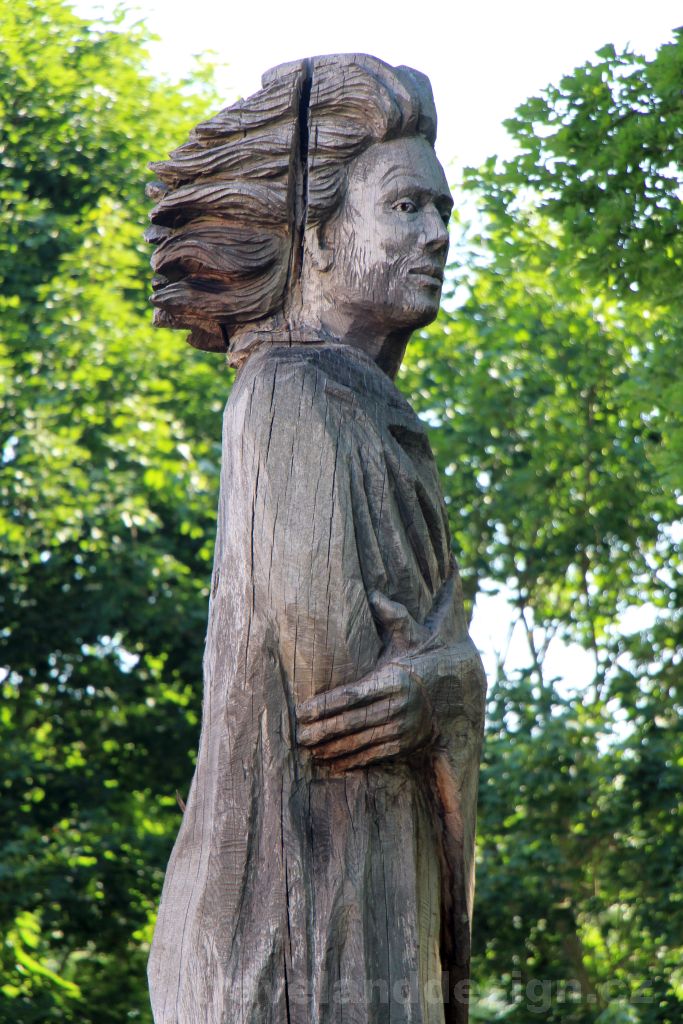
In the nineteenth century, the town was linked to the giant of Czech poetry, Karel Hynek Mácha. His most famous work, Máj was inspired primarily by the local landscape and legends of a patricide within the wealthy Schifner family, as evidenced by the baroque statue of St Prokop from 1771, which now stands in front of the Mácha memorial. He often stayed here thanks to friends he had made whilst studying at the Faculty of Philosophy in Prague. In his day, thanks to the teacher Jan Karel Kramerius, the National Revival flourished in this Germanised town, and the newspaper Vlastenecké listy was published here. Today, the significance of Mácha’s time here is commemorated by his memorial, which is housed in the timber-framed Hospitálek building. Not far from it, it is well worth visiting Mácha Park, which features a number of modern sculptures and quotations from his greatest romantic work. On the shore of Lake Mácha lies Jarmila’s Rock, from which Mácha’s heroine took her own life.
Top tourist attractions
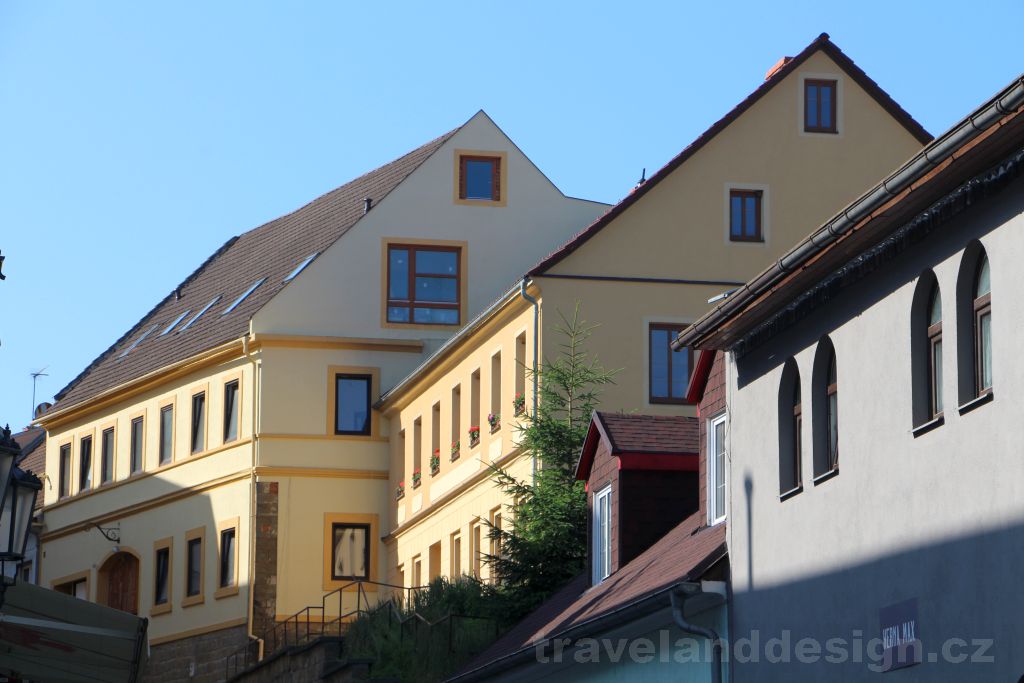
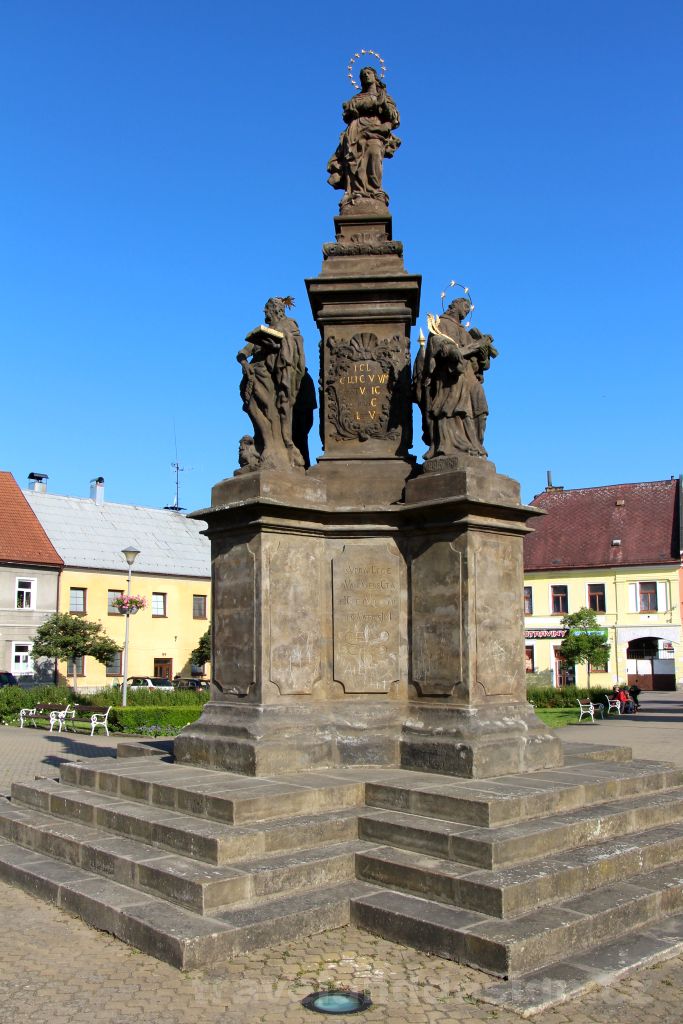
A stroll through the historic centre of Doksy is particularly captivating due to the relatively uniform classicist character of its regular streets and the central Republic Square, featuring the town hall with its clock tower dating from 1855 and the interesting Marian Column from 1685, designed by the architect Bernard Canevalle.
The founding era of this royal town is commemorated above all by the originally gothic church of St Bartholomew. However, it has been preserved in its early baroque form, designed by the Italian architect Bernard Canevalle in 1638, and in the first half of the 18th century it was further enhanced by two high baroque chapels, those of St Barbara and the Holy Cross.
A remarkable timber-framed building, however, is the baroque structure known as the ‘Hospitálek’, dating from 1669, with a brick-built ground floor, which today houses the Karel Hynek Mácha Memorial. Originally, Marie Františka of Vrtba had a small hospital built here. Later, the building served as an orphanage and almshouse. As well as avoiding major alterations, it also escaped the two great fires that ravaged the town centre, as, for obvious reasons, it was not built right in the heart of the town. This is one of the reasons why it has survived as the oldest timber-framed building in the town.
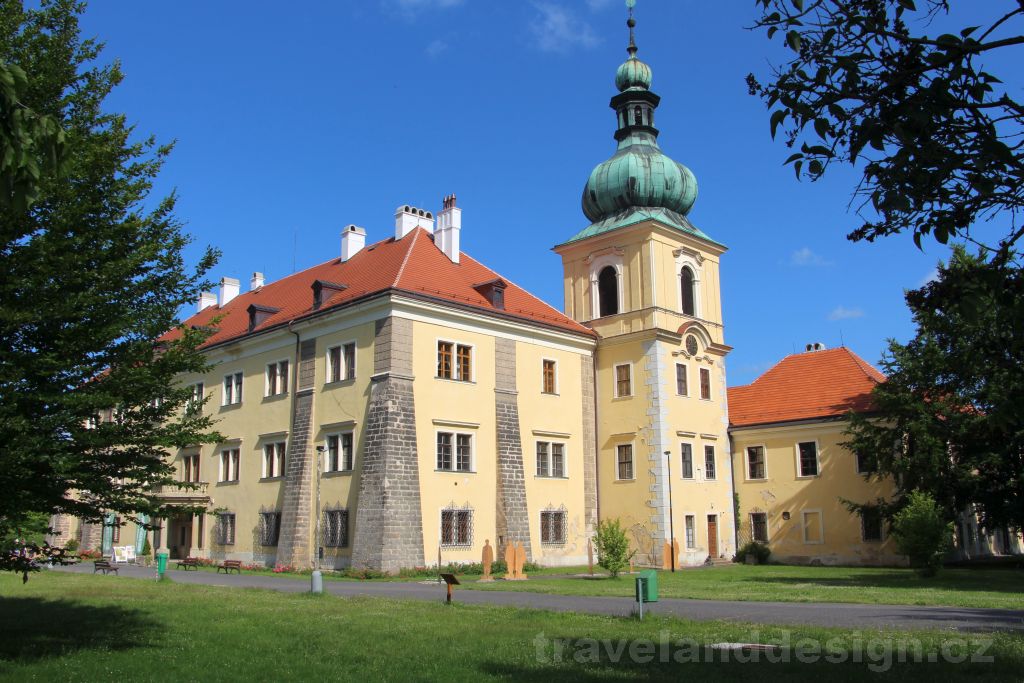
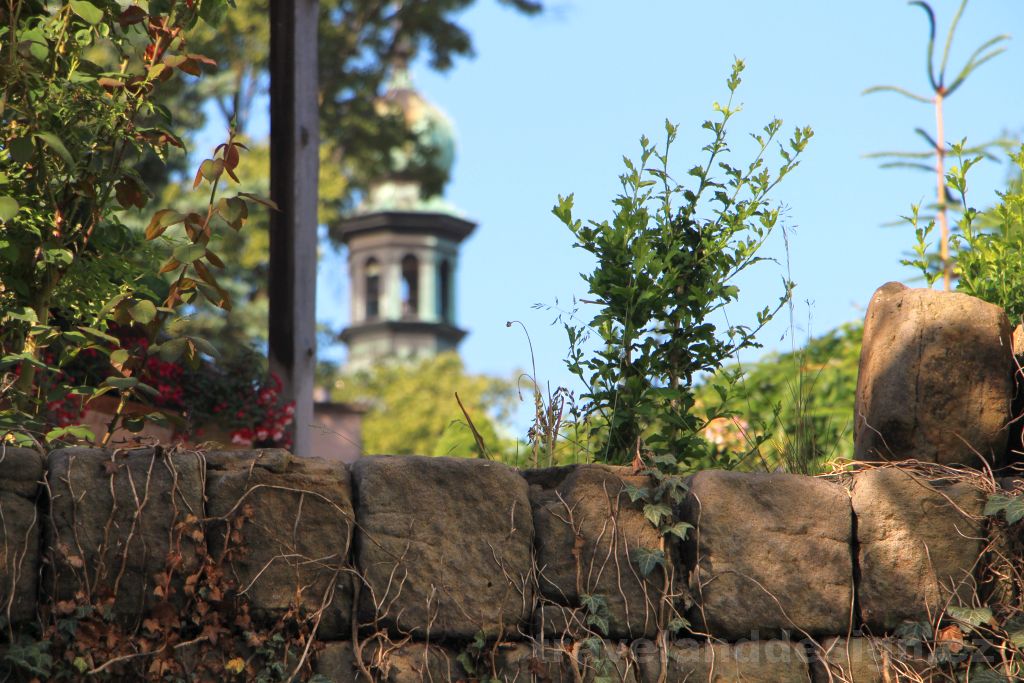
In the lower part of the historic town centre lies the extensive grounds of what was originally the renaissance chateau of Jan of Vartemberk. Its vast English-style park is surrounded by a high wall of sandstone blocks. The imposing three-winged building with a tall prismatic tower dominates the town and is open to the public. It houses not only historical exhibitions but also a toy museum and a museum dedicated to the ‘Čtyřlístek’ comic strip. Although it was remodelled in the baroque style and then again in the nineteenth century, it retains the character of the former main residence of the counts of Walenstein.
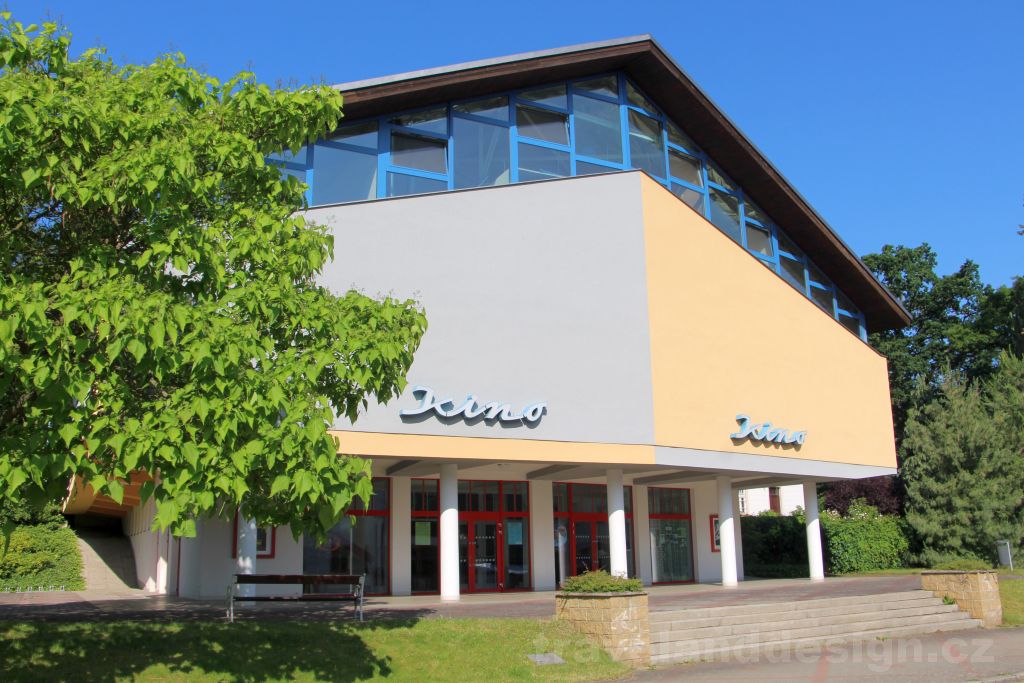
The Máj cinema building is an exceptionally interesting architectural achievement; it was built between 1957 and 1963 in the brutalist style to a design by the architect Karel Hubáček. He is also the architect behind the Ještěd television tower.
Famous figures who lived in the town
Karel Hynek Mácha, poet
Jaroslav Němeček, illustrator and creator of the magazine Čtyřlístek