Hradec Králové
(the royal city since 1225, the royal dowry city since the beginning of the 14th century)
94,000 inhabitants
Hradec Králové Region, Hradec Králové District
Historical milestones
995: After the slaughter of the Slavnikovitz’ noble family, the Přemyslids founded a fortress on the site of the town as the seat of their administration in eastern Bohemia. The castle was the seat of power in Eastern Bohemia.
1225: King Přemysl Otakar I made Hradec a royal town and the Přemyslid kings often stayed at the castle.
The beginning of the 14th century: During the reign of Luxembourgs, Queen Eliška Rejčka and her large court resided in the castle in 1308‒18. Since then the town has been called Hradec Králové.
1339: The town suffered a catastrophic fire, after which its Gothic reconstruction and the construction of new brick fortifications took place.
June 1420: The town was conquered by the Hussites, who destroyed the royal castle. They made the town the centre of the Caliphs, who resisted Emperor Sigismund of Luxembourg until 1437. From there, the priest Ambrož led the local orphans on expeditions to which many monasteries in the area fell victim.
1424: Jan Žižka of Trocnov, the late Hussite governor, was buried in the Hradec Church of the Holy Spirit.
1547: Hradec Králové took part in the first Estates uprising against Emperor Ferdinand I of Habsburg. After his defeat, the town was punished by the installation of a royal saga of the town, confiscation of land property and temporary loss of some town privileges (until 1562).
1586: The town was hit by a devastating fire. After it died down, a Renaissance restoration took place under the mayor Martin Cejp of Peclinovec.
1599: The town’s population was decimated by a plague epidemic, to which 4,000 people, including the mayor, fell victim.
1639: Hradec Králové was conquered by the Swedish army, which fortified itself in the town. The town was then given mud bastions, but almost depopulated. After their departure, the Baroque renewal of the city began, thanks mainly to the Jesuits.
1664: The Hradec Králové Bishopry was founded, and the Church of the Holy Spirit became a cathedral.
1741 and 1744: During the War of the Austrian Succession, the town was twice conquered by the Prussians.
1745: The construction of modern baroque fortifications began.
1762: Another disaster for the town was the Cossack raid and the subsequent fire, to which 200 houses fell victim.
1765: Emperor Joseph II decided to build a baroque citadel in Hradec Králové as the main stronghold in eastern Bohemia against Prussia. Hradec Králové became a military garrison town.
1789: At the cost of dismantling the Rožmberk hill, demolishing all the suburbs and regulating the flow of both rivers, a massive star-shaped Hradec Králové fortress with eight bastions and extended artillery positions, the so-called flotsam was completed.
1808: Jan Hostivít Pospíšil founded a printing house, publishing house and bookshop in the town. The magazine Květy (Flowers) began to be published here. The town became the second most important centre of the Czech national revival after Prague. F. Škroup, J. K. Tyl. K. J. Erben or V. K. Klicpera.
1864: The world-famous Petrof piano factory was founded in the Moravian suburb.
1866: In the Prussian-Austrian War, the Hradec Králové fortress did not make any impact, and the Prussian victors bypassed it without a fight after the crushing Austrian defeat in the battle of nearby Sadová. The retreating Austrian soldiers drowned in the moats of the fortress, which remained closed.
1884: It was decided to dismantle the Hradec Králové fortress, and the enlightened town council announced a competition for a regulation plan for the town.
1893: After the city bought the fort’s land, the walls were quickly demolished, which lasted until 1914.
1926: Gocar’s plan for the development of the city was designed and subsequently implemented.
1962: The historic core of the town was declared a municipal conservation area.
1992: The more modern parts of the city became an urban conservation area.
Interesting facts about the city
The name of the town comes from the fortified hill of the former Přemyslid stronghold (hradec as a fenced hill) and the attribute derived from the Czech queens who resided there („královen“ – queens’).
Hradec Králové is called the Salon of the Republic for its progressive architecture and perfect urbanization plan from the turn of the 19th and 20th centuries. The work of the then long-standing mayor František Ulrich (1895-1929), who invited the famous architects Jan Kotera and Josef Gočár to the city, was crucial. The town thus serves as a kind of model of modern architecture.
The town lies at the confluence of the Elbe and Orlice rivers. A unique monument on the Elbe is the Art Nouveau Elbe Power Station from 1909-14 with a movable segmental weir called Hučák. Two wheeled excursion steamboats also run along the Elbe.
Allegedly, under the historic core of the town, extensive cellars with a secret underground passage to the Abbey Monastery have been preserved, in which local citizens are said to have hidden their valuables due to frequent sieges.
In the Jirásek Gardens, the former general’s garden, we can find the wooden church of St. Nicholas, which was transported here in 1935 from the eastern Slovak village of Malá Polana. In the park there are some remains of the Baroque Hradec Králové fortress, and you can walk through it past the flower parterres to the confluence of the Elbe and Orlice rivers.
Worth a visit is the unique Municipal Baths from 1931-3 by architect Oldřich Liska, which were equipped with a sinking bottom and artificial breakwater for their time, still functional today.
The area of the former military airfield serves the international rock music festival Rock for People. However, in the city one can also visit a giant aquarium with 40 species of South American fish from the Amazon rainforest.
Culture is mainly served by the local Klicper Theatre and the world-famous puppet theatre Drak. The oldest and still functioning planetarium in the Czech Republic, dating back to 1957, has been digitized in the observatory.
Hradec Králové is a statutory and regional city and is headed by a mayor. It is also the seat of the university.
The biggest tourist magnets
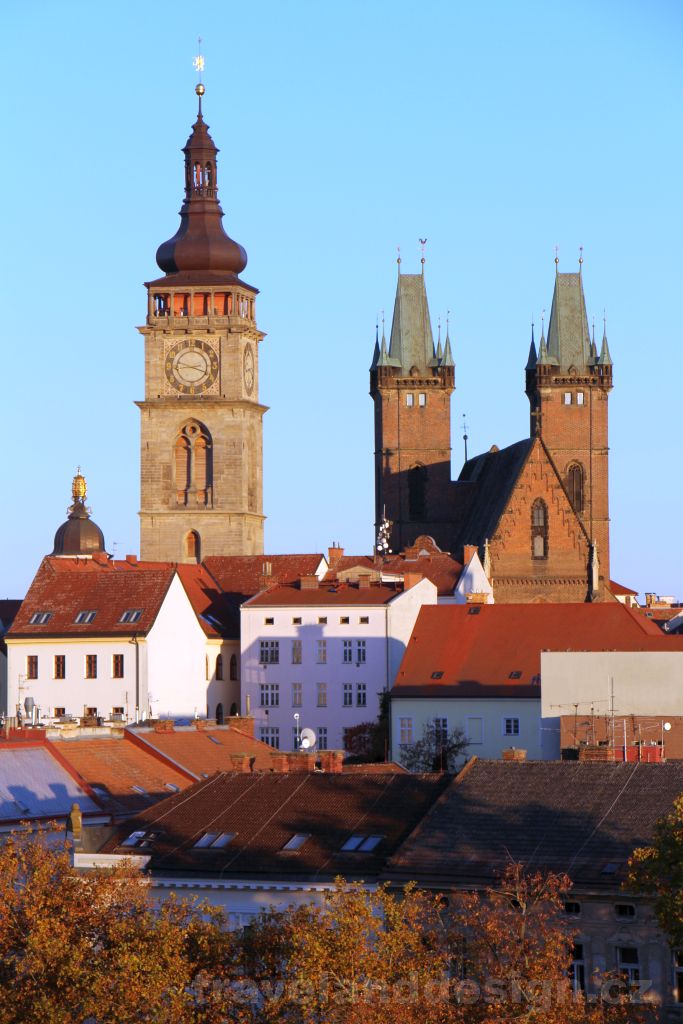
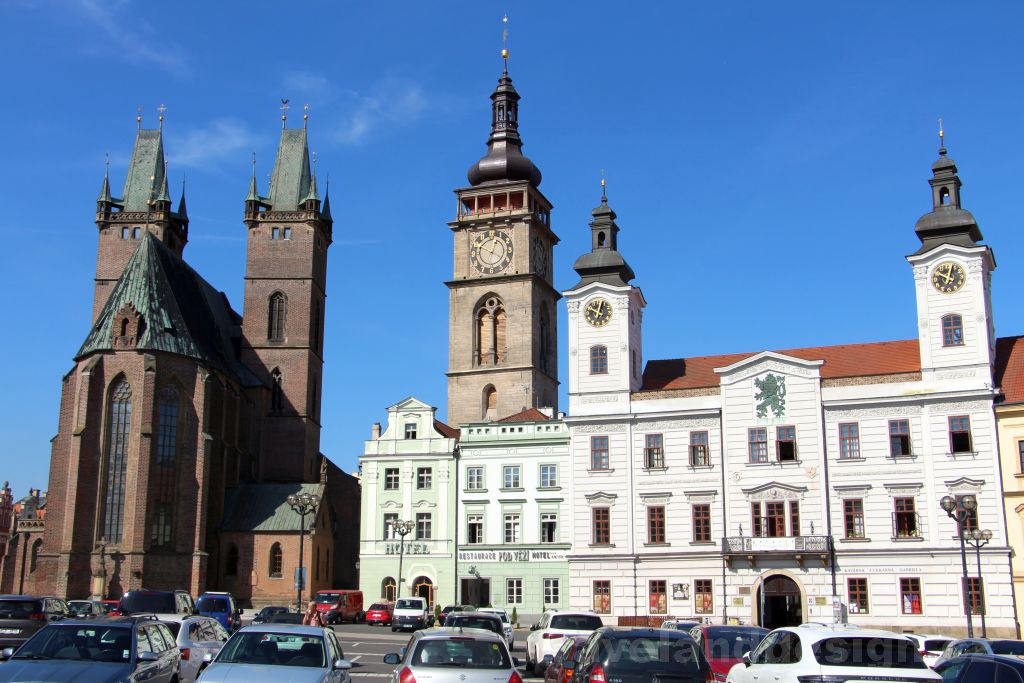
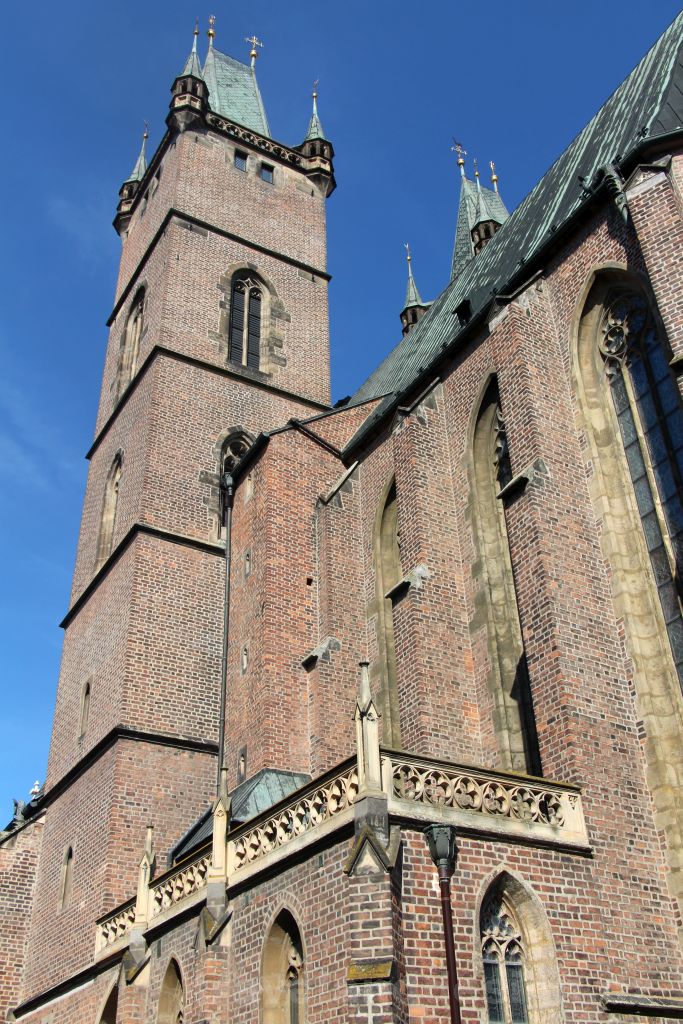
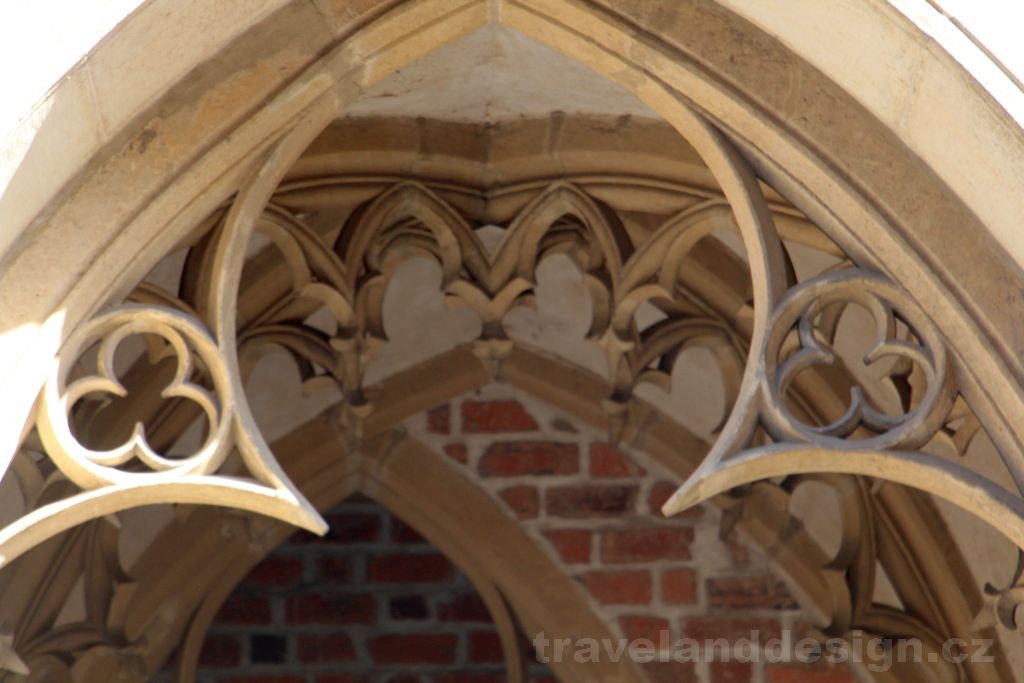
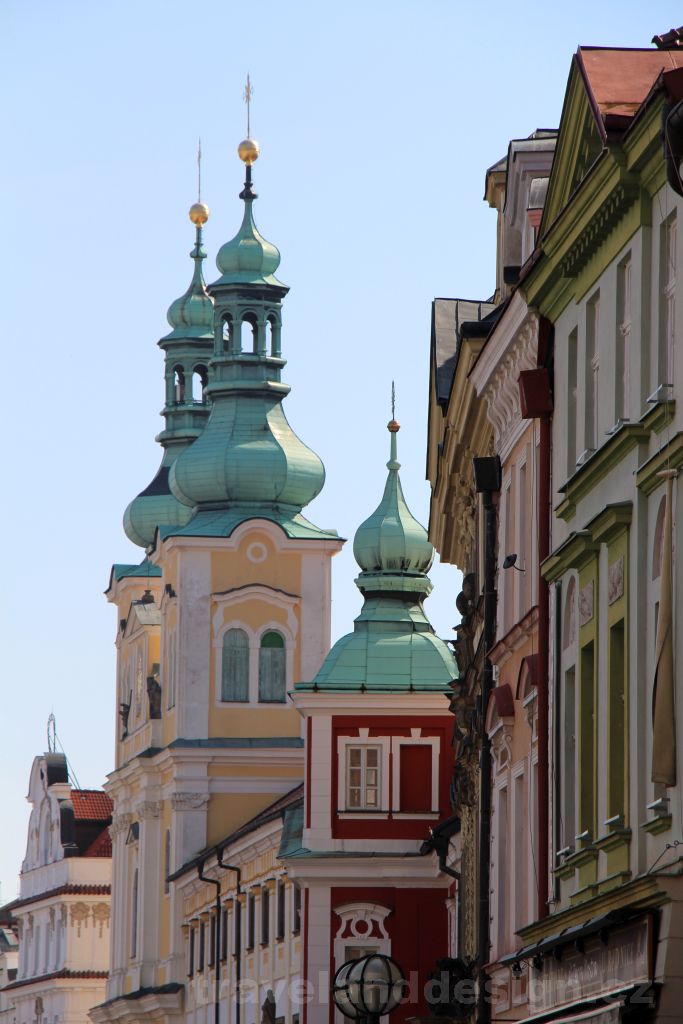
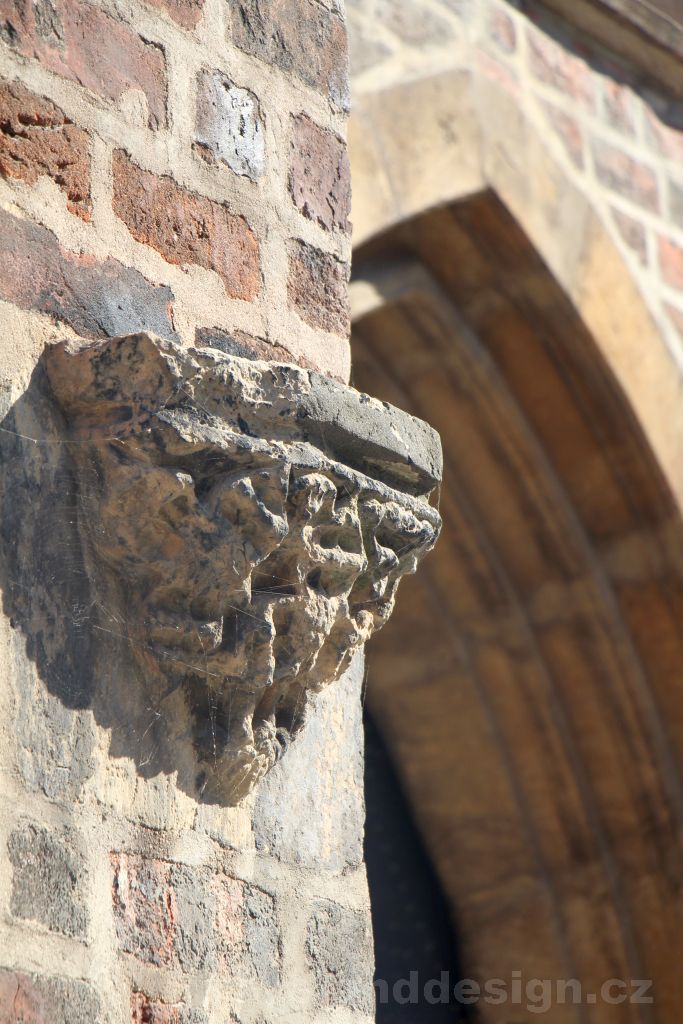
The sacred centre of the city centre is the Gothic brick Church of the Holy Spirit from the early 14th century, which has a pair of 40-metre high prismatic towers. It was created as an echo of North German sacred brick architecture and was re-corrected at the end of the 19th century by the architect František Schmoranz. The Church of the Assumption, on the other hand, is a superb baroque building from 1654-66, designed by the famous Italian architect Carlo Lurago; the adjacent Jesuit college is about half a century younger.
The dominant feature of the town, however, is the 72-metre high White Tower. It was built as a bell tower of light sandstone, from which it got its name, in 1574-89, and is therefore a Renaissance building. The third largest bell in Bohemia – Augustin – is suspended there. Adjacent to it is the ancient chapel of St. Clement, which has stood here since its restoration in 1339, but after 1714 it was replaced by a Baroque building by the brilliant architect Jan Blažej Santini-Aichl. The papal tiara sits atop it.
The building of the Jesuit seminary from 1709-14 incorporated the last remains of the former castle of the Bohemian queens, from which the Renaissance-style building of the former purgatory from the second half of the 16th century can be seen from the outside.
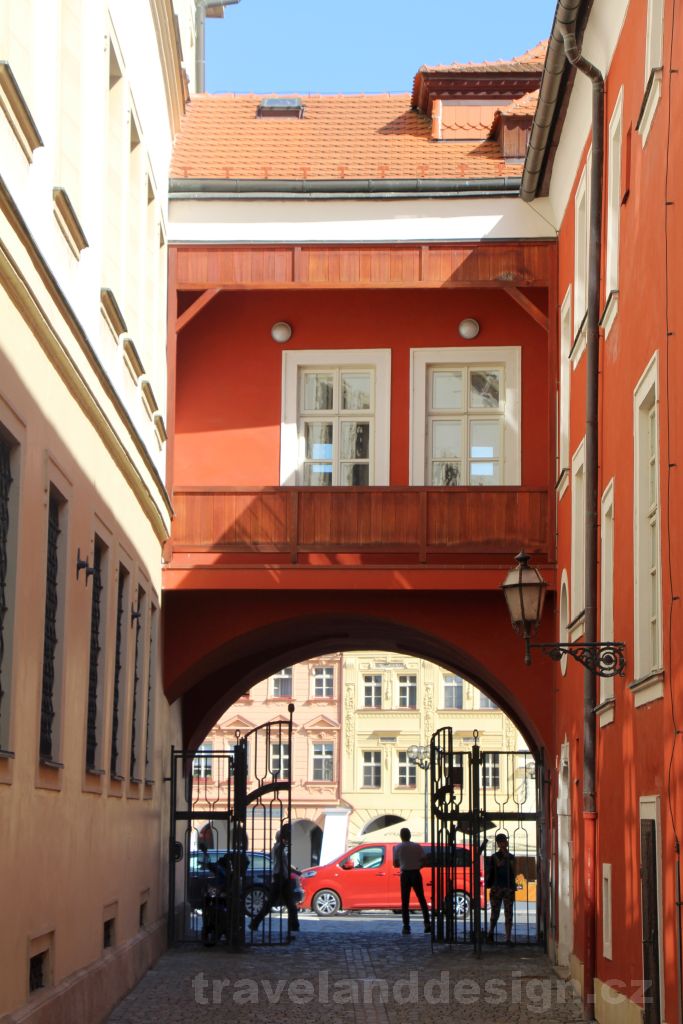
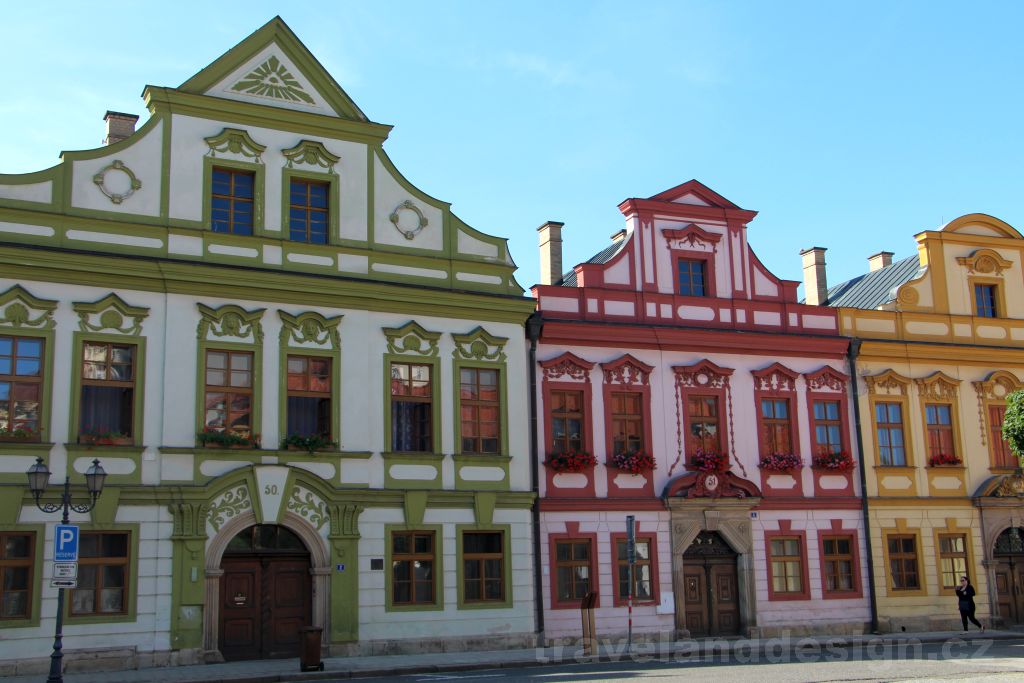
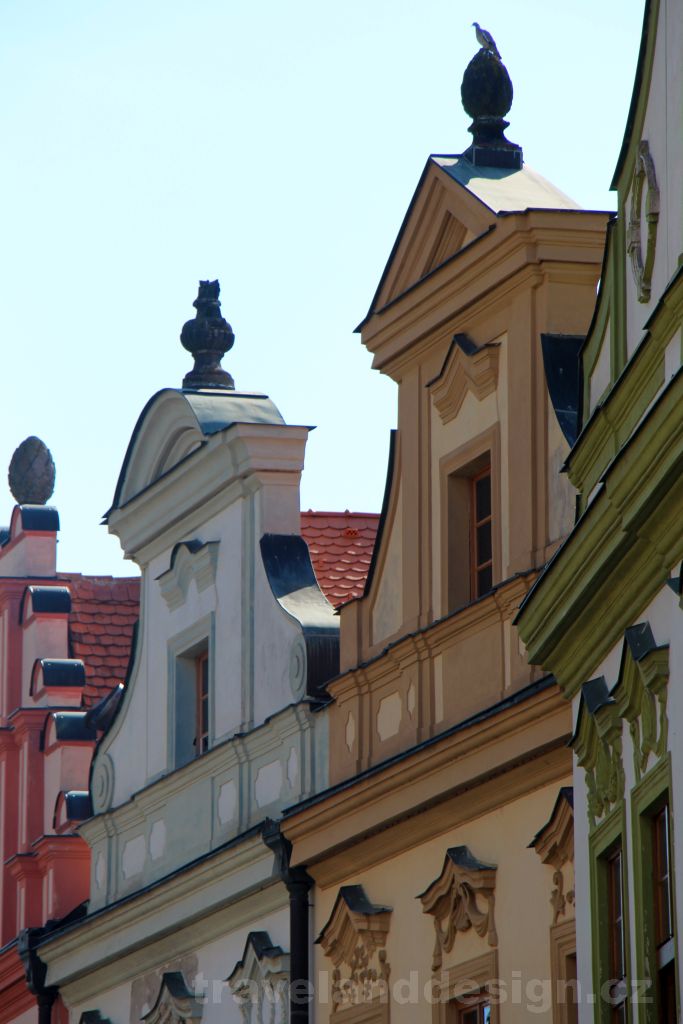
Only the cellars of the original Gothic town hall remain. The present building dates from 1540-88. However, it did not acquire its current pseudo-Renaissance appearance until 1850-2. It dominates the Great Square, which is connected to a smaller counterpart called the Small Square. While in the middle of the Great Square stands the 20-metre high baroque Marian Column with a row of statues (1717), in the middle of the Small Square you will find a fountain with a statue of St. John of Nepomuk from 1772. Both squares are surrounded by valuable houses with gothic, renaissance and baroque facades. Particularly notable is the baroque house U Špuláků with a façade from 1750, which is the only one with a prismatic tower jutting out into the Great Square. This house was also the birthplace of the progressive mayor František Ulrich, to whom the city owes the removal of the fortress and modern urbanism. Next door is the baroque Bishop’s Residence from 1715-18, which houses the Bishop of Hradec Kralove. It is an outstanding work of the famous Baroque architect Jan Blazej Santini-Aichl in the rear wing and in the superbly composed front part the handwriting of Italian Giovanni Battista Alliprandi can be discerned.
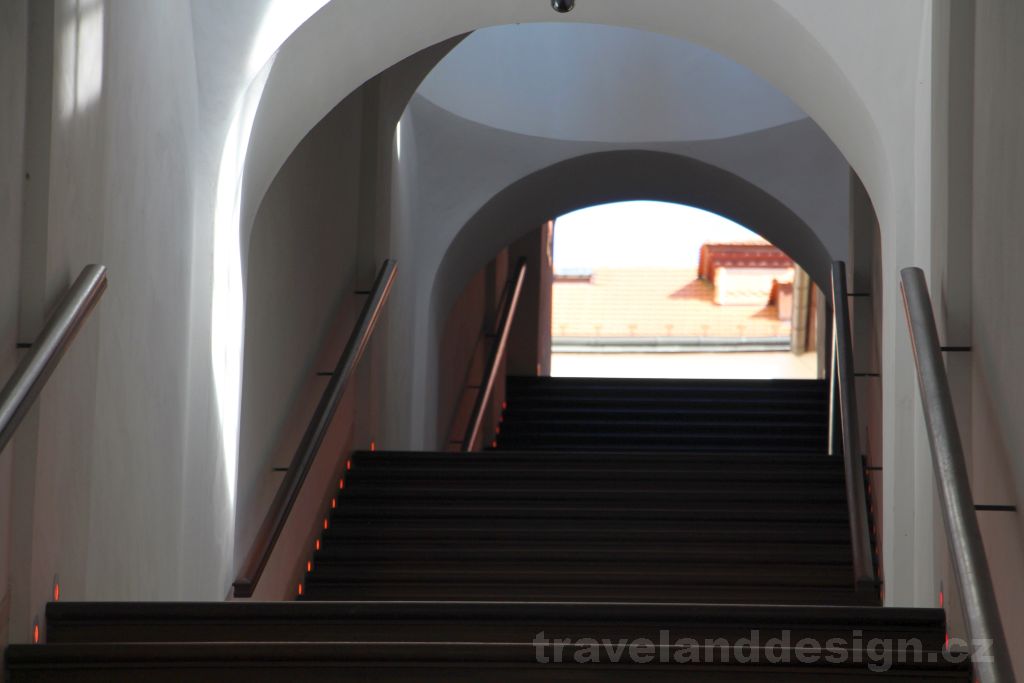
There is not much preserved from the times of the bastion fortress in the town, mainly several barracks for infantry, cavalry, but also artillery, small remains of the bastion walls, the inner fortification of the town core with the covered staircase Bono publico from 1810 and the Brewery and Pajkrova float.
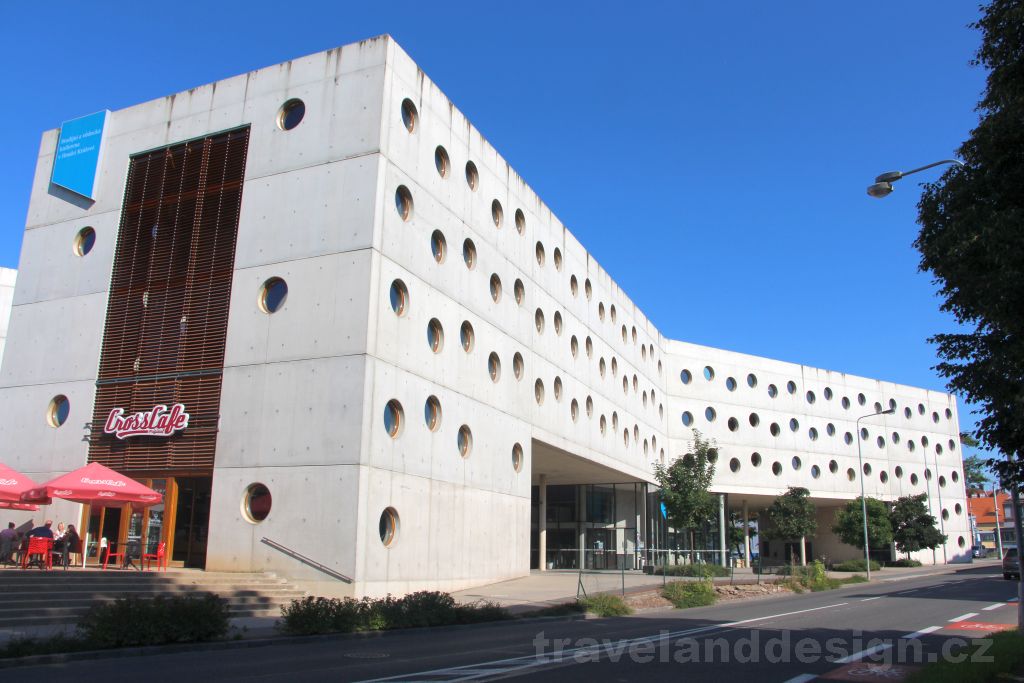
The pearl of modernist architecture, however, is the late Art Nouveau building of the Municipal Museum of History and Industry by Jan Kotěra. It was built in 1909‒12 using traditional burnt bricks and the massive seated sculptures Art and Industry by Stanislav Sucharda, as well as valuable stained glass windows by František Kysela. Jan Kotěra also landscaped the nearby Prague Bridge with its typical kiosks at both ends (1912), designed the Palm Garden of the local Grand Hotel (1911) and the synagogue from 1923, which now houses the State Scientific Library, was also built posthumously in the Oriental style. The Gallery of Modern Art on the Great Square was designed by architect Oskar Polívka in 1911‒12 and the bronze sculptures in the façade were decorated by Ladislav Šaloun.
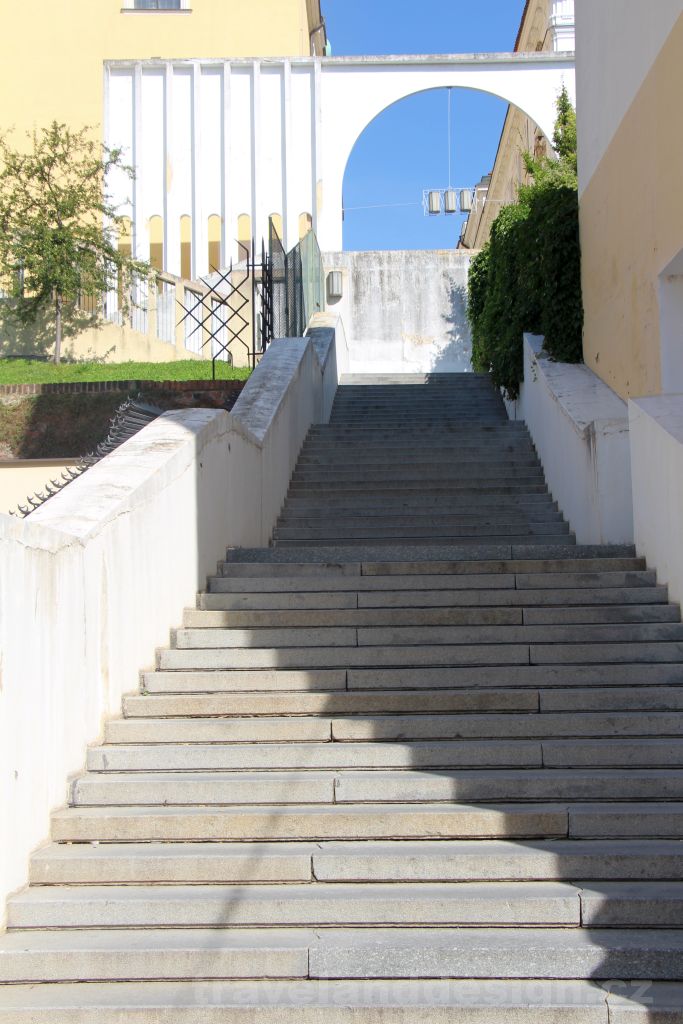
The work of Kotěra’s pupil Josef Gočár in the city is commemorated both by the modernist first edition of Gočár’s Staircase to the Historic Core (1909-10) and by the set of school buildings around the historic core of the city, which he designed using solid brickwork. For these purposes he had plenty of usable bricks from the demolished Hradec Králové fortress. Thus, the building of the Secondary Industrial Engineering School stands by the Orlice River, and by the Elbe a set of buildings starting with the J. K. Tyl Gymnasium (1925‒7) with Štursa’s statue of the Winner on a representative staircase and Gutfreund’s relief of a lion. The Gymnasium is followed by the Masaryk Primary School (1927‒8) and the Ambrose Church (1926‒7). Its other two Constructivist buildings are used by the City Council, the former State Railways Directorate building of 1929‒32 and the District Office building of 1932‒6.
Famous Hradec Králové natives
Cyprián Karásek of Lvovice, astronomer, mathematician and astrologer of Emperor Maximilian I (*1514)
Bohuslav Balbín, historian and writer (*1621)
František Smotlacha, mycologist (*1884)
Jaroslav Durych, poet and playwright (*1886)
Otakar Vávra, director (*1911)
Viktor Fischl, writer (*1912)
Josef Bek, actor (*1918)
Ota Sklenčka, actor (*1919)
Jiřina Švorcová, actress (*1928)
Dominik Duka, Archbishop and Cardinal of Prague (*1943)
Lenka Termerová, actress (*1947)
Ljuba Krbová, actress (*1958)
Zuzana Navarová, singer (*1959)
Jaroslav Svěcený, violinist (*1960)
Martin Zounar, actor (*1967)
Lucie Výborná, moderator (*1969)
Jaroslav Plesl, actor (*1974)
Jan Dolanský, actor (*1978)
Kateřina Siniaková, tennis player (*1996)
The famous who stayed in the city
Václav Kliment Klicpera, playwright
Josef Kajetán Tyl, writer and playwright
František Škroup, author of the Czech national anthem
Karel Jaromír Erben, poet
Alois Jirásek, writer
Karel Čapek, writer