Horní Blatná
(the royal mining town since 1548)
365 inhabitants
Karlovy Vary Region, Karlovy Vary District
Historical milestones
1529: Saxon miners from Schneeberg began mining tin and silver in the vicinity of the later founded town.
1532: The Saxon Elector John Frederick founded the mining town of Platna (Platten), later called Blatna.
1547: After the lost Schmalkaldic War, the Elector of Saxony cedes Horní Blatna to Emperor Ferdinand I of Habsburg.
1548: Horní Blatná was made a royal mining town by Emperor Ferdinand I of Habsburg. At that time there were 40 so-called forest tin mines in the vicinity of the town.
1585: The decline of mining initiated a boom in crafts, especially the production of glass and gloves, but also lighters and bobbin lace.
1653: Five Protestant families were expelled from the town as part of the recatholicization of the region, followed by a further exodus of locals who founded the town of Johanngeorgenstadt on the Saxon side.
1739-1747: Temporary restoration of the silver mines in the town by the entrepreneur Jan Franz Hessler.
1799: A state-owned manufactory for the production of tin spoons and tin utensils was established in the town, which was taken over by Franz Kerl in 1878 and continued to produce until 1949.
1898: The railway was brought to Horní Blatná.
1945: After the Second World War, the German population was displaced. As a result, almost half of the houses in the town were subsequently demolished.
1992: The historic centre of the town has been declared an urban conservation area.
Interesting facts about the town
Horní Blatná forms the best preserved historical urban complex in the Saxon Renaissance style in the Erzgebirge, whose origin was closely linked to the mining of tin, cobalt, silver, but also manganese and iron. The adjective „Horní“ does not refer to Blatná’s location in the mountains, but to its relationship to the mining law.
Cobalt blue was processed and ground in the town from the 16th to the 19th century and exported far beyond the borders of Bohemia, for example to the Netherlands for painting the famous Delft faience.
Silver and tin were mined in Horní Blatná until 1837, when the Vavřinec mine was finally closed. The deepest tin mine was Konrád, opened in 1719, which reached a depth of 160 metres and produced 800 tonnes of tin by 1773. Thanks to this mining, interesting sites with the remains of mining activity have been preserved in the immediate vicinity of the town, especially the Wolf Pits and the Ice Pits, which are carved into the rocks and form interesting canyon-like formations.
Today, this small town has as many inhabitants as there are days in the year and is situated at an impressive altitude of 888 metres above sea level, making it a mountain resort, in particular with 100 kilometres of cross-country skiing trails.
Horní Blatná is part of the Erzgebirge/Krušnohoří mining region, which is a UNESCO World Heritage Site.
The biggest tourist magnets
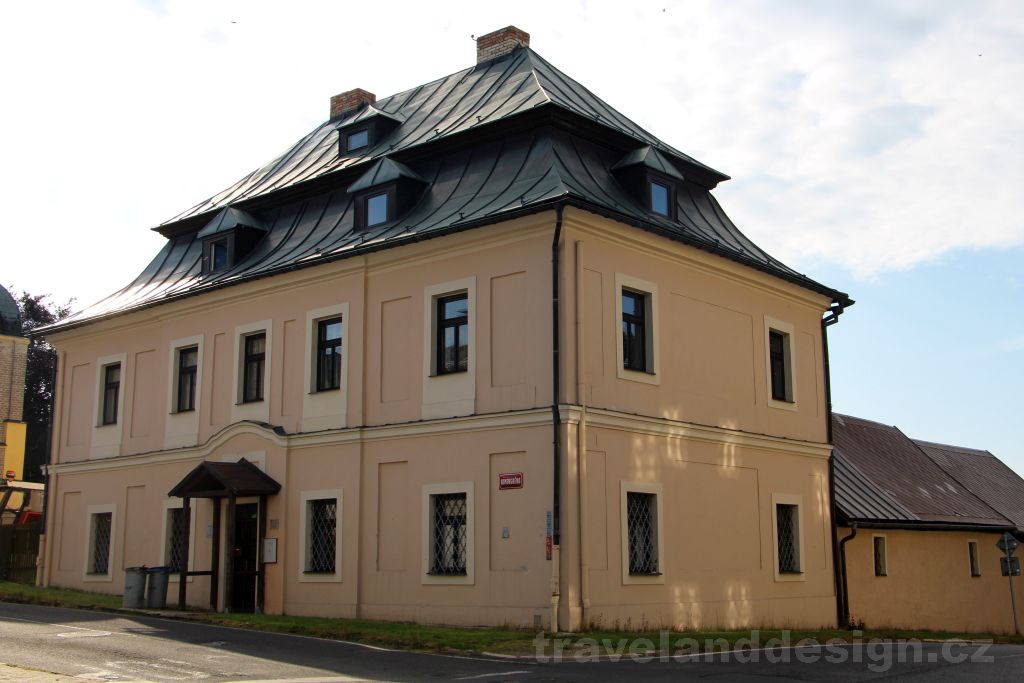
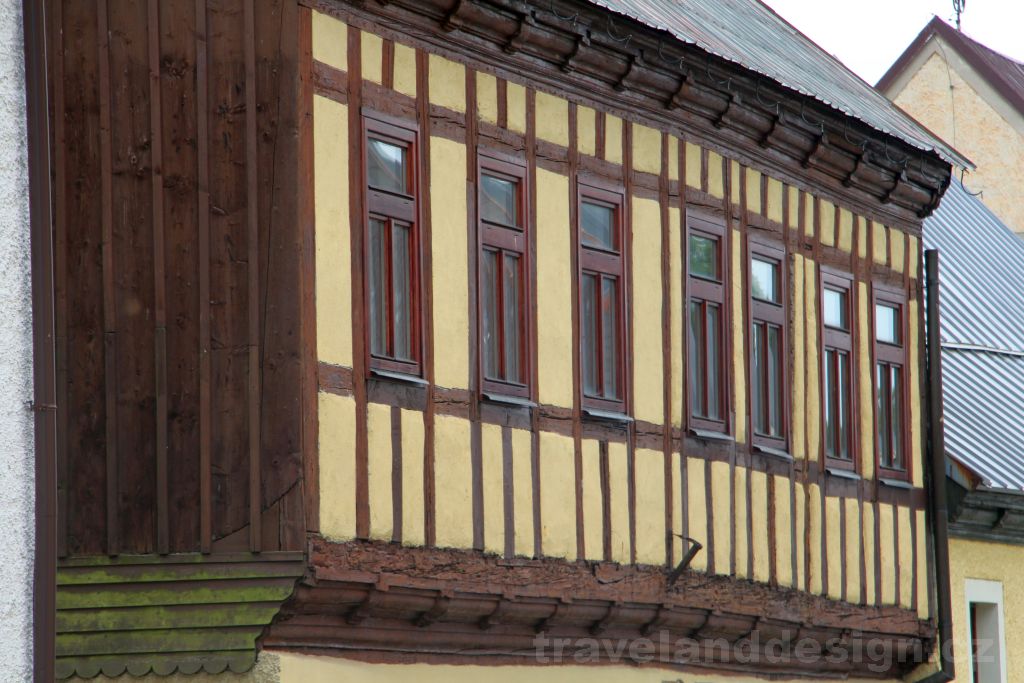
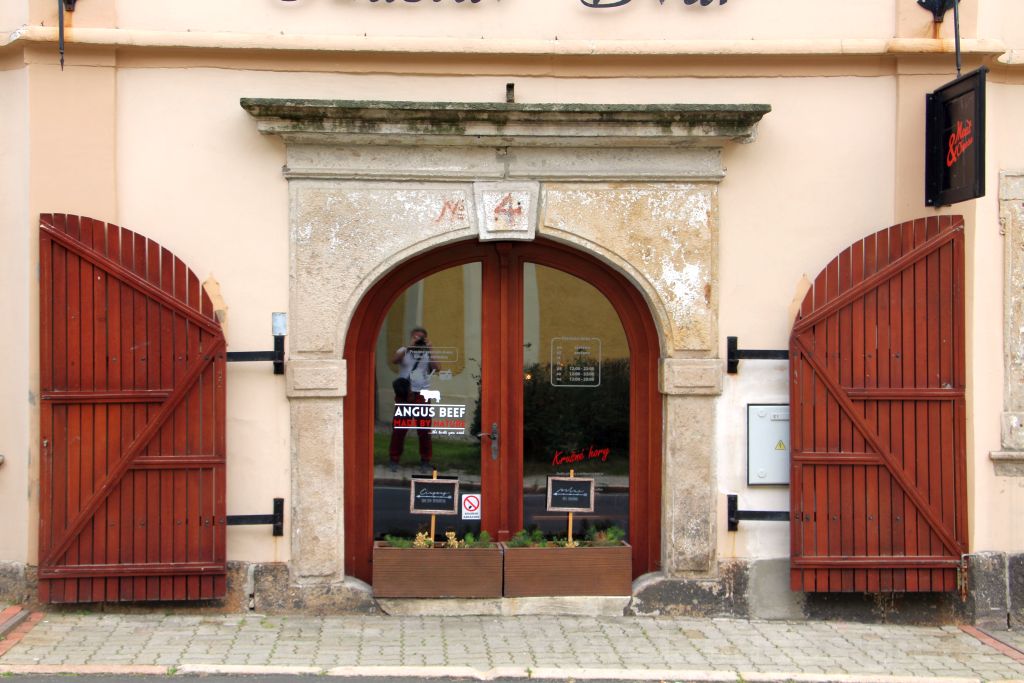
In Horní Blatná, thanks to the fact that the town avoided modernization after the communists took power in 1948, the historical architecture and the renaissance layout of the large rectangular square with its adjacent checkerboard street network have been relatively well preserved. However, most of the façades of the townhouses are already baroque and classical in style, or have half-timbered floors, such as the baroque houses Nos. 4 and 6 directly on the square.
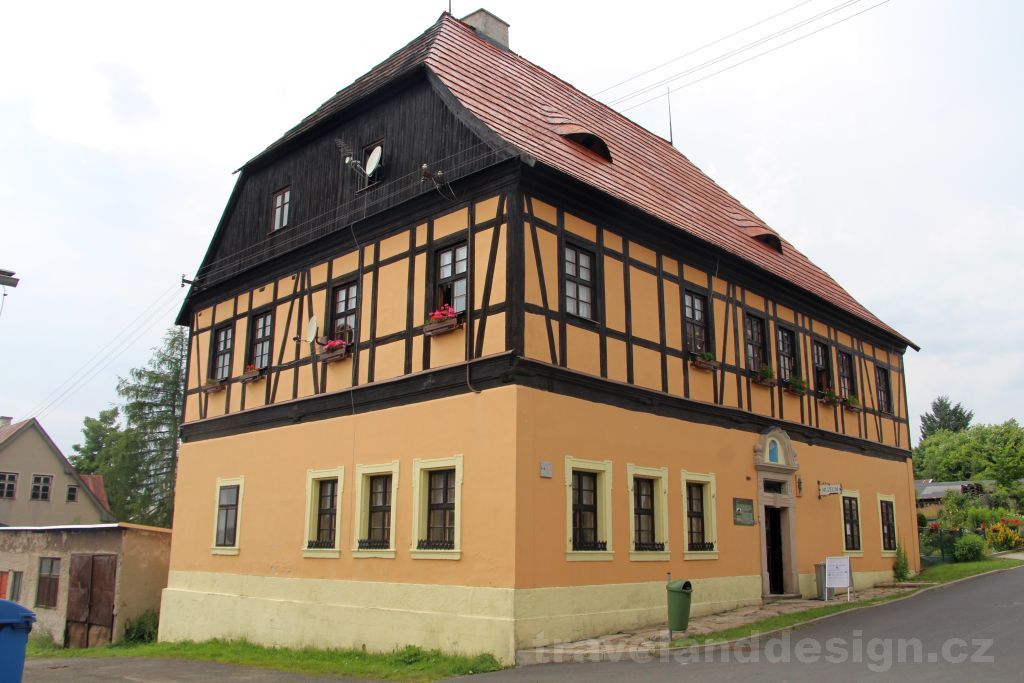
The nicest house is No. 127 and has a half-timbered floor. It is covered with a steep tiled roof and decorated with a profiled stone portal dating from 1754. It houses a tin mining and processing museum.
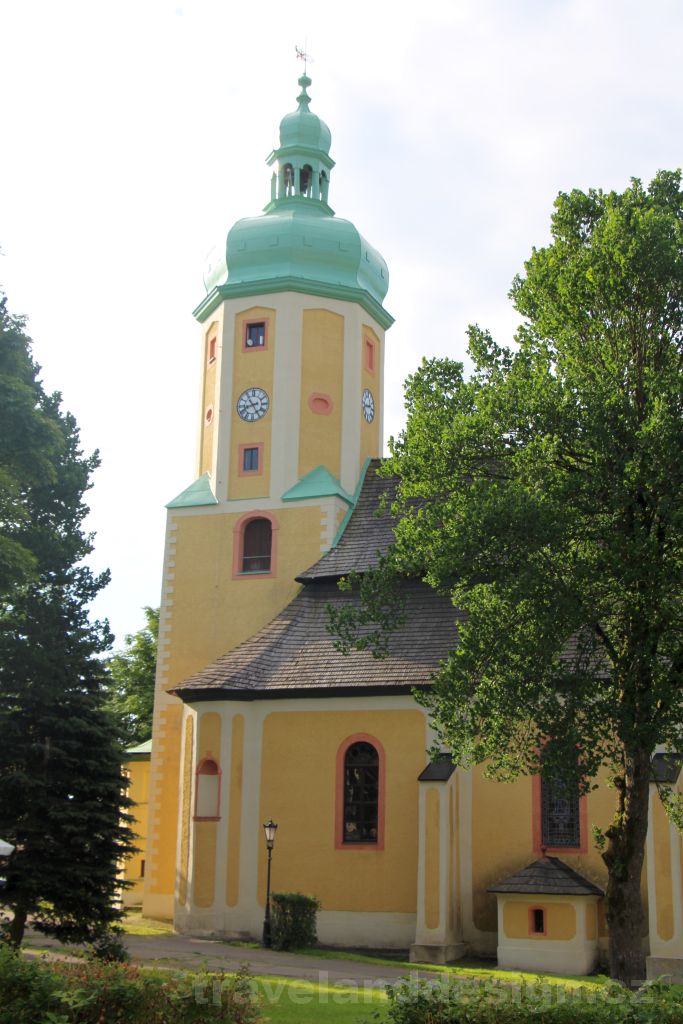
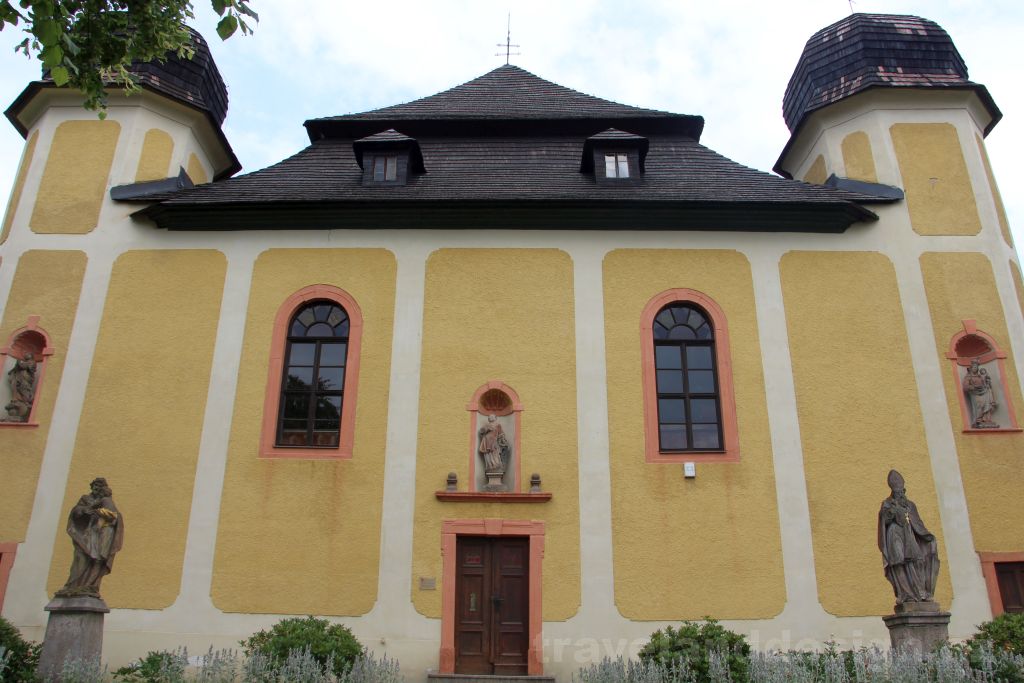
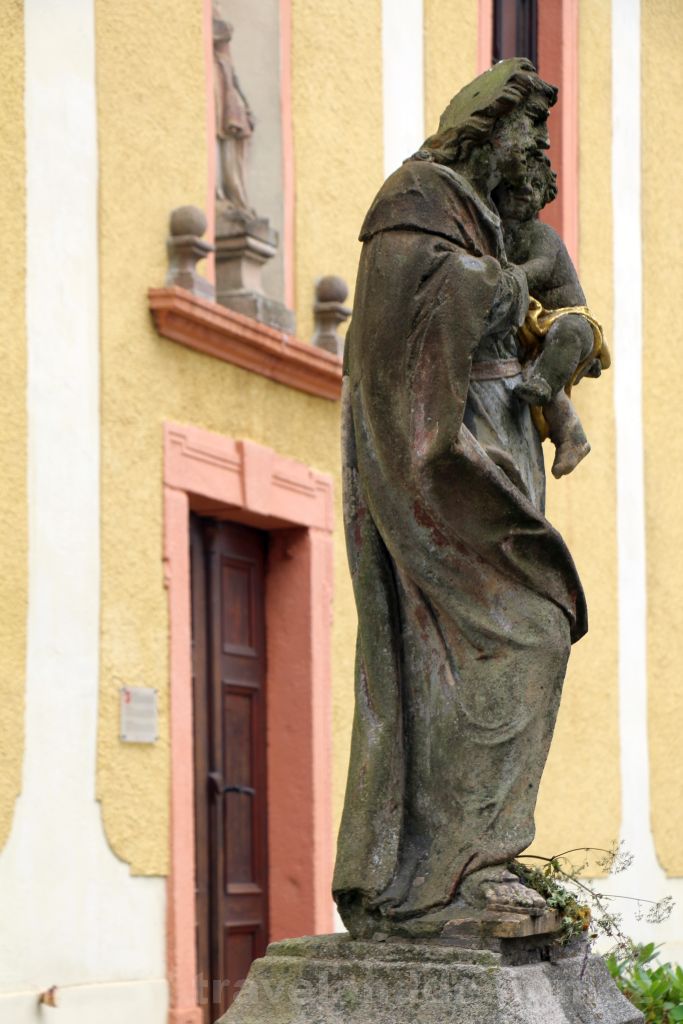
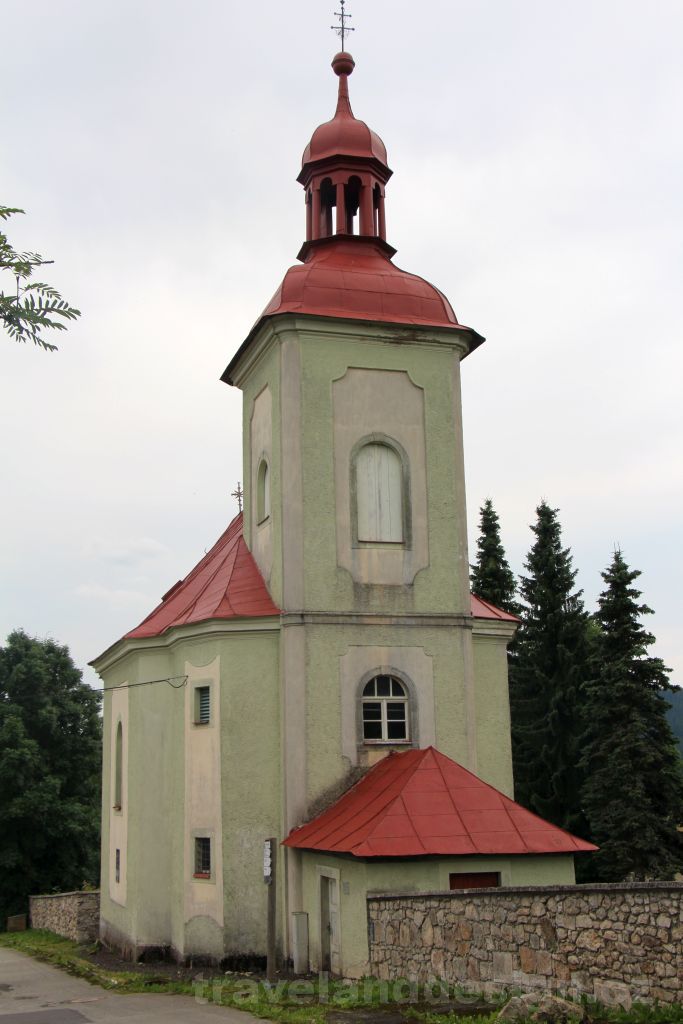
The central landmark of the square and the town is the parish church of St Lawrence with its octagonal tower, which was built in the second half of the 16th century in the late gothic style, but was completely baroqueised in 1754. Its predecessor was wooden and collapsed due to undermining in 1542.
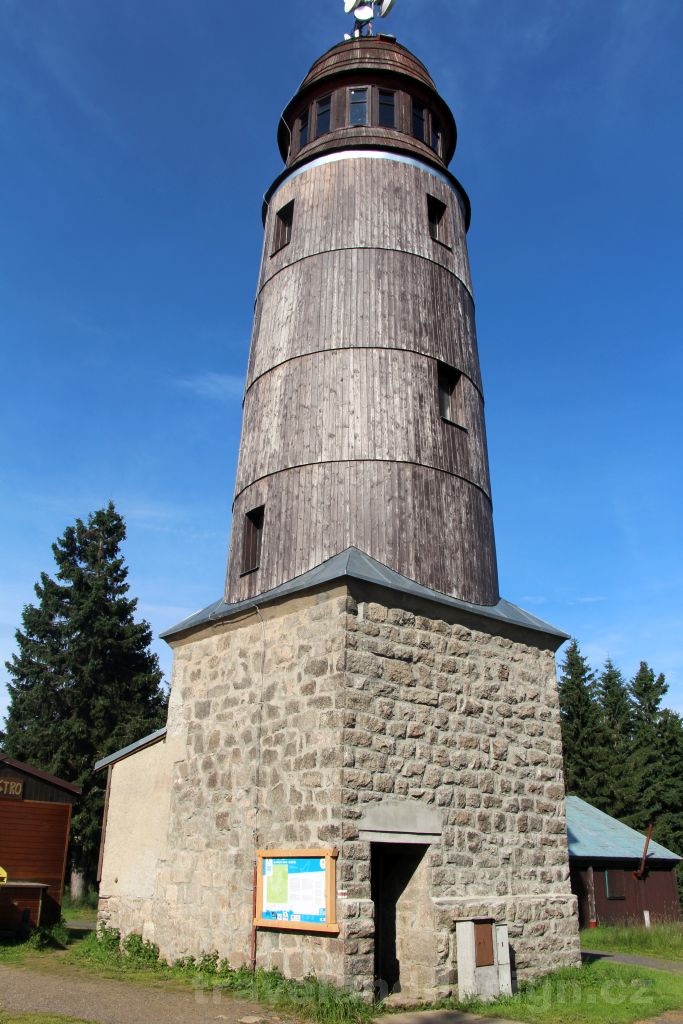
However, the Blatná Canal from 1540 to 1544, which is 12 kilometres long and still functional, is technically unique. It used to bring water from the Blatná Hill to the mining facilities. It includes a balancing reservoir called the Black Pond. A hiking trail leads to Blatenský hilltop and a lookout tower from 1913 dedicated to the last Empress Zita stands at the top of the hill.