Mladá Boleslav
(the royal city since 1600)
43,000 inhabitants
Central Bohemian Region, Mladá Boleslav District
Historical milestones
Around 950: A wooden princely castle was built on a rocky promontory, with a settlement and St. Vitus Church below.
Before 1290: Mladá Boleslav is elevated to a town.
Around 1330: The town becomes a serf town.
1344: Jan of Michalovice, owner of the town and castle, ordered the town to be moved from the foot of the castle to the top of the castle promontory for defensive reasons. At that time, the present-day Old Town was surrounded by stone walls with three gates – Prague, Iron and Bělská. The castle was rebuilt in the gothic style at that time.
1421: The town opened its gates to the Hussites without a fight. The Minorite monastery and the Johannite commandery were looted.
1486: The lords of Michalovice were replaced in the town by the Tovačovský family of Cimburk.
1516: Mladá Boleslav was acquired by the Krajíř family of Krajk, who supported the Unity of Brethren. The new town of Mladá Boleslav became the most important centre of the Unity of Brethren in the kingdom, with a printing press, a Brethren cemetery and, above all, the largest Brethren congregation in the country.
1528: The Old and New Towns were merged into one entity and experienced tremendous economic growth as a centre for furriery, cloth making, cutlery and bell making.
1595: Mladá Boleslav bought itself out from serfdom.
1600: Emperor Rudolf II of Habsburg included Mladá Boleslav among the royal towns.
1614: The town bought the castle.
1620: After the defeat of the Estates Uprising, recatholisation began and many of the town’s inhabitants emigrated.
1631: Hungarian troops of the imperial army plundered all the suburbs outside the fortifications.
1639: Mladá Boleslav was besieged and burned by the Swedes. The castle was subsequently rebuilt into a baroque citadel with imperial barracks.
1642-3: The Swedish army passed through the town twice, causing severe damage.
1697: A catastrophic fire destroyed a number of houses in the centre. Thanks to subsequent regular fires (1710 and 1761), the town underwent extensive baroque reconstruction.
1826: In connection with the construction of the imperial road, two city gates were demolished and the demolition of the city walls began.
1865: A railway was built in the city.
1895: Václav Laurin and Václav Klement began manufacturing bicycles in the city, which was replaced ten years later by factory production of automobiles.
1925: The Laurin & Klement and Škoda factories were merged into a single entity.
May 1945: The city and especially the Škoda factory were bombed by the Red Army, killing 450 people.
2003: Mladá Boleslav became a statutory city headed by a mayor.
Interesting facts about the city
Mladá Boleslav was named after the Czech prince Boleslav II the Young, who founded the town.
The city lies at the confluence of the Jizera and Klenice rivers on a unique triangular sandstone hill, thanks to which the Old Town has preserved its elongated triangular main square ending at the castle grounds. The historic parts of the city are protected as an urban conservation area.
Since the end of the 19th century, Mladá Boleslav has been known as the centre of motoring in the Czech lands. Thanks to the Škoda car factories, it remains one of the industrial centres of Central Bohemia and a key industrial centre for the entire lower Pojizeří region.
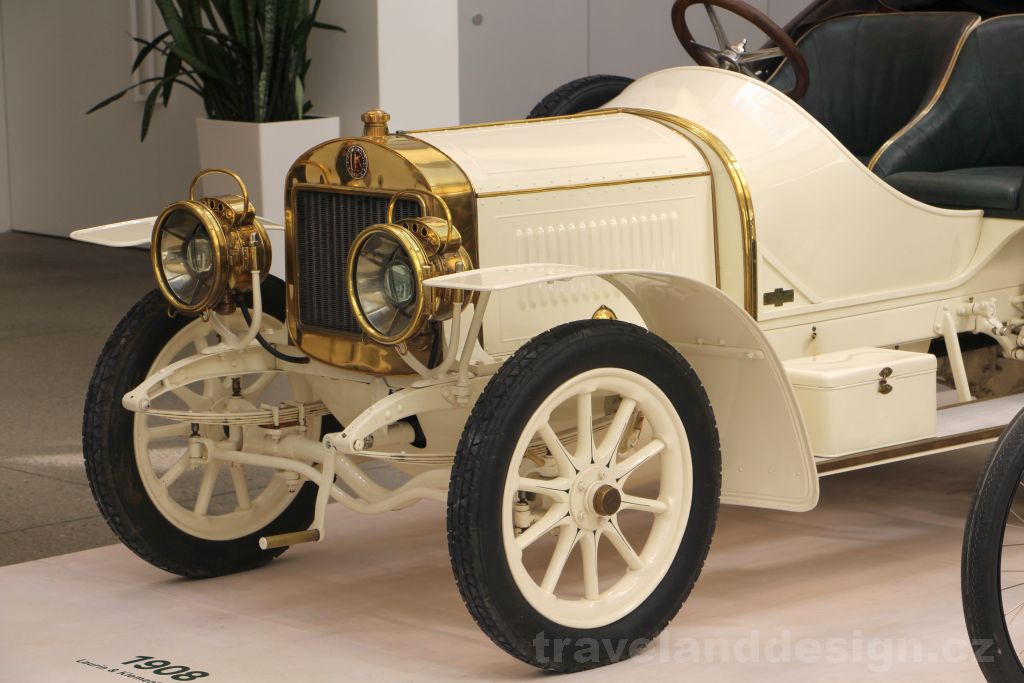
Mladá Boleslav is the birthplace of Czech motoring. Škoda cars are still produced there today, albeit with German capital involvement since the era of large-scale privatisation. The personalities of the founders of the automotive industry, Václav Laurin and Václav Klement, are commemorated not only by the Mladá Boleslav Museum, where Klement’s completely preserved study is located, but above all by the Škoda Auto Museum in its modern exhibitions, which partly include the former factory of both automotive visionaries. Here you will find all the vehicles produced by Laurin&Klement and Škoda. In the accessible depository, however, you will find the only example of the famous film prototype of the Ferat racing car, which starred in the Czech horror film Upír z Feratu (The Vampire of Ferat) by director Juraj Herz. The historic factory hall from 1906 displays historic Laurin&Klement cars.
The oldest printed map of Bohemia by Mikuláš Klaudyán was created in the Mladá Boleslav printing house after 1518.
On the southern edge of the city, an aviation museum with ten replicas of historic aircraft has been open since 2015. It was established in memory of Metoděj Vlach, a local native who built his own aeroplane in 1912.
The biggest tourist attractions
Although the historic centre of Mladá Boleslav was affected by redevelopment efforts that began after 1948, leading to the demolition of parts of the New Town and the Old Town, interesting monuments of historical and modern architecture have been preserved despite the prefabricated housing estates.
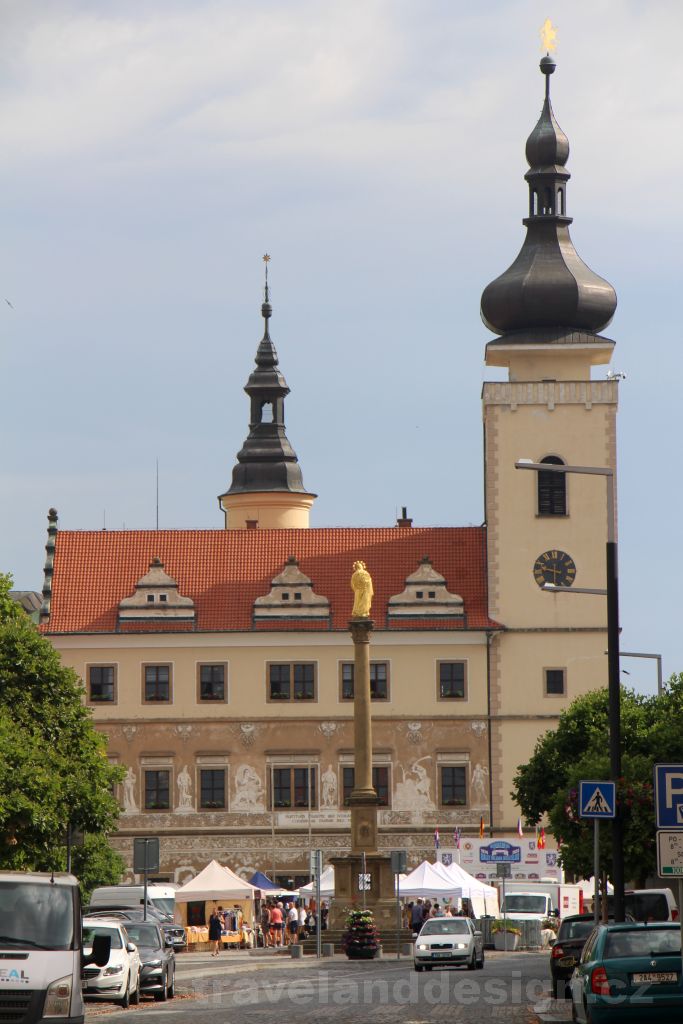
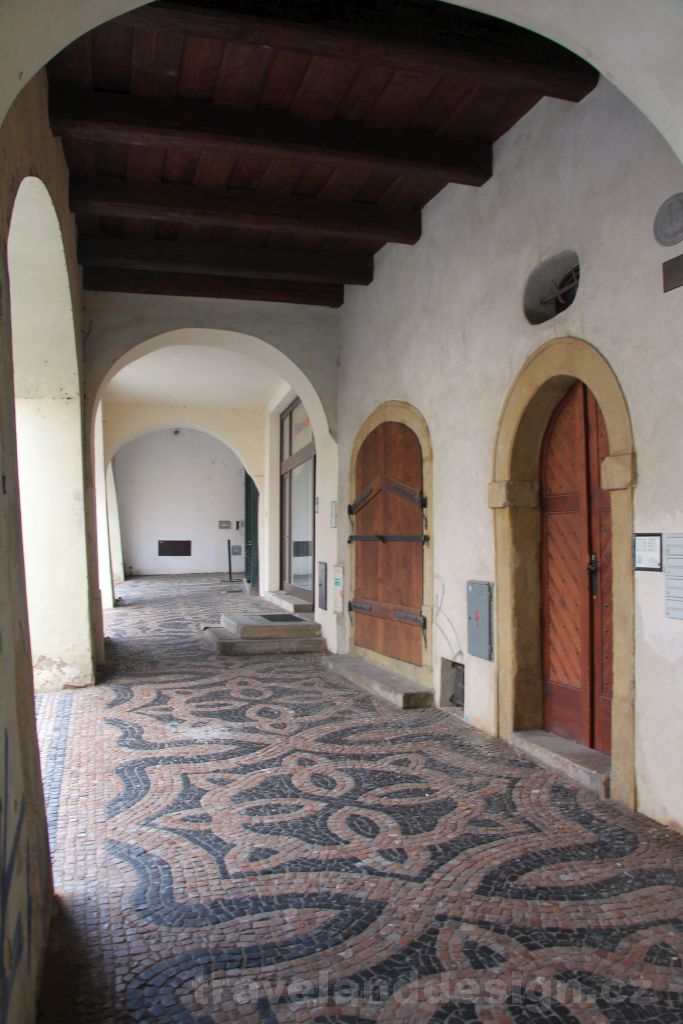
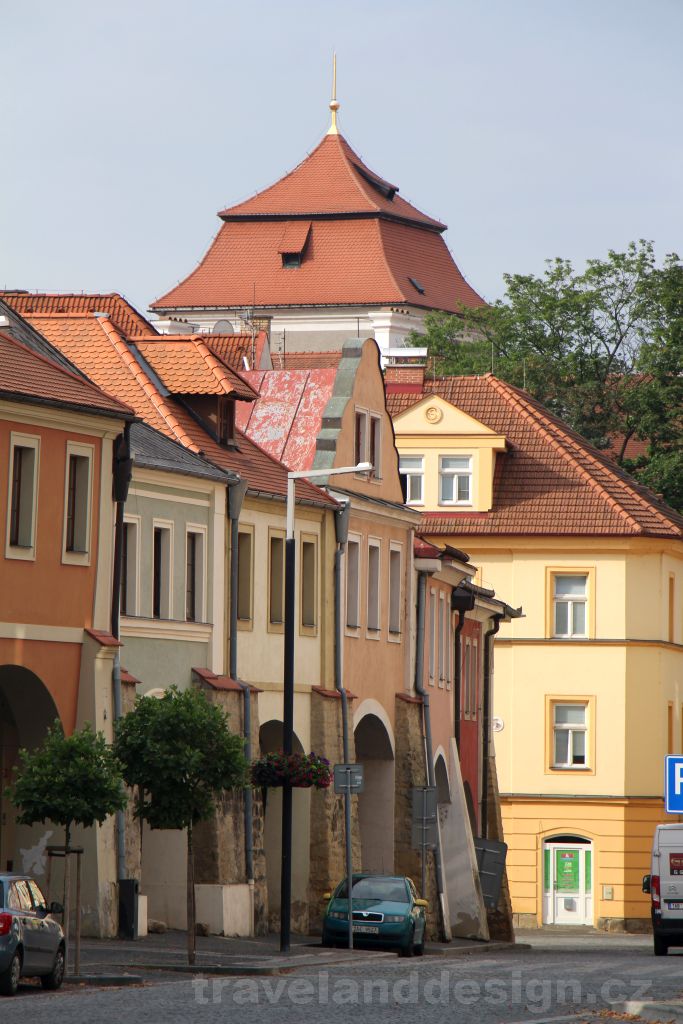
At the head of Old Town Square stands the old renaissance town hall from the 16th century, designed by Italian architect Matteo Borgorelli. Its facades are decorated with figural sgraffito depicting ancient and biblical motifs, and visitors can climb its tower for a view of the city. The town houses here have preserved their gothic, renaissance and baroque cores. Most of them can be accessed via arcades from the square.
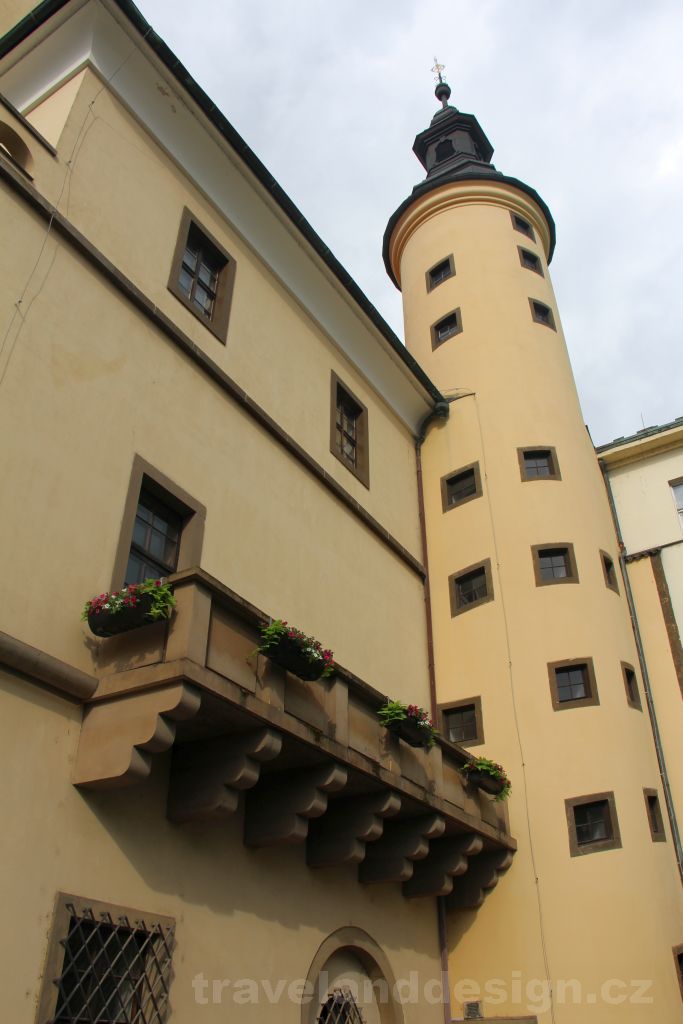
One of the most distinctive buildings in the Old Town is the gothic town palace called Templ, which stands on the very edge of the promontory and gives the impression of a small castle. It was built in 1488-93 for Jan Císař of Hliník, and today its reconstructed premises house an exhibition of the town museum. It is an outstanding example of late vladislavian gothic architecture.
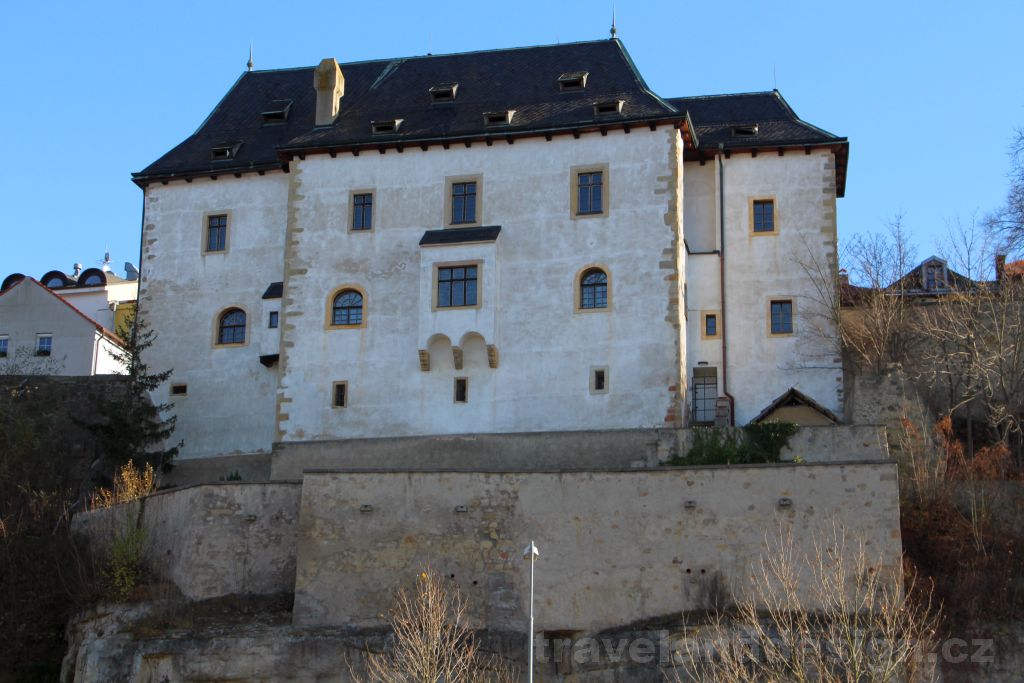
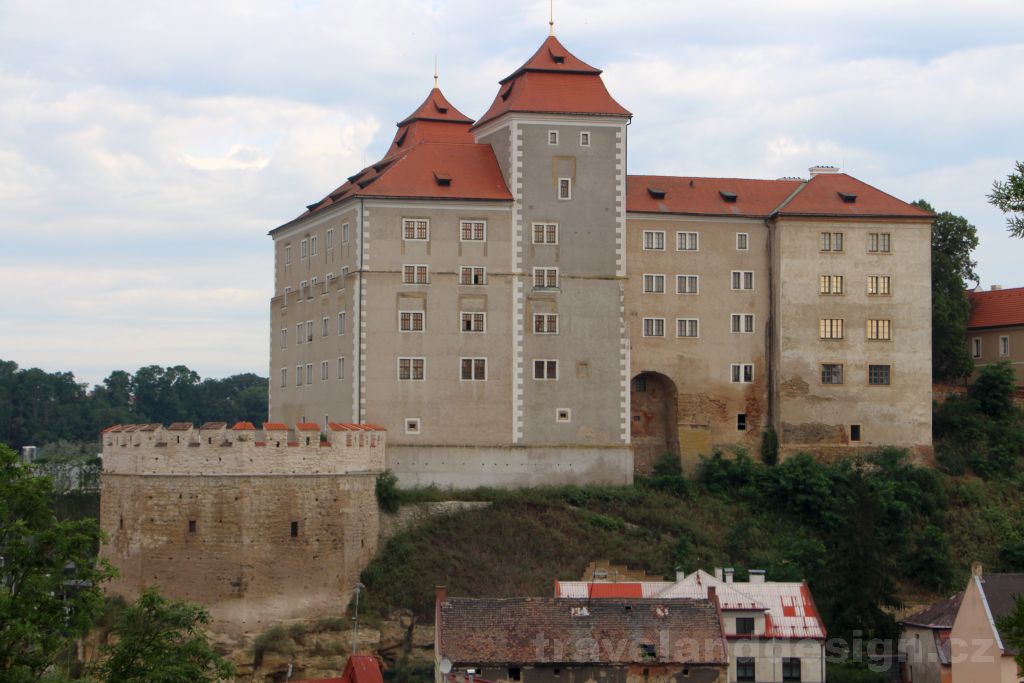
Thanks to its massive gothic fortifications with walls and battlements, Mladá Boleslav Castle gives the impression of a mighty fortress. Its premises, later converted into barracks, house the exhibitions of the Museum of Mladá Boleslav.
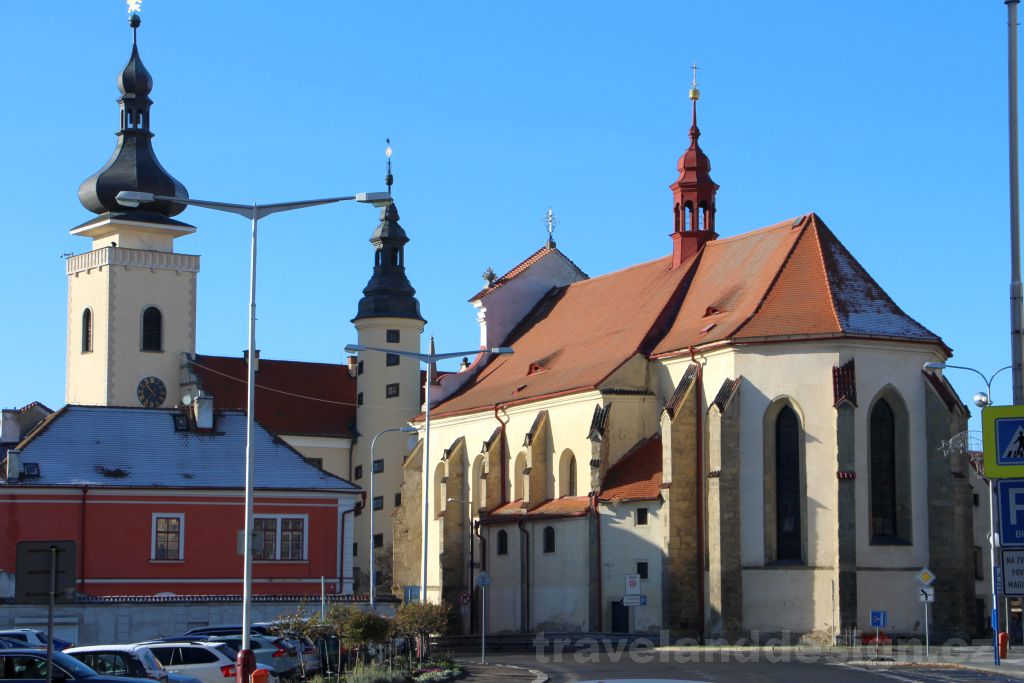
Of the church buildings in the Old Town, the Archdeacon’s Church of the Virgin Mary, with its gothic core dating from 1406 but later significantly baroqueised, is particularly noteworthy. Its façade is baroque in style and its ornateness gives it an almost theatrical appearance. Inside, there are unusually elaborate, high-quality sculptures by members of the Jelínek family, whose work is also highlighted in an exhibition of their sculptures in the Mladá Boleslav Museum at the castle. In the baroque Church of St. John of Nepomuk from 1727, you will find a valuable painting by the painter Václav Vavřinec Reiner.
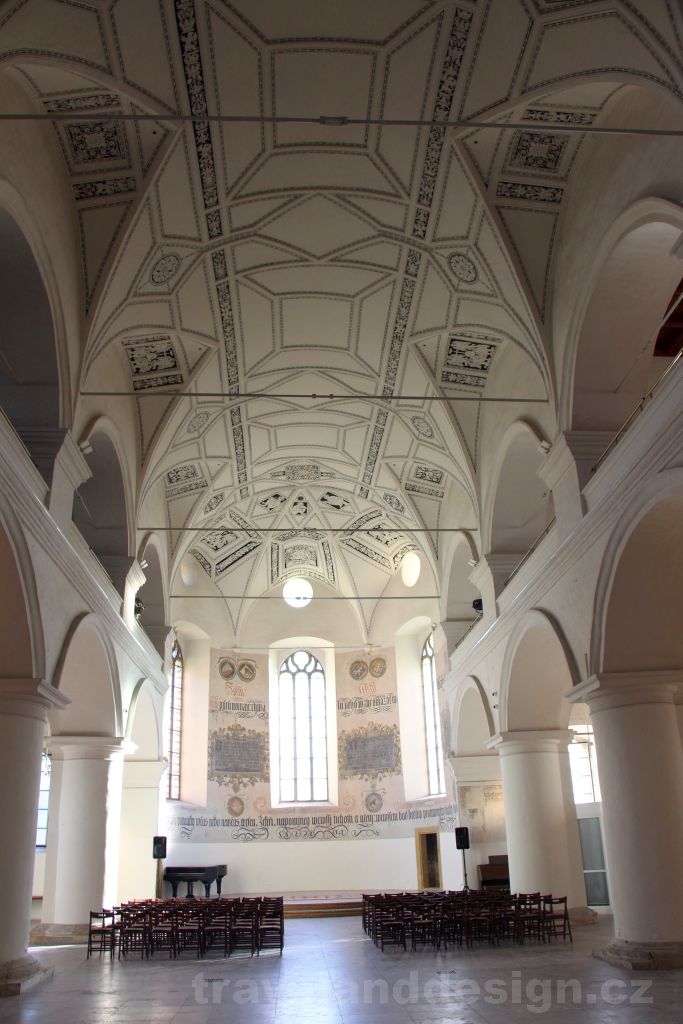
The new town also has a lot to offer. It connects directly to the Old Town Square with the extensive neo-romanesque building of the New Town Hall by architect Jiří Fichtner. It dates from 1865-7. This is also the site of the former centre of the Unity of Brethren in Bohemia, which was called the Brethren Rome. A unique monument here is the preserved renaissance building of the Brethren congregation – a huge three-nave structure from 1544-54 with internal galleries and no tower, which has recently undergone reconstruction. It was built here by Italian architect Matteo Borgorelli as the oldest Italian pseudo-basilica outside Italy. The Brethren in New Town are also commemorated by the renaissance buildings of the Brethren school and Brethren printing house on Karmel. The Old Water Tower was also built thanks to the activities of the Brethren in the city. The former Minorite monastery, together with the adjacent ultra-modern buildings, became the seat of the Škoda Auto University in 2007.
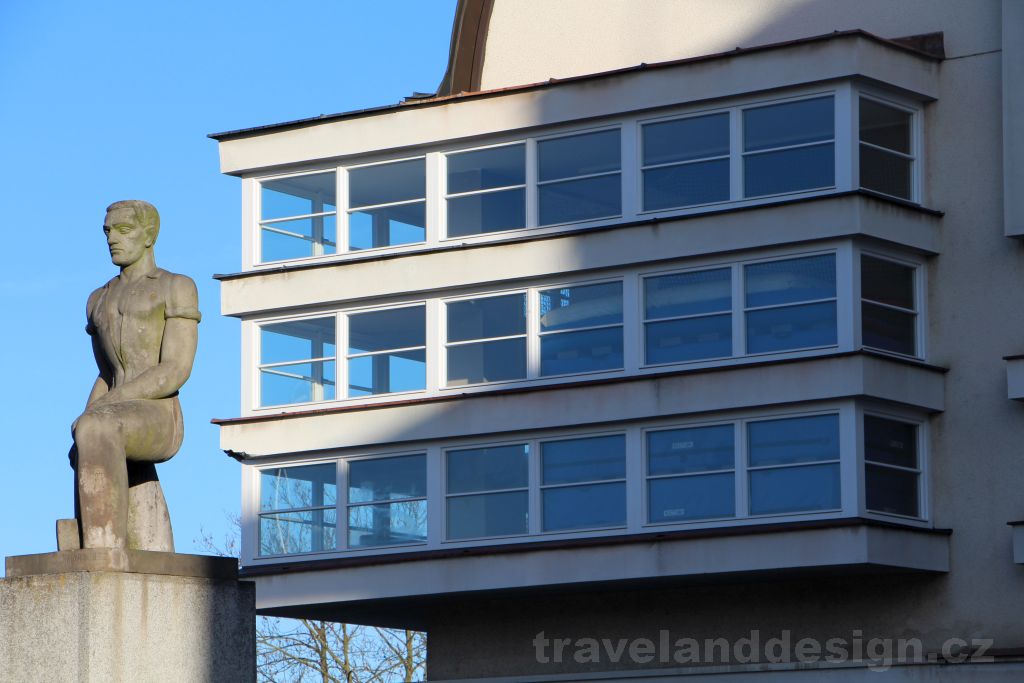
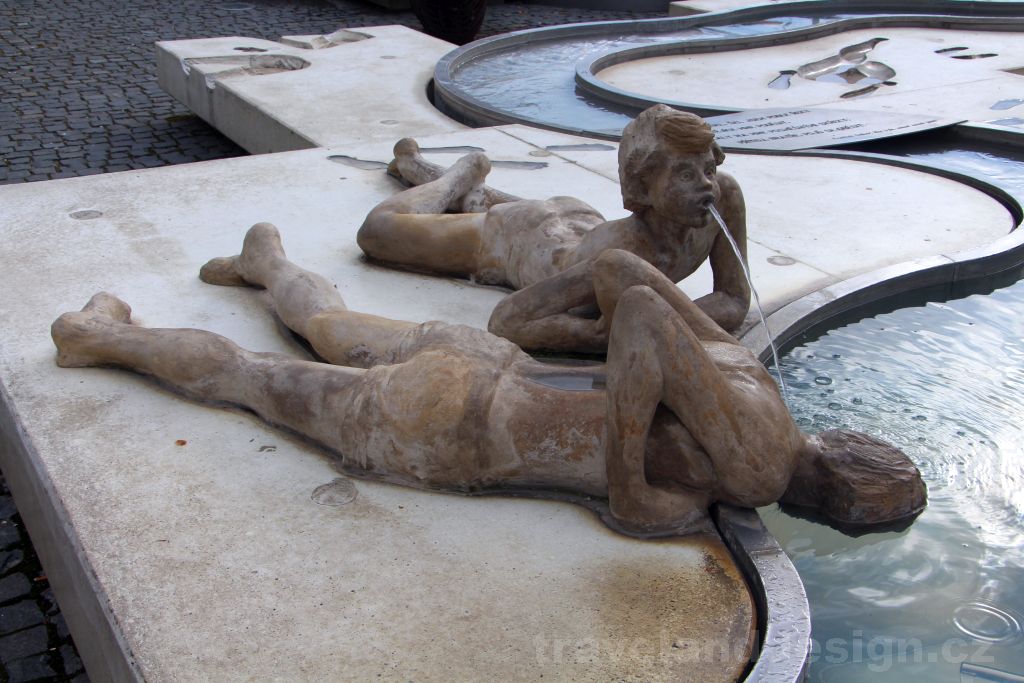
However, the New Town development is enlivened by important monuments of modern architecture. Among the older buildings, the magnificent art nouveau theatre from 1906-9 stands out, with the adjacent green area of the French-style Švermovy sady park with its pavilions and fountains. The renowned architect Emil Králík also contributed to the design of the theatre. However, the absolute sensation of modernist interwar architecture are the complexes designed by architect Jiří Kroha in 1923-7. This resulted in the magnificent building of the Secondary Technical School and the Masaryk Institute of Social Care. Jiří Kroha also modernised the façade of the Věnec Hotel on Old Town Square.
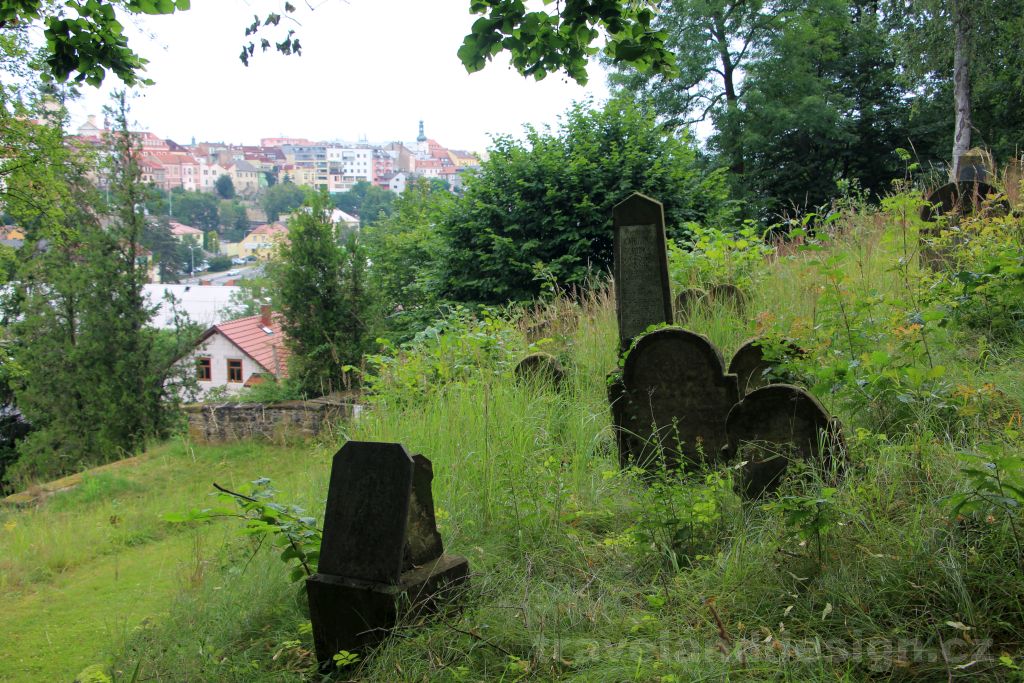
When visiting the city, don’t miss the Jewish cemetery, which offers a magnificent view of Mladá Boleslav Castle. The terraced cemetery itself is unusually large and stands out for its blend of different architectural styles. Its origins date back to the gothic period, but the Moorish ceremonial hall dates from 1888. The functionalist mortuary building from 1937 is a proportionally perfect structure. The cemetery contains the grave of the banker of the military commander Albrecht von Wallenstein, whose name was Jakub Baševi.
Famous natives of Mladá Boleslav
František Gellner, poet (*1881)
Adina Mandlová, actress (*1910)
Darja Hajská, actress (*1911)
Přemysl Sobotka, politician (*1944)
Miluše Voborníková, singer (*1949)
Vladimír Michálek, director (born 1956)
Vilém Čok, musician (born 1961)
Jan Železný, javelin thrower (born 1966)
Jan Hamáček, politician (born 1978)
Famous people who lived in the city
Michael Kocáb, musician and politician