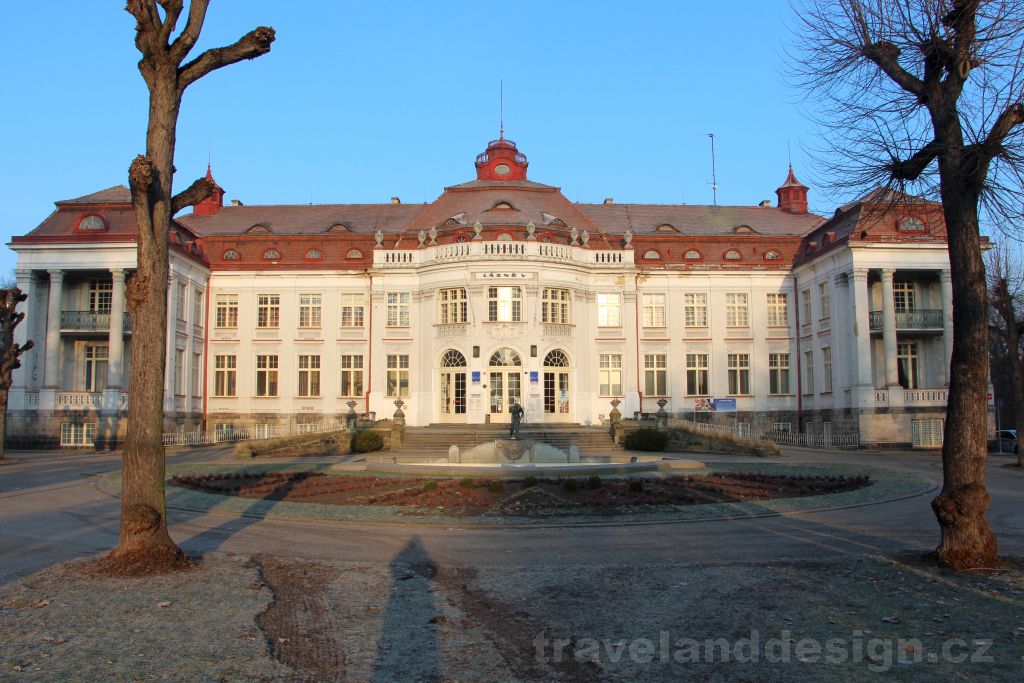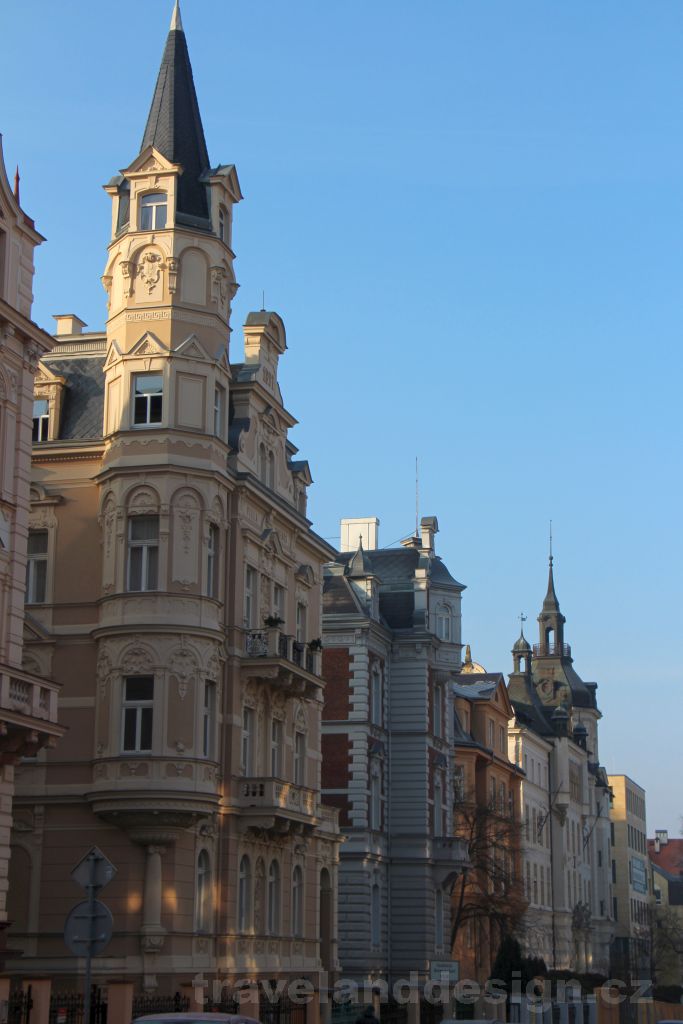
Karlovy Vary
49,000 inhabitants
Karlovy Vary Region, Karlovy Vary District
History of the spa industry
Around 1350: King Charles IV’s hunting party discovered the Karlovy Vary (Carlsbad) Hot Spring (called Vřídlo) and founded a spa.
1522: A book by physician Václav Payer of Loket about the Karlovy Vary springs was published, recommending drinking thermal acidulous water in addition to bathing for the first time.
1711: The first spa house, Mill Spa, was opened.
Second half of the 18th century: Modern drinking cures were introduced by physician David Becher.
1776: The famous confectioner Johann Georg Pupp created the iconic Grandhotel Pupp by connecting the Bohemian and Saxon Halls.
1777: The Hot Spring Hall was completed.
1791: The Poštovní dvůr (Postal Court) is built as a destination for spa guests to take walks.
1792: The first wooden colonnade at the New Spring is opened.
1865: The positive effects of Carlsbad water for the treatment of obesity and diabetes were discovered.
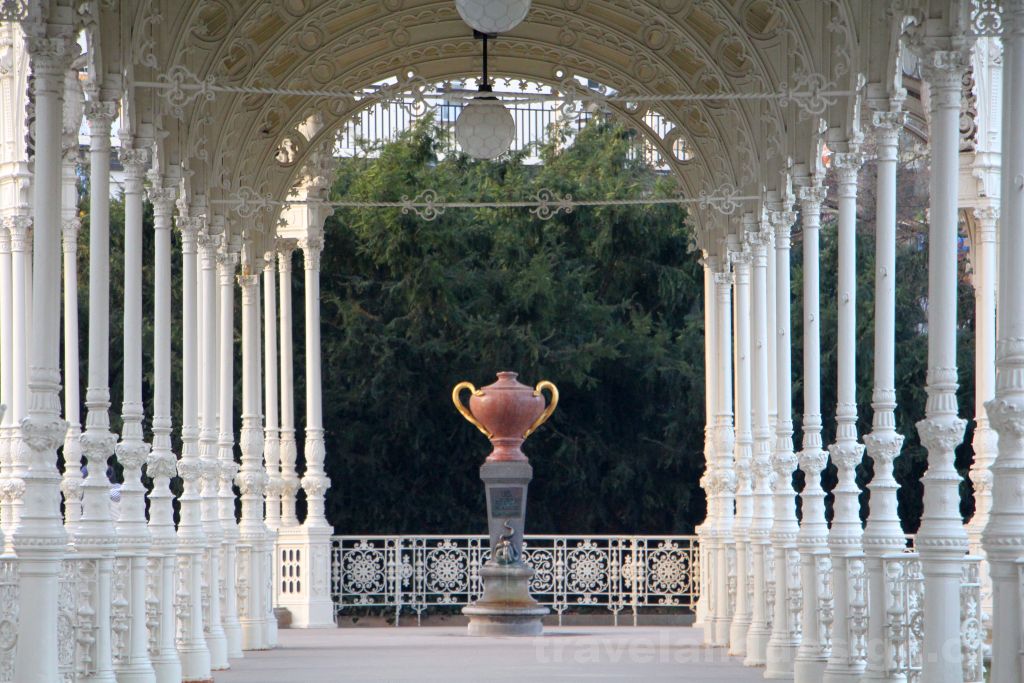
1878: The Mill Colonnade, designed by architect Josef Zítek, is opened.
1894: The continental premiere of Dvořák’s New World Symphony takes place at the Postal Court.
1912: The Imperial Hotel is built.
1949: The first edition of the famous international film festival takes place in Carlsbad.
1948: The spa is nationalised.
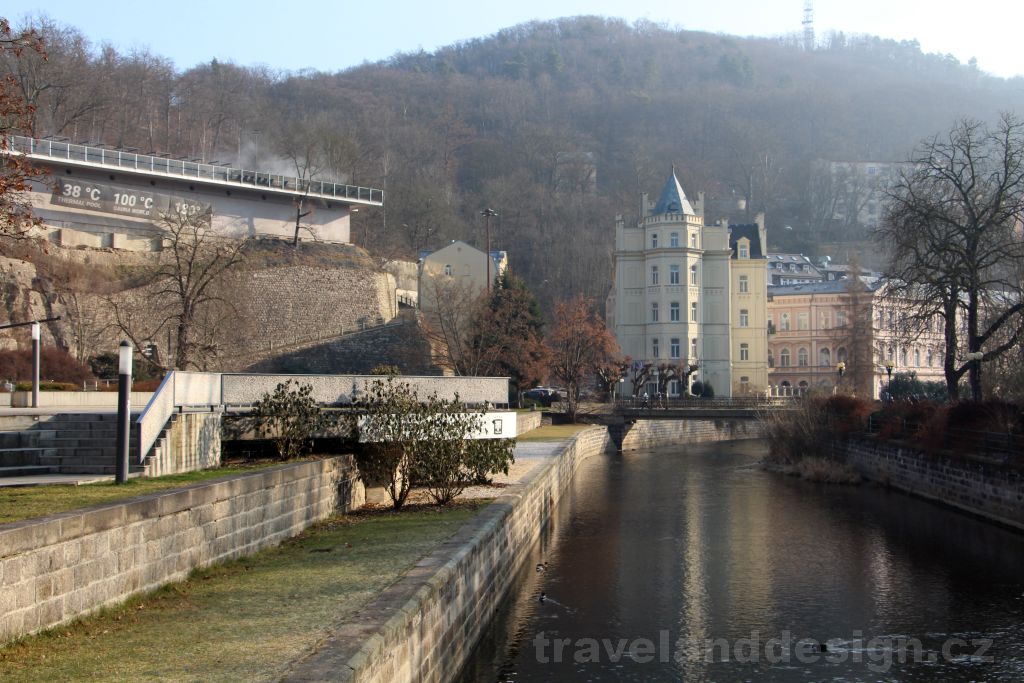
1976: The brutalist building for the Vřídlo fountain is completed.
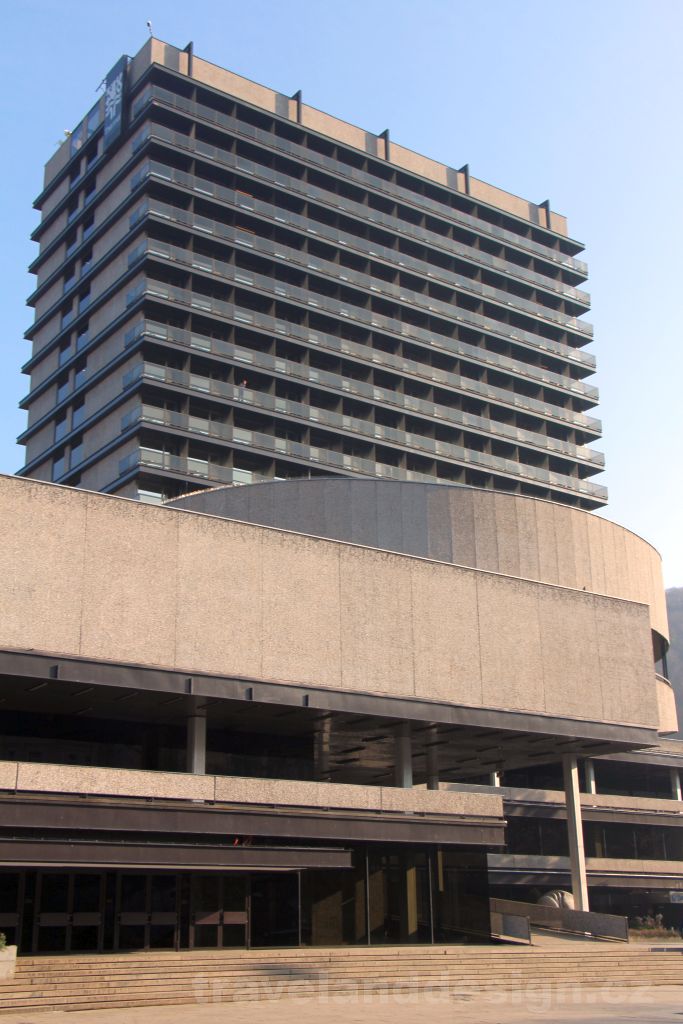
1977: The Thermal Hotel, a masterpiece of Mr and Mrs Machonin, is officially opened.
After 1989: The spa is privatised.
2021: The town and its spa are inscribed on the UNESCO World Heritage List.
Interesting facts about the spa
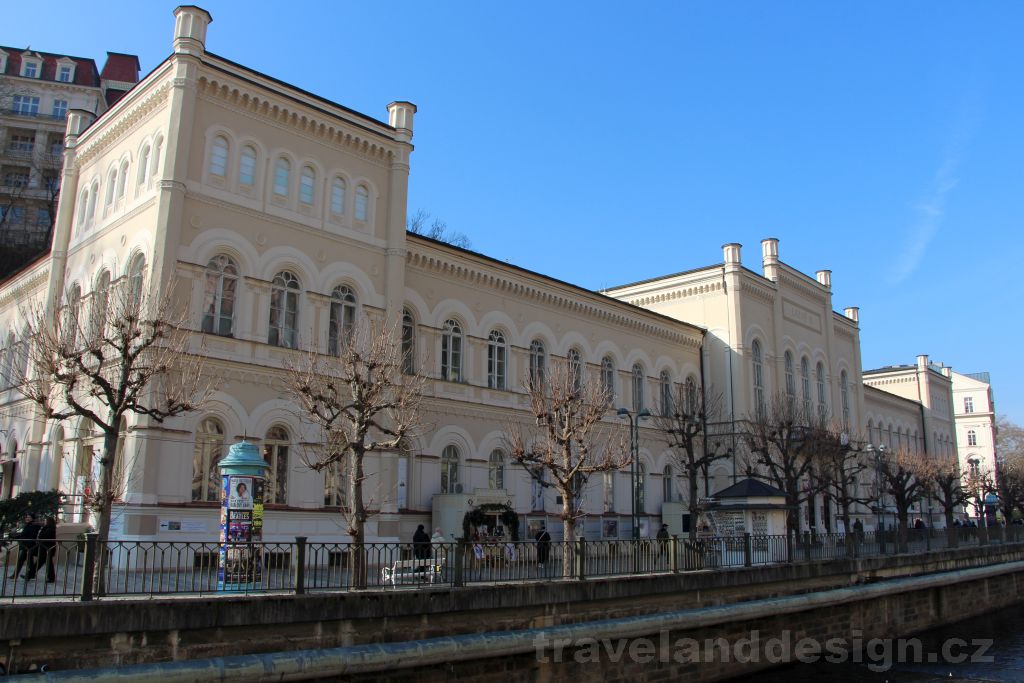
The original royal town was founded by King Charles IV of Luxembourg near the hot springs flowing into the Teplá River. The famous Vřídlo was discovered by the royal hunting party sometime around 1350. Carlsbad thus became the oldest and largest spa town in Bohemia. The famous herbal liqueur Becherovka is also produced here according to a secret recipe. Today, around 70,000 patients are treated at the spa every year. Among the sights worth seeing are the historic city centre around the Teplá River with its theatre, as well as the baroque Church of St. Mary Magdalene by Kilian Ignaz Diezenhofer. A number of pleasant trails with views or the famous statue of a chamois on Jeleni skok lead to the surrounding wooded hills. The town is also home to the world-famous Moser glassworks and several producers of the famous Carlsbad porcelain.
What natural resources are used for treatment at the spa
There are twelve warm healing springs and one cold healing spring in the town – Štěpánka, which is only 10˚C. The thermal springs are hydrogen-carbonate-sulphate-chloride-sodium mineral waters. The hottest is Vřídlo, which is 72.3˚C and gushes to a height of 12 metres from a depth of up to 90 metres below the surface. The Emperor himself treated his feet in the Charles IV Spring. Other springs include the Upper and Lower Castle Springs, the Market Spring, the Mill Spring, the Rusalka Spring, the Prince Venceslaus Spring, the Libuše Spring, the Rock Spring, the Freedom Spring and the Garden Spring.
What the spa helps with
Carlsbad mainly treats diseases of the digestive tract, metabolic disorders and diseases of the musculoskeletal system. Many guests come here to treat diabetes, obesity or various occupational diseases.
Who has been treated at the spa
Peter the Great, Russian Tsar
Jöns Jakob Berzelius, Swedish chemist
Johann Sebastian Bach, German composer
Wolfgang Amadeus Mozart, Austrian composer
Johann Wolfgang von Goethe, German poet and Prussian privy councillor
Ludwig van Beethoven, composer
Josef Dobrovský, writer
Josef Kajetán Tyl, playwright
Fryderyk Chopin, Polish composer
Niccolo Paganini, Italian violinist
Joachim Barrande, French geologist
Charles Darwin, British naturalist
Jan Evangelista Purkyně, natural scientist
Franz Joseph I, Austro-Hungarian Emperor
Sigmund Freud, Austrian psychologist
Franz Kafka, writer