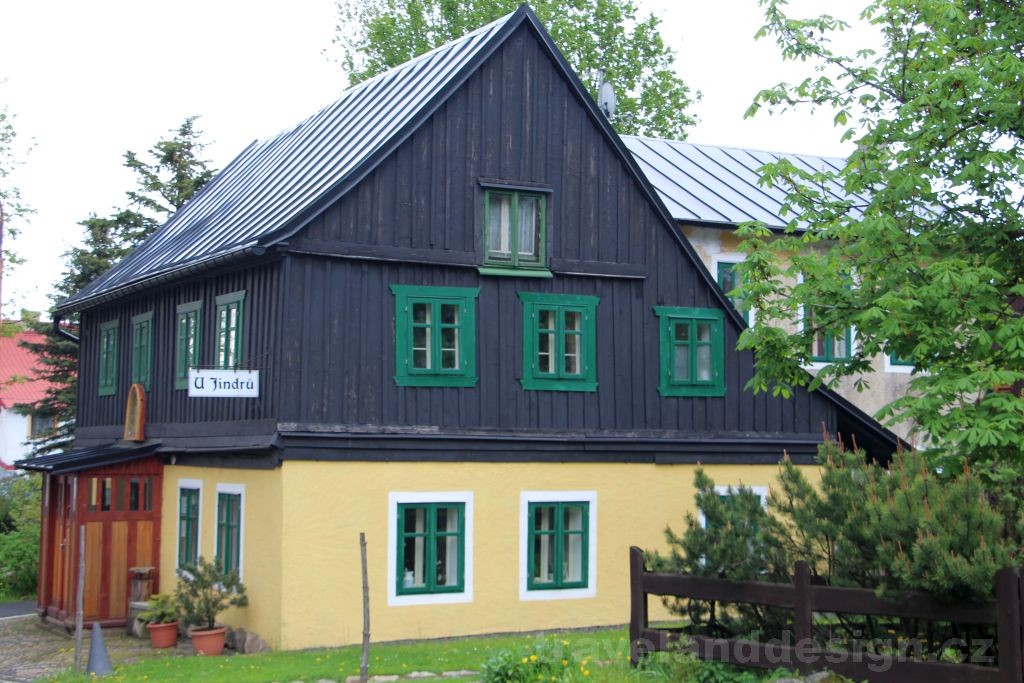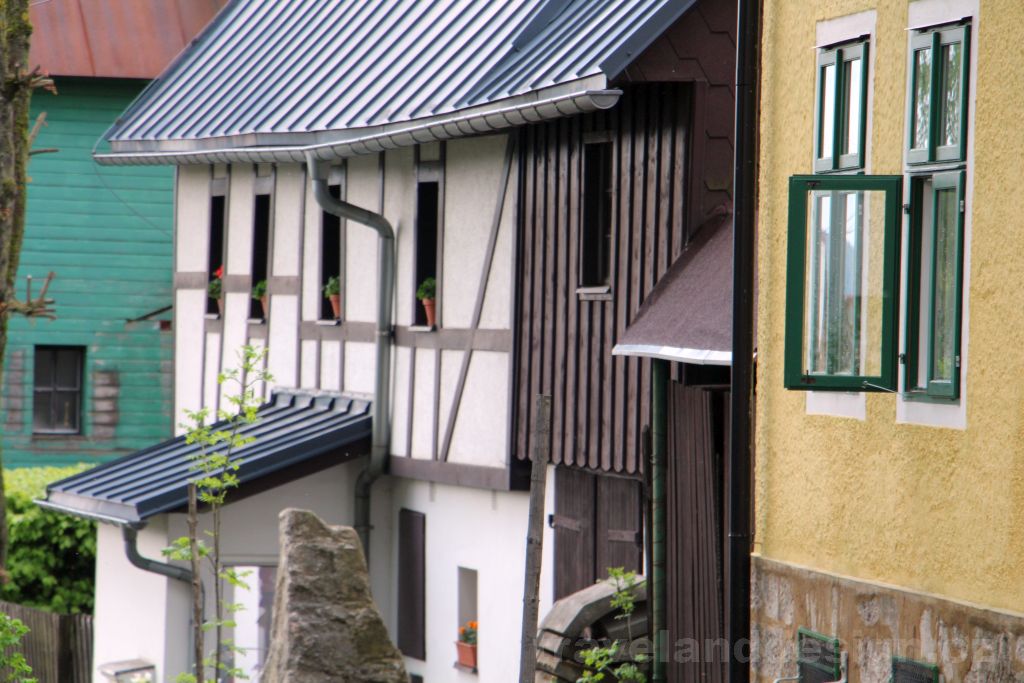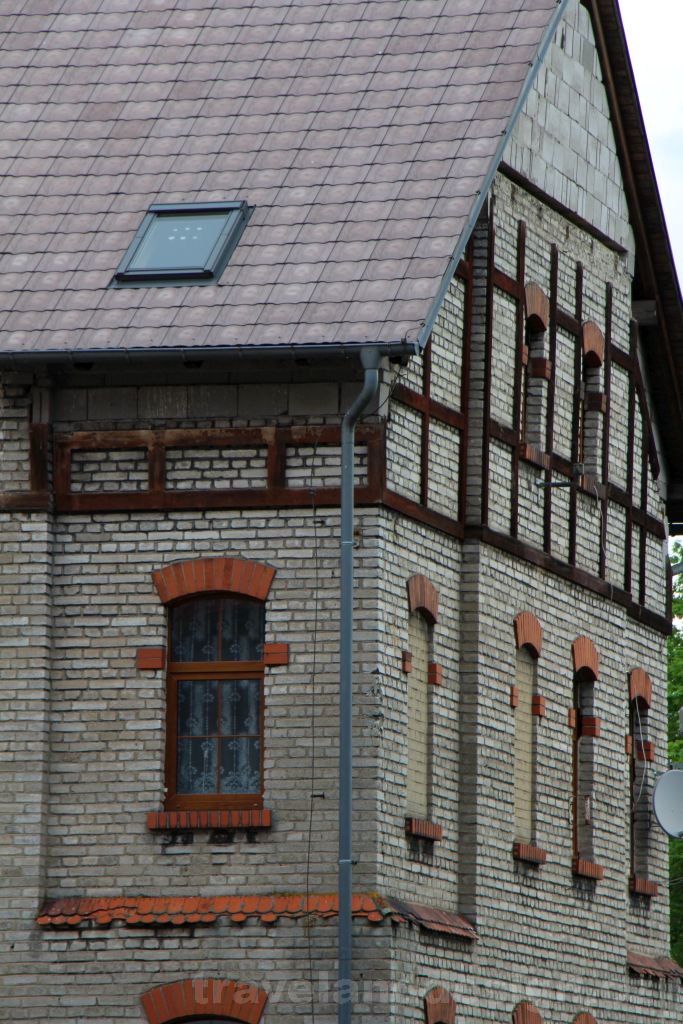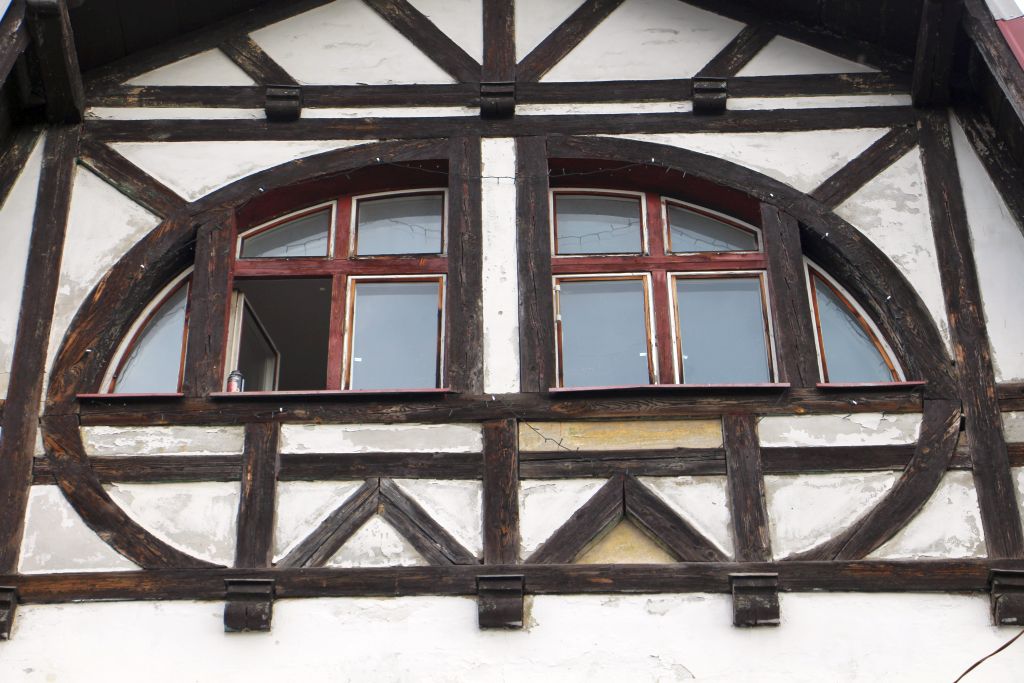
Abertamy
(the royal mining town since 1579)
830 inhabitants
Karlovy Vary Region, Karlovy Vary District
Historical milestones
1529: First mention of the town founded around rich silver deposits by the Šlik noble family, who administratively linked it to their nearby town of Jáchymov.
1534: A Lutheran church near the most productive silver vein, Lorenz, is mentioned in the mining town.
1579: The town was donated by Emperor Rudolf II Habsburg to the royal chamber and has had the status of a royal mining town ever since.
1590: A strong earthquake was recorded in Abertamy.
1622: The silver mines were closed.
1688: The German Lutheran population of the town was displaced to Saxony.
1766: Emperor Joseph II visited the town.
1791: Abertamy was granted the right to hold an annual market by Emperor Francis I of Habsburg.
1848: Adalbert Eberhart founded a glove factory in the town, which later became world-famous.
1876: Abertamy was promoted to a royal mining town.
1944: Tin mining in the Mauritius mine was terminated.
1945: With a few exceptions, the German population of the town was expelled abroad.
1947: After the expulsion of the German population, uranium mining began.
Interesting facts about the town
The name of the town, Abertamy, comes from German and consists of two words. The simplest explanation is that it comes from the combination of two German words, „aber-damm“, which means „rear dam„. However, historians are not certain, as another possible variant is the German term „Eberdamm“, which can be translated as „boar dam“.
Abertamy was founded by German colonists in the Ore Mountains on a site where a rich silver vein was allegedly discovered in the early 16th century while digging a well. The largest vein, named Lorenz, or Vavřinec, is named after the then owner of the Jáchymov estate and mining entrepreneur Vavřinec Šlik. The mined silver was then used to mint silver thalers in Jáchymov.
Silver ore was mined at impressive depths of up to 200 metres below the surface, and at the time of mining, the historic tunnels reached a length of twenty kilometres! However, it is also true that mining was carried out with varying degrees of success. By the end of the 16th century, the discovered deposits were gradually being depleted, until mining ceased completely after the defeat of the estates uprising at White Mountain. Lutheran miners were eventually displaced to Saxony because of their faith. This situation lasted until the 1840s, when silver mining was resumed on a limited scale for about twenty years.
From the end of the 16th century, the local female population began to earn their living from lace-making, which was replaced in the mid-19th century by successful factory production of gloves, exported all over the world, mainly overseas. Unfortunately, factory leather production ceased in 1998, but two smaller craft workshops remained. However, the town hall building houses a small glove-making museum, which, together with an exhibition of local minerals, is open to the public.
The German population left behind a gourmet regional speciality, the much sought-after Abertamy cheese, made from goat’s milk and pressed into balls with a yellowish rind. After the expulsion of the German population, its production ceased, but recently it has been revived in nearby Rýžoviště using sheep’s cheese. Gourmets should also try the local meat and dairy products from the Abertamy Mountain Farm.
The years following World War II, after the expulsion of the German population, were a problematic period for mining, when uranium was mined here. Thanks to uranium ore mining in the Jeroným mine and two other locations, the underground shafts were extended to a total length of 70 kilometres. However, this mining was eventually stopped in 1965.
In the Abertamy ski resort, located near the mouth of the Albrecht mining tunnel, you can ski on the slopes of the Ore Mountains in winter.
The biggest tourist magnets
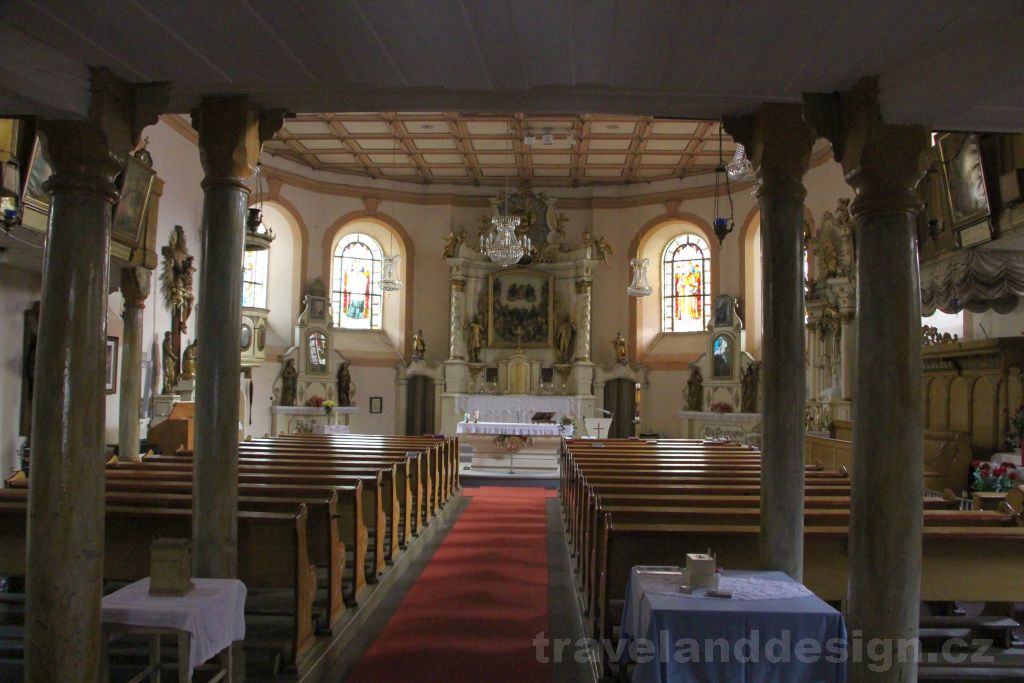
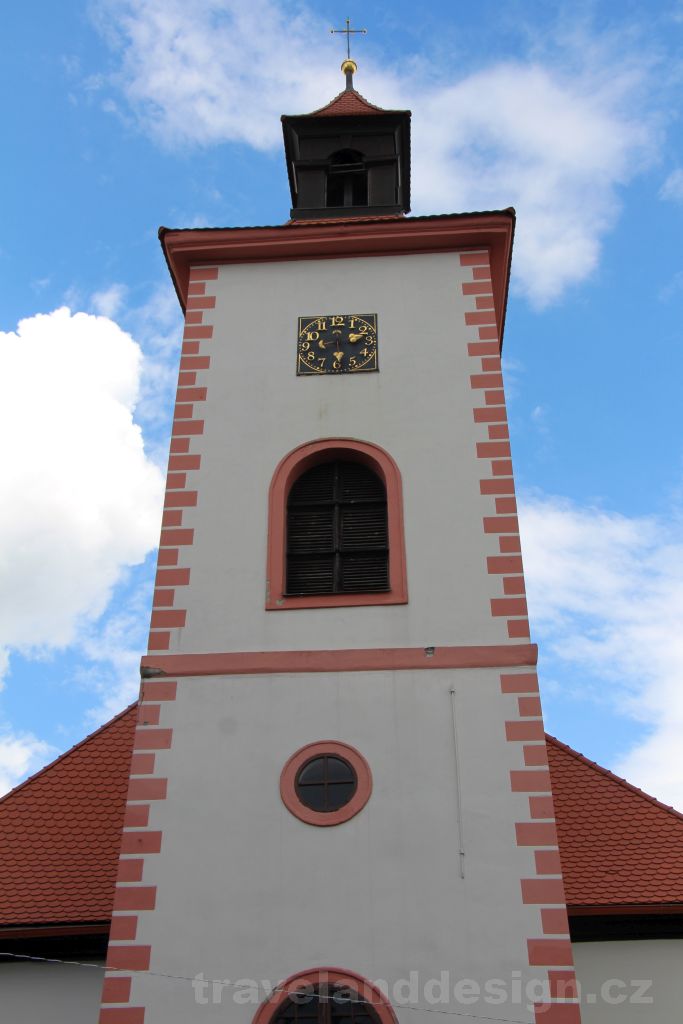
In the centre of the town there is the baroque Church of the Fourteen Holy Helpers from 1735-8, which was created by rebuilding an older Lutheran renaissance church from 1534. The rather simple building is dominated by a distinctive prismatic tower, and the interior furnishings date back to the end of the 18th century.
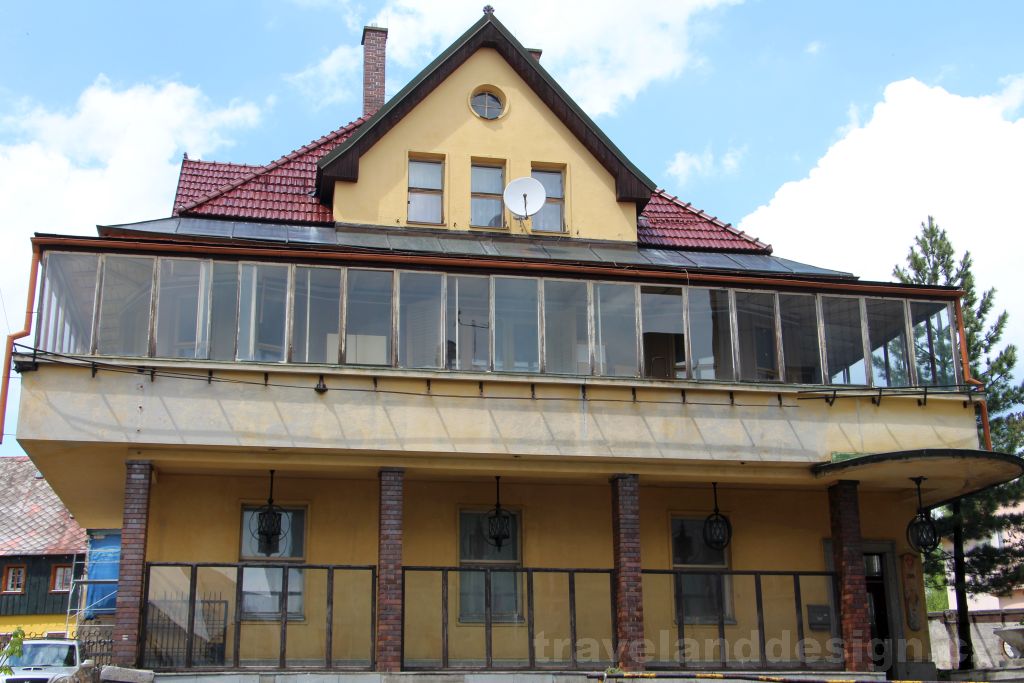
An outstanding monument of modern architecture is Villa No. 286, built here in 1921 in the traditional German style by the Zenker family of factory owners, who took over Eberhart’s glove factory. But just six years later, the Zenkers decided to rebuild it in the functionalist style. The upper floor of the building is encircled by a glassed-in gallery with sliding windows. The interior is lined with marble of various colours, but brown marble predominates, and a small garden was also created next to the villa.
Some remnants of silver and uranium mining have been preserved in the immediate vicinity of the town, especially the massive spoil heaps located near the former Jeroným and Albrecht mines. The distinctive spoil heaps also reveal mining activity at the Křížová shaft or directly in the town along a vein called Buriani. You can visit the 400-metre-long Kryštof adit of the Mauritius tin mine, which is located in the local district of Hřebečná. Tin was mined here from 1540 to 1944.
The famous who stayed in the city
Horst Siegel, football player